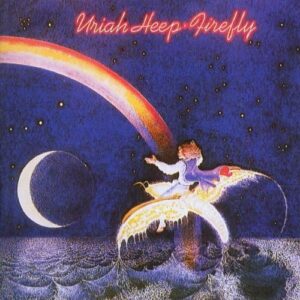
 When David Byron left Uriah Heep in 1976, the band’s fans figured he’d be irreplaceable. His dynamic vocal range was an essential part of the Heep sound, after all. Not long after his departure, the band found a replacement in ex-Lucifer’s Friend vocalist John Lawton and, joining him in the newly configured Heep, came another familiar face – ex-Bowie/Spiders bassist Trevor Bolder, replacing the departed John Wetton. Despite Heep now being the underdogs, the resulting album – 1977’s ‘Firefly’ – was not only enjoyable, but a big improvement over the workmanlike approach which dominated most of 1976’s ‘High and Mighty’.
Tag Archives: uriah heep
URIAH HEEP – Return To Fantasy
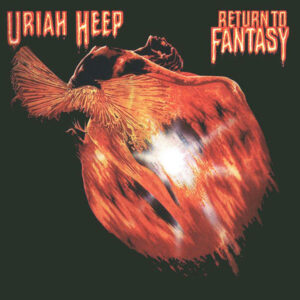 After releasing three fantastic albums in ‘Demons and Wizards’, ‘Magician’s Birthday’ and ‘Sweet Freedom’ as well as a classic live document in a little over a year between May 1972 to September 1973, it’s no wonder Uriah Heep sounded less inspired on their 1974 LP ‘Wonderworld’. Although not a document from a creatively spent band, the album included absolutely nothing memorable in the long term. Bizarrely, the best track dating from those sessions,’Stone’s Throw’, was never completed. Released in demo form on an expanded reissue of ‘Wonderworld’ in 1996, it knocks the entire album into a cocked hat. Following bassist Gary Thain being electrocuted during a show in Texas on that tour, 1974 could very much be considered the end of the band’s “imperial phase”.
CIRCUS OF ROCK – Lost Behind The Mask
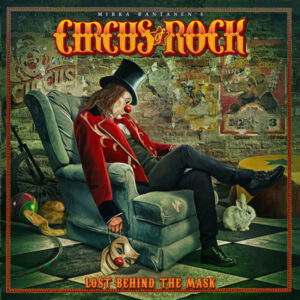 The debut album from Circus of Rock gave hard rock fans plenty to enjoy. The side project from King Company’s Mika Rantanen saw the Finnish musician collaborating with a whole host of familiar faces, including Tyketto’s Danny Vaughn, Axel Rudi Pell, Hardline vocalist Johnny Gioeli, and ex-Nightwish man Marco Hietala. This second outing for the Circus (released in May 2023) isn’t quite as impressive in terms of roll call, but any album that features vocal contributions from Uriah Heep’s Bernie Shaw and the legendary Jeff Scott Soto is definitely worth hearing.
TRAPEZE – Midnight Flyers: Complete Recordings Volume 2 – 1975-81
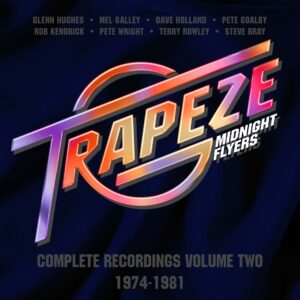 In the minds of many, Trapeze will be best remembered as the band that gave the now legendary Glenn Hughes his first major steps in the music world. On three albums recorded between 1969 and 1972, Hughes showed a strong vocal talent. Whether tackling strange psychedelic jams (as per the Trapeze debut), or losing himself within deep, soulful blues, it seemed there was nothing the young musician couldn’t take in his stride. It wasn’t until the release of 1972’s ‘You Are The Music…We’re Just The Band’, however, that Hughes and Trapeze really hit upon a perfect sound, with a blend of hard rock, blues and soul that would rival the likes of Free in terms of talent. As great as the album was – and remains – it failed to chart, but Trapeze hadn’t gone entirely unnoticed. Whilst playing live shows for the album, Hughes was headhunted by Ritchie Blackmore for a new line up of Deep Purple, and fter the release of their ‘Burn’ LP in 1974 – a massive hit on both sides of the Atlantic – Glenn’s career was catapulted into the stratosphere.
VARIOUS ARTISTS – Breakthrough: The Underground Sounds Of 1971
 According to music historian and author David Hepworth, 1971 is “rock’s most exciting year”. There are a lot of music fans of a certain age who would agree with that: those keen record buyers who still treasure well worn copies of Uriah Heep’s ‘Salisbury’, Caravan’s ‘In The Land of Grey & Pink’, Hawkwind’s ‘In Search of Space’ and Rory Gallagher’s ‘Deuce’; people who’d hit their early twenties in time to hear Pink Floyd’s ‘Meddle’ and Emerson, Lake & Palmer’s ‘Tarkus’ with fresh ears when the sounds of those hugely indulgent arrangements sounded like the future; and certainly not forgetting those for whom the first three Black Sabbath albums heralded the arrival of a whole new genre, but arguably hit perfection in ’71. There’s a lot of further weight to be added to the argument that 1971 is musically significant, with lesser known albums by Samurai and Jade Warrior propping up the art-rock scene, The Zombies’ Colin Blunstone delivering an absolutely killer solo debut with ‘One Year’ and Phil Collins making his first major appearance with Genesis. All of that barely scratches the surface, of course, but it’s fair to say there was always far more to 1971 than Led Zeppelin’s monolithic fourth platter and ‘Who’s Next’.