
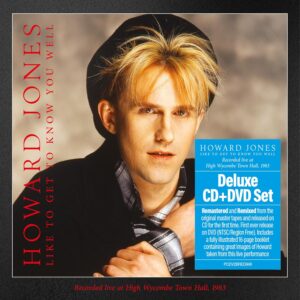
 Much like its predecessor ‘In Japan’, ‘Like To Get To Know You Well’, the second long form visual release from Howard Jones to be released in 1984, spent far too many years stuck in a VHS limbo as far as UK audiences are concerned. It was given a Laserdisc release in Japan, but would be over thirty years later that the show would finally make its hi-def debut in Britain. Eventually brought to the deserving fans via Cherry Red Records’ extensive HoJo reissue programme which has yielded – among other things – huge box sets of ‘Humans Lib’ and ‘Dream Into Action’, and a lavish 5CD set of BBC related recordings, the long overdue reissue goes the extra mile by coupling the original video material with a full CD soundtrack for the very first time.
Tag Archives: cherry red records
THE FALL – Fall Sound Archive Vol. 13: Cerebral Caustic
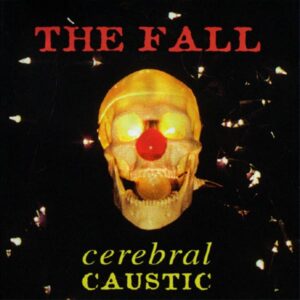 The Fall’s fanbase is notoriously obsessive, but there aren’t likely too many fans who would consider the band’s seventeenth full length studio release, 1995’s ‘Cerebral Caustic’, to be one of their very best. It lacks the sheen of 1994’s ‘Middle Class Revolt’, and kicks off a three album run of less essential offerings. The rougher production values call back to the band’s origins in some ways, but with less distinctive material in hand, the bulk of ‘Cerebral Caustic’ often sounds like Mark E. Smith and cohorts going through the motions with a selection of garage rockers given a post punk edge. If you approach it expecting not much more than that, it’s actually fine for what it is, but considering the band featured Karl Burns, Steve Hanley and Craig Scanlon at this point, and the album marked the brief return of Brix Smith, it should be better than it is.
JAH WOBBLE & TIAN QIYI – Mystic Liverpool: The Beatles’ Psychedelic Psongbook
 For those old enough to have been keen record buyers and gig goers in the late 70s, Jah Wobble will need no introduction. His fat, dub-centric basslines were an integral part of the early Public Image sound and, as such, he was one of the most important and influential figures in the post-punk scene. His often tough, sometimes dark bass tones mightn’t seem a natural fit with the recordings of a little-known Liverpudlian quartet, but that makes this album an interesting proposition even before a note is heard.
IAIN MATTHEWS – Rhythm Of The West: The Columbia Years 1975-1977
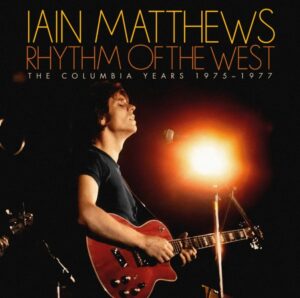 In 1970, Iain Matthews formed band Matthews Southern Comfort, a top notch country rock band which would become his main musical vehicle following his departure from Fairport Convention. Formed essentially as a vehicle to promote Iain’s 1969 solo album of the same name while out on the road, they’ll always be remembered for their UK number 1 hit with a cover of Joni Mitchell’s ‘Woodstock’ – a recording very much modelled upon the Crosby, Stills, Nash & Young recording – but the band recorded a lot of strong material across two more rather fine albums. Over the next couple of years, Matthews barely rested; by the end of 1972, he’d recorded and toured with country rock band Plainsong and also recorded a brilliant solo album,‘If You Saw Thro’ My Eyes’. That would ultimately be the springboard for a run of great solo records over the next decade.
By the mid 70s, Matthews had already amassed an impressive body of work. His albums ‘Tigers Will Survive’ (1972), the marvellous ‘Valley Hi’ (1973), ‘Journeys From Gospel Oak’ and ‘Some Days You Eat The Bear’ (both released in 1974) shared a typical mix of folk, country and pop-rock tunes mixing covers with original material, but 1975’s ‘Go For Broke’ found Iain taking a dip into slightly more commercial waters. …And it’s with that album – a slightly overlooked entry in the Matthews canon – that ‘Rhythm of The West: The Columbia Years 1975-1977’ begins its look back at another prolific period for the singer-songwriter.
THE REAL GONE SINGLES BAR #154
The eight picks that make up this selection for the Singles Bar cover a lot of musical ground. Joining a couple of superb singer songwriters, there’s a reggae-centric number from some legends of British ska, a beautiful track that pushes beyond the boundaries of dream pop, a slab of great post punk, and more besides. It’s one of our stronger selections in a while. As always, we hope you find something new to enjoy!
*