 The first Styx album (self-titled, 1972) is an overlooked slab of pomp rock. It’s not a masterpiece by any stretch of the imagination, but any band wishing to open their debut long player with a thirteen minute epic fusing hard rock with flourishes of Aaron Copland and what sounds like a conversation with a New York cabbie must have something, right? With that track, ‘Movement For The Common Man’, Styx announced their arrival in a typically grand style. The rest of the album, while nowhere near as complete sounding as 1977’s ‘Grand Illusion’ or as obviously song oriented as any of the albums from then onward, still makes for interesting listening decades after its original release. 1973’s ‘Styx II’, by contrast, is a more sedate affair – sedate in the world of early Styx means still very much still pompous and overblown – but, naturally, a bigger input from vocalist/pianist Dennis DeYoung, brought with it a much stronger element of musical theatre.
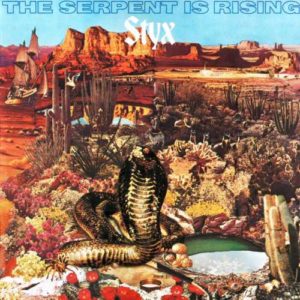
With these two records as a solid grounding, the band went all out for their next long player ‘The Serpent Is Rising’. Released in October 1973 – the third Styx LP to hit the shelves in just eighteen months – it has to be said, it has less of a focus than its predecessors. It doesn’t sound as if Styx had been tempted to use up leftover material though, rather more that this time out, the gloves were truly off. Coming from the days when bands were allowed to spend record company money (no matter how meagre a budget) while still very much on a learning curve, it sounds as if Styx intended to throw everything at this recording bar the kitchen sink to find out, once and for all, what styles worked for them…and which ones really didn’t.
Continue reading →