MAGDALLAN – Big Bang

Although he’d been previously known for his work with Joshua and Shout in the late 80s, I was a little late in discovering Ken Tamplin, first hearing a track by him on a record company CD sampler in the early part of 1994. After hearing that track (‘Dancing on a Volcano’, from the ‘Tamplin’ LP), I knew I had to hear more of his stuff. Later that same year, a friend lent me a copy of this Magdallan album.He originally lent it to me thinking I’d like it, since he thought the first track was a bit prog-metal influenced.  He hadn’t remembered Ken Tamplin was the band’s vocalist!

Of course I liked it – but not for the “prog metal” reasons my friend thought I would [aside from its general speed and a slightly edgy, metallic guitar riff, I’m not even sure why he thought it was prog metal. It’s likely he confused them with Magellan].In fact, my liking of this album had nothing to do with that first track; I found its full-on bombast a bit of a turn off. I was, however, more than impressed by the band for various other reasons.  Firstly there was that Ken Tamplin connection (this album gave me a proper introduction to his work and I continued to buy his albums for a good few years afterwards), but also I liked the other band members: I’d been familiar with Lanny Cordola and Ken Mary previously, as they’d been members of House of Lords, a band whose first couple of albums I’d rather liked.  So, since Magdallan featured a few musicians I was potentially interested in, I’m not sure how this album had managed to slip under my radar for a couple of years…

If I’m honest, I still don’t like that opening track, ‘End of the Ages’, much at all. While Ken Tamplin’s voice is strong, the band spends the best part of the track trying to outplay each other at full pelt.While the level of musicianship should be respected, the approach taken seems to be at the expense of the song.While some of Lanny Cordola’s guitar solos here are very good, when they’re combined with the fast rhythm section, it becomes very tiring.As a track, it’s far too demanding on the listener.Hats off to Brian Bromberg, though, for a jaw-dropping bassline.

With that out the way, the rest of ‘Big Bang’ is fantastic.  If you’re looking for huge melodic rock: look no further!‘Radio Bikini’ (not sure why they chose that name) is the stuff that late 80s rock radio was made of.  It couples a huge chorus with a mid-paced rock riff, topped off with the kind of huge harmony vocals which would make Mutt Lange proud.  ‘Shake’ opts for a funkier edge, led by bass player Brian Bromberg, whose work here is inspired, since it has a huge presence and manages to firmly stay within the hard rock parameters despite showing a strong funk influence, rather like the work of Marcel Jacob (sadly missed).

‘Wounded Hearts’, a big Whitesnake style ballad, feels much simpler again.  It features another top vocal performance from Tamplin.Also less demanding is ‘Love To The Rescue’, a pumping hard rock workout; once again, Cordola grabs an opportunity to really show some chops in the guitar solo department, although unlike most of ‘The End of the Ages’, he’s a bit more restrained. The title cut has a confident swagger and, once again, the multi layered vocals are used to fantastic effect.  Bromberg’s bass work goes for a funky edge again here and Lanny turns in an off-kilter guitar solo which raises a smile.  This would have been the ultimate attention grabber before the horns were laid on!  The Led Zeppelin inspired, acoustic blues stomp of ‘Old Hard Line’ captures the whole band on top form.Tamplin’s blues rock vocal style is faultless, Ken Mary settles into an understated drum groove, Bromberg’s bass playing has warmth, but it’s Lanny who stands out the most: his acoustic work is second to none – really stylish.  A few bluesy vibes carry over to ‘Dome of the Rock’, but, this time, the band return to full-on rock mode.  Bromberg’s contribution is superb, his busy bass runs lying behind a decent riff laid down by Lanny.Multi-layer vocals are the icing on the cake – somewhere between Queen circa 1974 and early Journey, they turn a decent rock tune into a pomp fan’s dream.  Choirs of vocals swamp ‘House of Dreams’, the album’s ultimate lighters-in-the-air big hair rock moment.As with ‘Wounded Hearts’, the slower pace allows Ken Tamplin’s vocal to really shine.

Dozens of sampled voices played through a keyboard (a la ‘Leave It’ by Yes) kick off ‘Cry Just a Little’ before things settle into a standard rock groove.Again, the backing vocals are huge and is in good company with the rest of the album.  Lanny throws in a really metallic guitar solo – and not to be outdone, Bromberg’s bass playing is really complex throught.  Musically, this is quite demanding on the listener, but by this point of the album it shouldn’t be a mystery why these musicians are so well respected by melodic rock fans.

If you’ve never heard ‘Big Bang’ you’ll probably have half an idea what an album featuring Ken Tamplin backed by most of House of Lords could sound like.If you like your melodic rock to be larger than life and well produced (allegedly this cost about a quarter of a million dollars to make), then you’ll love this.

March 2010


KISS – Music From The Elder

Throughout the late 70s, it seemed KISS could do little wrong. In the US, their albums sold by the truckload and fans filled large stadiums to witness their face-painted theatrics. In 1979, nodding towards then current musical trends, KISS added disco elements to their brand of hard rock. This seemed to be a good move, as ‘Dynasty’ became another top seller and its single ‘I Was Made For Loving You’ became one of KISS’s best selling singles outside the US. Attempts at re-creating a similar formula for 1980’s ‘Unmasked’ were less successful, despite a couple of stand-out tracks. Drummer Peter Criss quit the band mid way through the albums sessions and things were generally not as rosy.

It was time for a re-think. Very much in favour after his work on Pink Floyd’s ‘The Wall’, producer Bob Ezrin (who’d previously worked as producer on KISS’s 1976 fan favourite ‘Destroyer’) was bought on board to produce the next album – the overblown concept piece ‘Music From The Elder’.

‘Music From The Elder’ follows a half-baked story about a futuristic world and a battle between good and evil. It’s best to not concentrate too much on that and just take the songs at face value.  The songs themselves, don’t always feel like traditional Kiss songs – Ezrin’s orchestral arrangements and slick production swamps the album, as if he is the fifth band member here; this is obvious right from the introductory fanfare. His influence becomes absolutely unavoidable as Paul Stanley croons his way through ‘Odyssey’, which is pure musical theatre and not in the usual fun KISS style. Ace Frehley is said to have become rather unhappy with the musical direction ‘The Elder’ was taking but despite that, his contribution ‘Dark Light’ is quite strong, while Paul’s ‘The Oath’ demonstrates a hard rock style KISS would further explore on their 80s albums. The only track here which comes anywhere near the band’s previous anthem style is closing number ‘I’.
Gene’s lament ‘A World Without Heroes’ (co-written with Paul Stanley and Bob Ezrin, with a contribution from Lou Reed) and the more aggressive ‘Mr Blackwell’ are the essential tracks (it’s not very often you’ll find me picking Gene’s songs as KISS album highlights).

Upon release, many fans felt indifferent towards the album; sales were down and it marked the first time KISS did not tour. Some reviews were positive, though: Rolling Stone called the album ‘better than anything the band has recorded in years’.

Time has been kind to ‘Music From The Elder’. Ezrin’s production still sounds superb and musically, KISS are in good shape. Eric Carr makes his debut and turns in a good performance, despite supposedly sharing Frehley’s uncertainties about the concept album. Granted, some of the songs aren’t as catchy as previous outings – the concept approach means that sing-along anthems aren’t so evident. That aside, it’s a decent album none the less and I’m never sure why it tops fans’ ‘worst album’ lists. Bloated and pompous it may be, but there’s nothing here anywhere near as embarrassing as ‘Burn Bitch Burn’ (Animalize, 1984), ‘Bang Bang You’ (Crazy Nights, 1988) or ‘Domino’ (Revenge, 1991), so surely it deserves to be treated just a little better?

January 2010

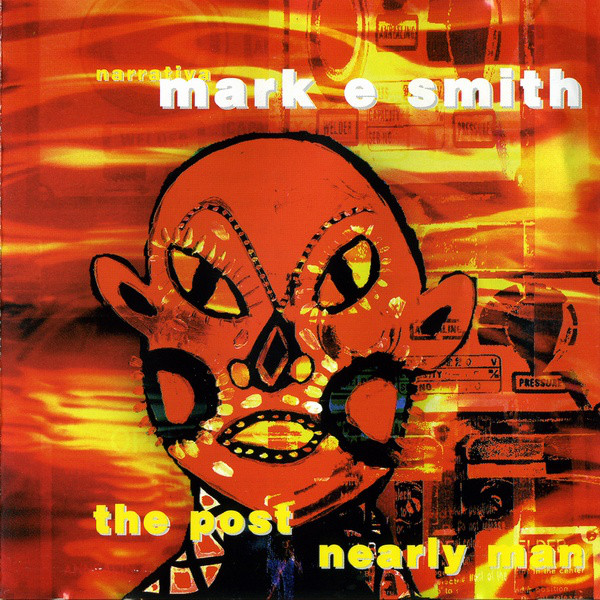
MARK E. SMITH – The Post Nearly Man

Modern Energy…and what it means to you and I” spouts Mark E Smith at the beginning of one of the tracks on this CD. A man with a skewed take on life, you may be forgiven for thinking a spoken word release from The Fall’s front man (and only constant member) could be an interesting prospect indeed. He goes from mentioning energy – something this collection of ramblings severely lacks – to mentioning Richard and Judy and then “Fred West’s sweaty family” in the space of less than a minute. As he does so, it becomes obvious that rather than being an outing of interesting beat or slam poetry as championed by Tom Waits, Henry Rollins or that under-rated wordsmith Mike Doughty, this is little more than a vanity project from a man who’d rather confuse and frustrate than entertain.

Continue reading

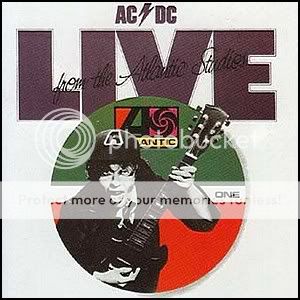
AC/DC – Live From The Atlantic Studios

Following 1980’s multi-million selling ‘Back In Black’, Brian Johnson helped steer AC/DC to uncharted heights.  The band have headlined festivals the world over, filled arenas and held an enduring popularity.

No matter how good or how popular the band became in the 80s and beyond, the material AC/DC released in the 70s is among their very best.  On recordings like ‘High Voltage’ and ‘Let There Be Rock’, their style is a little looser and the rock ‘n’ roll ethic hasn’t yet given way to the band’s slightly more metallic tendencies explored throughout Brian Johnson’s tenure fronting the band.

The studio albums are great, but it’s on the live albums where the early AC/DC really hit home. It’s often said that 1978’s ‘If You Want Blood’ is one of the great live albums of the age – that’s a theory with which it is hard to argue and the 2CD soundtrack to the ‘Let There Be Rock: Live In Paris’ film has some cracking performances.  However, it’s ‘Live From The Atlantic Studios’ which captures the band on most consistent, lean and mean form.  The intimate setting really gives the performance spark.

Bon’s voice is strong throughout the 40-odd minutes; he’s in good spirit, chatting with the small audience between numbers. ‘Live Wire’, ‘Problem Child’ and ‘High Voltage’ set the stage and the Aussie live wire sounds really focused; Phil Rudd and Cliff Williams are impeccably strong in their understated role as rhythm section.  What really works here, though, is the volume of the guitars; ‘Live At The Atlantic Studios’ has a feeling throughout of a studio run-through and as a result, the eight numbers don’t offer much difference to the band’s recordings in terms of performance, but that bit of extra volume means these tracks stomp over many of their studio equivalents.  Solid renditions of ‘Dog Eat Dog’ and ‘Hell Ain’t a Bad Place to Be’ maintain the spirit well, but it’s during the second half of the set that AC/DC relax a little and the fun really begins.

An extended version of the bluesy rocker ‘The Jack’ appears here in its best rendition, largely due to having retained the original album lyrics – much preferred over the sexually themed ones, full of schoolboy humour (pun intended) used on ‘If You Want Blood’ and other live performances.  An extended arrangement allows the band to really fall into a solid blues groove, with Angus turning in a fine solo en route. The band close their set with the double rock ‘n’ roll whammy of ‘Whole Lotta Rosie’ and ‘Rocker’.  Both numbers by this point had been established as crowd-pleasers, but during ‘Rocker’ especially, you can feel the sweaty atmosphere, as Angus and co tear it up.  It would have been fantastic to have been there: it’s such a great shame this set never filmed for posterity.

For those of you who have the studio albums and have loved them for many years, there’s little else to add, as you know exactly what you’re in for.  AC/DC at their most powerful, in front of a tiny audience?  If you want a snapshot of a hugely influential band at their most vital, ‘Live From The Atlantic Studios’ gives you what you need.

Bon Scott (09.07.46 – 19.02.80)

February 2010

*’Live At The Atlantic Studios’ is available as part of the AC/DC ‘Bonfire’ 5CD box set.

VANILLA ICE – Hard To Swallow

Yes, Vanilla Ice. You know him. In 1990, ‘Ice Ice Baby’ was huge and people loved him. He sold millions of records – though it’s unusual to meet anyone who’ll openly admit to having owned either ‘Ice Ice Baby’, or its parent album ‘To The Extreme’. He faded from the public eye some time after and a follow up album, 1994’s ‘Mind Blowin’, went largely un-noticed.

In 1998, Ice returned with ‘Hard To Swallow’, a rap-metal album produced by Ross Robinson, a producer then very much in vogue due to his work with KoЯn, Sepultura and Limp Bizkit. It’s likely you’ll meet more people who’ve heard about ‘Hard To Swallow’ rather than actually heard it. Of those people, most of them will probably tell you they’d like to hear it, y’know…just out of curiosity. After all, Vanilla Ice has been treated as a bit of a joke for so long, could he actually pull off a decent rap-metal/nu-metal album?

Well, curious folks, let Real Gone help you out: ‘Hard To Swallow’ is nowhere near as bad as anything you’re expecting from Vanilla Ice.Nor is it as good as you’re hoping for, from something which fits neatly into its particular niche…and let’s be honest, the metal aspect is why most of you curious folk have remained curious over the years.Being one of the curious myself, part of me hoped this album would be great; thus giving the finger to all those who’d written off the project before it’d even begun.

Ross Robinson’s input as producer is blindingly obvious. The album sounds like you’re expecting, although possibly with a stronger bias toward nu-metal. There’s stuff here which could be compared to early Limp Bizkit on their ‘Three Dollar Bill, Y’all’ album (although about three times heavier); in part that’d be thanks to Robinson, but there’s another connection here in the shape of keyboardist and bassist Scott Borland, whose brother Wes is best known as Limp Bizkit’s sometime guitarist. There’s also a fair amount of KoЯn influence in the downtuned guitars. Again, this is likely the influence of Robinson and the other band members, since Ice claimed he never listened to any nu-metal bands prior to making the record. The drum stool is filled by Shannon Larkin of Godsmack and the heavy guitar work is provided by Snot/Amen man Sonny Mayo. Looking at those musicians’ previous works, the Limp Bizkit debut was enjoyable, if a little disposable, Godsmack have released some decent albums (although their best work was released after this) and the Snot album is an absolute classic of the nu-metal genre, so ‘Hard To Swallow’ is fairly solid from that point of view. It clearly sounds like the product of all the musicians involved – more than just a bunch of guys hired to back Vanilla Ice. Add to that some guest spots from Casey Chaos (Amen), Cyco (Insane Poetry) and Jimmy Pop Ali (Bloodhound Gang), the album has potentially got a lot in its favour.

Ice’s performances here are loaded with arrogance, as he shouts down his detractors and reminds everyone he’s sold millions of albums (hey, Ice, so has David Hasselhoff) but ultimately, this album feels like dozens of albums of a similar ilk, especially during the moments when the raps give way to nu-metal shouting. I still enjoy a lot of late 90s nu-metal stuff and have nothing against shouting, but for approximately half of this album, something doesn’t quite click. Ross Robinson carries a lot of clout as a producer, so why then, does ‘Hard To Swallow’ sound so laboured and generic? There’s plenty of heaviness for sure (maybe a little too much) and Ice does what’s required from him about as well as he can manage – but still, it’s lacking something.

Sadly, there’s very little variation in the material and by about halfway through, the sludgy sound and heavy handed approach starts to become wearing and doesn’t really let up. This isn’t a fun record and I feel it really suffers for taking itself too seriously. Maybe combining heavy riffage with a more light-hearted approach (like ‘Injected’ by Phunk Junkeez, for example) could’ve been a better route for Ice.

That said, there are a few clear standout tracks: ‘A.D.D.’ finds Ice accompanied by a sheet of downtuned sludge where the verses feel like Snot (quite understandably) and there’s more than a sliver of KoЯn thrown into the mix; ‘Stompin’ Through The Bayou’ is the bastard child of KoЯn and Disturbed and ‘Too Cold’ (a metal version of ‘Ice Ice Baby’) proves that Ice isn’t embarrassed by his past, even though many people think he ought to be (he really ought to be embarrassed by this album’s poorest effort though: ‘The Horny Song’ is tacky and frankly provides no entertainment).

All the guys involved with making this album supposedly had a fantastic time in the studio, but that doesn’t really come across when listening to the end product. If you’re still curious, you really ought to hear this album, just to say you have. The best advice I can give you is to not shell out any money in doing so.

February 2010