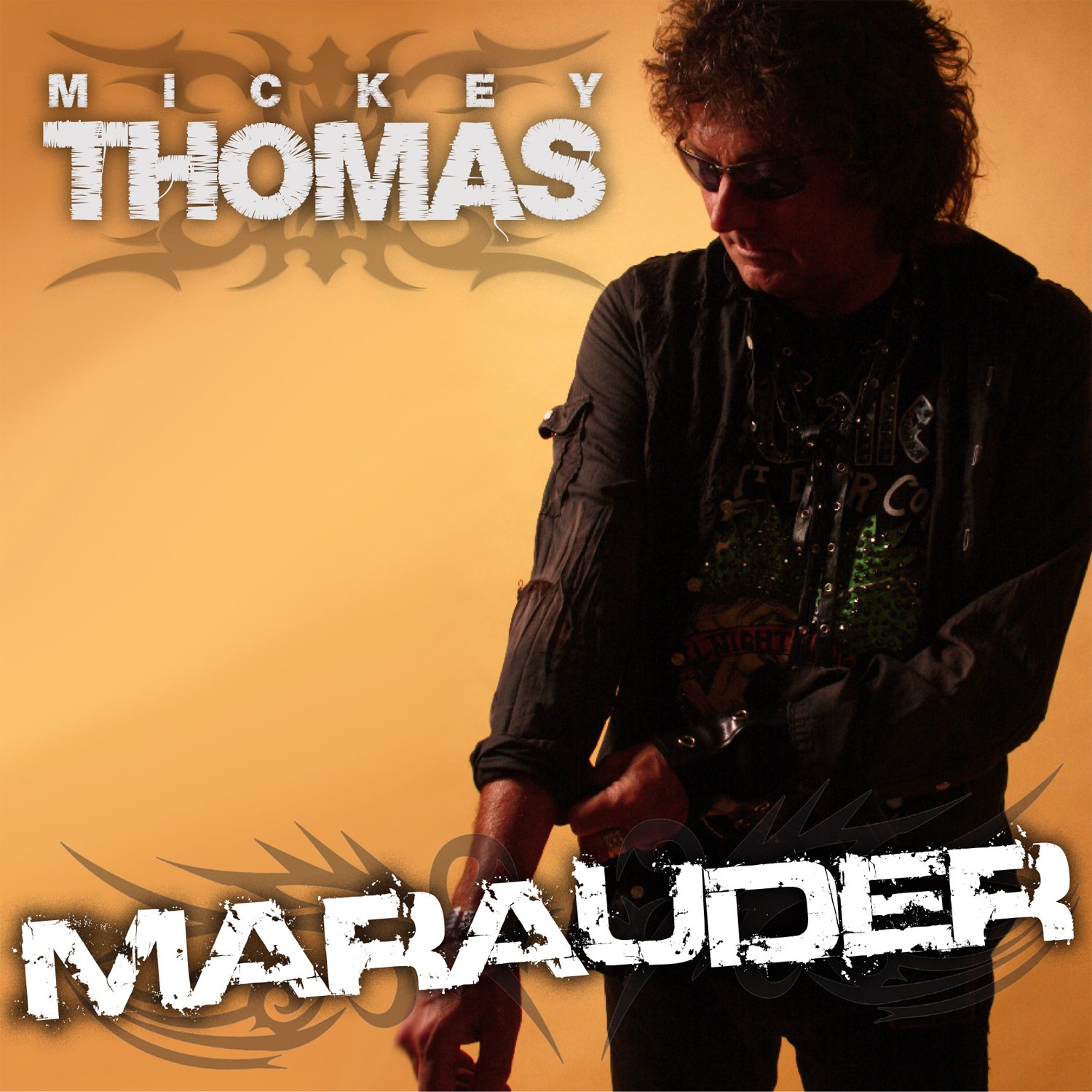
 After Mickey Thomas joined Jefferson Starship in 1979, they entered the most commercial phase of their career, with Thomas always seen as a key figure in pushing the band in a more pop direction (culminating in its Starship incarnation). It’s not entirely fair to blame Mickey Thomas for that, since he joined the band on the cusp of the new decade, and lots of bands turned rather more poppy in the 80s, so it likely would have happened to Jefferson Starship too, with or without the help of Mickey Thomas. Although all of a very 80s persuasion, some of his work with that band is great, however, with ‘Freedom at Point Zero (1979), ‘Knee Deep In The Hoopla (1985) and ‘No Protection’ (1987) all worth investigating.
Tag Archives: rock
FOO FIGHTERS – Wasting Light

The second and third Foo Fighters albums (1997’s ‘The Color and The Shape’ and 1999’s ‘There Is Nothing Left To Lose’) really raised the bar for radio-friendly alternative rock, with both releases absolutely loaded with fantastic songs. Across the two albums, Dave Grohl more than proved his well rounded talent. In contrast, the handful of albums which followed were predictable, a bit formulaic and as a result, rather lacklustre. None were awful of course, but there was a strong feeling we’d heard it all before. Even the acoustic second half of ‘In Your Honour’, which seemed like a great idea on paper, in reality, didn’t translate into something which could set the world of acoustic rock alight. Given then that Dave Grohl and company had appeared to have been going through the motions and playing it safe too often, there was little reason to think that their seventh studio album, 2011’s ‘Wasting Light’ would do anything to break the cycle.
However, a few bars into the opening number, something feels different somehow. This may or may not have something to do with Pat Smear’s presence on second guitar, making his first full-time appearance since ‘The Color and The Shape’. Smear’s return is not the album’s only nod to the past either – the disc also boasts a guest performance by Nirvana bassist Krist Novoselic and was produced by Butch Vig, who had last worked with Grohl on Nirvana’s multi-million selling ‘Nevermind’ back in 1991.
‘Bridge Burning’ opens with some discordant guitars swiftly joined by a crashy drum part, where Taylor Hawkins sounds like he’s channelling Dave Grohl’s 1990s drumming style. After the verse settles in, it’s chock full of the muted string riffs Foo Fighters have incorporated into their signature sound. The noisier parts are counterbalanced by a pre-chorus featuring Grohl in particularly fine voice, before the chorus itself uses a few great harmonies over a simple hook. There’s an energy at play here, the kind you’d hope to find driving most of the great Foo Fighters numbers, which makes it a strong opener. For those looking to the Foo’s for another blast of high octane rock, ‘White Limo’ is also hugely appealing, with a carefree, almost Nirvana-ish edge. The fast-paced riffing and general vibe is a definite throwback to the Foo Fighters’ earliest work, with its speed and vocal distortion recalling both ‘Wattershed’ and ‘Weenie Beenie’. [See the video clip featuring Lemmy!]
With an approach to the verses which sounds a little like early Joe Jackson, ‘Dear Rosemary’ shows another side to the Foo Fighters. The spiky rhythm is complimented by some great playing from everyone concerned, particularly Nate Mandel, whose bass sound has a great presence. The track also features ex- Hüsker Dü /Sugar frontman (and legend) Bob Mould, who contributes guitar and vocals. Clearly the guitars offered by Smear and Chris Shiflett would have been adequate enough, since Mould’s work remains indistinct. When you consider how distinctive Mould’s shrill guitar tone has been, particularly during his Hüsker Dü years, it wouldn’t have been so hard for him to add something similar here, to really make his presence felt. It’s not until the close of the number, when Mould can be heard clearly on second vocal, his contribution is really obvious.
Naturally, there are still moments where the band retreats to the safety of their stadium rock stylings. The weakest of these tracks, ‘These Days’, is a dull retread of something which sounds like it belongs on the Foos’ 2002 outing ‘One By One’. Also with a focus on big riffs and a radio-friendly chorus, ‘Miss The Misery’ features some crisp rhythm guitar work and decent vocals; but despite being extremely well written, it’s a number which could do with a little of the energy that’s in abundance elsewhere. Lead single ‘Rope’ fares a little better, thanks in no small part to a slightly quirky rhythm during the verses and big rock section near the end. Taylor Hawkins’s drum work throughout the number creates enough interest to sustain momentum. Neither ‘Miss The Misery’ or ‘Rope’ are bad enough to skip, but there are better examples of this style in the Foo Fighters’ back catalogue.
Sometimes, though, familiarity isn’t a bad thing, as proved by ‘Arlandria’. With quiet verses full of muted chords, building to a sing-along chorus, it could be described as Foo Fighters by numbers. However, by having a chorus which lodges firmly inside your head after two or three plays, it’s an instant classic. Well constructed with enough oomph to make a decent rocker, yet with a commercial edge that’s meant for radio play, ‘Arlandria’ is one of ‘Wasting Light’s absolute crackers. Almost equally appealing, ‘Back & Forth’ moves almost into power-pop territory on occasion, with a chorus that has a slight Cheap Trick influence. Shiflett’s muted chords may raise a smile, since they sound exactly like those Shiflett used previously on the Me First & The Gimme Gimmes version of The Cars’ ‘Just What I Needed’. On the negative side, the vocals on the pre-chorus seems a little droney, but hang in there, since the harmony-fuelled pop/rock chorus which follows is one of the album’s best.
‘I Should’ve Known’ is a slow number which presents the band in a more reflective mood. Grohl’s vocals are heavily filtered, but this is balanced by the clear quality of Shiflett’s guitar. Krist Novoselic’s guest performances on bass and accordion seem, at first, understated. To begin with, his bass part appears particularly pedestrian, but it’s deliberately misleading… Near the track’s end once everyone starts to rock out, the bass is full of anger; a fuzzy sound partly recalling Novoselic’s Pixies-inspired style from way back when. The bass work is definitely the high point here.
Granted, ‘Wasting Light’ is an album which brings few musical surprises, but it captures Grohl and company on good form, often playing with a renewed sense of vigour. Since it features a handful of terrific numbers and little in the way of filler, it’s a decent addition to the band’s catalogue. It still doesn’t quite live up to those standards set by the early albums, but it certainly comes close.
April 2011
AUGUST CHRISTOPHER – A Brand New Day
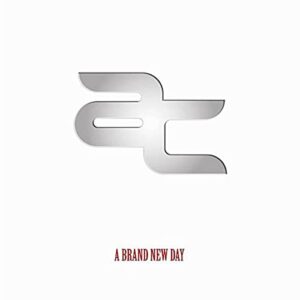
August Christopher is a Nashville based band which has a sound which encompasses many different elements, but could best be described as rock/pop with a leaning towards country rock. They’ve gained a reputation for being a hard working band and have secured support slots in the past with various bands, but appearances with Lynyrd Skynyrd, Train, Seven Mary Three and Nickelback would certainly be among their more high profile.
This third August Christopher release is a concept disc about “a man struggling with his alter-ego, walking a tightrope of good and evil”. As always with concept albums, this isn’t always completely clear. Concepts aside, though, ‘A Brand New Day’ features some good quality material. A couple of tracks fall short of the mark, but generally, the album presents a solid set of tunes.
STATUS QUO – Picturesque Matchstickable Messages
 In 1967, Britain was in the midst of a psychedelic musical revolution: The Beatles released an undeniable classic in ‘Sgt Pepper’, Steve Winwood’s Traffic released the rather more cult ‘Mr Fantasy’, while The Jimi Hendrix Experience and Cream fused a psychedelic spirit with blues influences on their respective albums, ‘Axis: Bold as Love’ and ‘Disreali Gears’. By 1968, the psychedelic vibe had started to fade slightly, although it was the year in which The Zombies released ‘Odessey and Oracle’, which despite poor sales at the time, is possibly the greatest piece of British psych-pop. In that same year, Status Quo released their debut, ‘Picturesque Matchstickable Messages’.
‘Pictures of Matchstick Men’ may feel like a well worn classic now and familiar to everyone, but what of the rest of that debut album? The opening track ‘Veils of Melancholy’ sounds rather like ‘Pictures of Matchstick Men’ with the notes played in wrong order, which probably says a lot about why it bombed when released as a single. But, while ‘Matchstick Men’ feels like a piece of late-sixties happiness, ‘Veils’ has an effect that’s slightly sinister. ‘When My Mind Is Not Live’ typifies the psych-pop movement, feeling like a Traffic and Tomorrow hybrid. ‘Gentleman Joe’s Sidewalk Cafe’ is rather more whimsical. Written by songwriter-for-hire Kenny Young (erroneously credited on occasion to Bob Young, who’d later be a regular Quo collaborator), this Kinks-esque number was originally scheduled to be the single. Although a decent album track, I’m not so sure about its single potential – they made the right choice releasing it on the flip-side of ‘Matchstick Men’. ‘Paradise Flat’, takes the psych elements slightly farther, complete with deep voice-over on the mid section. It’s hard to tell whether the voice over always sounded bad, or whether time has been unkind.
It’s interesting to note that Francis Rossi doesn’t play such a pivotal role on a lot of these songs, as he would in later years. Although the heavily phased guitars are important to the end product, it’s the electric organ which seems to dominate the early Quo’s multi-layered sound (courtesy of Roy Lynes, who remained with the band until 1970). Surprising as it may seem, the well-loved title cut isn’t the best track, nor is it the most psychedelic. That honour falls to Alan Lancaster’s ‘Sunny Cellophane Skies’. Rossi’s heavily treated guitar is the track’s driving force, coupled by multi-layered vocals, which evoke the period.
The album is padded out with cover material, all of which is more in keeping with 60s beat pop than psychedelia. In the 21st Century, that makes for okay listening for anyone with a liking for stuff of that retro style, but I suspect that in 1968, some of it felt a little ordinary. ‘Ice In The Sun’ and ‘Elizabeth Dreams’ (both written by Marty Wilde) are probably the best of the bunch with regard to the said cover material, while the Quo’s treatment of The Lemon Pipers’‘Green Tambourine’ isn’t too bad either. The cover of the Bee Gees’ ‘Spicks and Specks’ is horribly misjudged – while Gibb, Gibb and Gibb would prove themselves to be at the forefront of the songwriting masterclass, this isn’t one of their better late 60s tunes as it is, and it definitely doesn’t suit Status Quo.
‘Picturesque Matchstickable Messages’ contains some enjoyable music during its 34 minutes, even if it isn’t quite as inventive as some other albums of the period. The following year’s ‘Spare Parts’ followed a similar musical path, but had little commercial success. By the end of the decade, the psychedelic times were over. If Status Quo had thrown in the towel, they’d likely be remembered as one of Britain’s greatest cult bands.
[In 2009, ‘Picturesque’ was re-issued as a 2CD Deluxe Edition, featuring both mono and stereo mixes of the album as well as non-album singles and BBC Sessions. Also included are rare recordings by the pre-Quo band, in both their Spectres and Traffic Jam guises].
January 2010
STEVE LUKATHER – Ever Changing Times
 I’ve been a melodic rock fan for a long time. However, as much as I love the classic mid-eighties stuff, a lot of the later releases don’t always do much for me. Back in 2005, I got bored with the genre’s predictable nature. Every week, there seemed to be small armies of bands signed to small labels who seemed to think that just because they’d heard some of the genre’s classic albums from the 80s and could reproduce that style, it’d make for a great album. Many fans seemed to lap it up, but for me, it often felt a little forced and lacking in real heart. Couple that with the average fan’s attitude of ‘our music is better than yours’ (even when most of the music churned out between 1994 and beyond is distinctly production-line stuff…), and you might understand why I distanced myself from AOR for a time.
However, even when things aren’t as rosy as they used to be, there’s always the odd decent album coming through. Most of the old guard can be relied upon to make an enjoyable album and Steve Lukather is no exception. There’s already a comfort barrier, as you know whenever he releases an album he’ll rarely let you down. On ‘Ever Changing Times’, he’s surrounded himself with some of the best session guys – John Pierce, Abe Laboriel Jr, Leland Sklar, Randy Goodrum… If you’ve ever been a fan of Westcoast style AOR, these guys will require no introduction.
The title track opens up proceedings with a riff that’s slightly heavier than the norm, but not altogether out of character for Luke. By the time the chorus comes, you know what you’re in for. It’s pretty much by-numbers melodic rock, which coming from one of the best, is precisely what you’d want from this album. Fans of Toto’s slightly edgier ‘Kingdom Of Desire’ tracks will enjoy this a great deal, as well as a couple of tracks further on. It’s topped off with a faultless guitar solo. ‘Without Letting Go’ is softer; Luke is at the top of his game on a song which for all the world sounds like it was written with Toto in mind – a soft ballad, soulful but not quite syrupy. ‘Never Ending Night’ falls into the same category and highlights Lukather’s great vocal style. ‘Jammin’ With Jesus’ leans towards the harder, slightly bluesier sound explored on Lukather’s ‘Candyman’ album, but here, it’s probably the closest the album gets to filler. Some of the guitar work is notable as usual, but the (I assume) tongue-in-cheek lyrics are a little grating.
‘I Am’, again is soft, but nowhere near as effective as ‘Without Letting Go’. There’s a part of me which feels Lukather is on auto-pilot here. There’s something about this track which sounds like Toto’s ‘I’ll Be Over You’, but with the notes played in the wrong order. An absolutely beautiful, soaring guitar solo hits the mark though. At first, the jazzy intro of ‘How Many Zeros’ lead the listener into thinking it may be another ‘Dave’s Gone Skiing’ workout (still one of my favourite moments from Toto’s ‘Tambu’), but it soon settles into another piece of guitar-led AOR, complete with well placed, big backing vocals. It’s definitely another stand-out. ‘New World’ is at once both tough edged and melodic. There’s not the usual smoothness here, but there’s something unmistakably Toto about it, until the chorus when things speed up just a touch, but just enough to make the song not quite work – it’s probably the only skipper here; from eleven songs, that’s not so bad.
At the time of making this album, Lukather says his son has helped him stay youthful and up to date musically, but unsurprisingly, most of this album sounds exactly how you’re expecting. One track may surprise, though: ‘Tell Me What You Want From Me’ comes with a few sharper edges. Luke claims that “if you blindfolded rock critics, they wouldn’t tell who the artist was”. This is a bit of an exaggeration, as Luke has a very distinctive sound and most of the track sounds like Steve Lukather of old. The only difference is a really heavy and – dare I say – unnecessary guitar riff which kicks in occasionally. It spoils the track for me and sounds like a man trying to prove a point which doesn’t need proving. Most people know Luke can play in pretty much every style. Sadly, as is often the case with old-school musicians, their fan base will enjoy new material but it’s a struggle to win new fans – and even if he is trying to win new fans, I’m not convinced that trying something uncharacteristic is the way to go…Definitely one of the weaker tracks, alongside ‘New World’. ‘Stab In The Back’ has a jazzy groove which is an obvious tribute to Steely Dan, whom Lukather played alongside when he was young. Great stuff.
‘Ever Changing Times’ is a decent enough album. It showcases most of the different styles Luke is capable of. Even if not as good as his ‘Candyman’ masterpiece from the mid-90s, it’s a welcome addition to his back catalogue – an album from a man whom in ever changing times (mostly) knows what works for him and has pretty much stayed the same.
January 2008