 By the summer of 1973, Roxy Music had released two fantastic, groundbreaking albums mixing pop and glam rock with a heavy dose of experimentation to produce an art-rock sound which sounded quite unlike anything heard before. The second of those albums, ‘For Your Pleasure’ – released in March 1973 – captured the early Roxy’s most avant-garde side at its peak. With Roxy’s career barely out of the starting blocks, frontman Bryan Ferry began work on a solo career. His first album, ‘These Foolish Things’ – a covers record – was released in June of that year.
Tag Archives: 70s
JUDAS PRIEST – Sad Wings Of Destiny
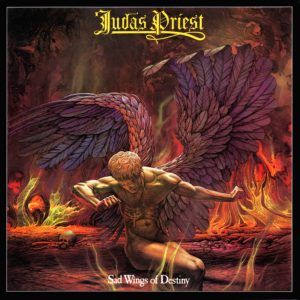 Judas Priest’s debut album, 1974’s ‘Rocka Rolla’ hints at a potentially very talented band, but is ultimately let down by some plodding arrangements and somewhat leaden production values. Everything about Priest’s second album, ‘Sad Wings of Destiny’ (issued by Gull Records in 1976) is in a completely different league, right down to the fantastic album artwork (‘Fallen Angels’ painted by Patrick Woodroffe).
SAMMY HAGAR – Street Machine
Between leaving Montrose in 1975 and joining Van Halen a decade later, Sammy Hagar was a busy man. During that decade he embarked upon a solo career whereby he released eight studio albums and two live albums, as well as a collaboration with Neal Schon, Kenny Aaronson and Mike Shreive (released as HSAS: ‘Through The Fire’).
A great deal of this work represents quantity over quality as far as I’m concerned.Most of those studio albums contain three or four really great numbers, bolstered by approx half a dozen dispensable ones to bring things up to album length.1977’s ‘Musical Chairs’ doesn’t even stretch that far. After the opening good times of ‘Turn Up The Music’, most of what follows is lacklustre; even a deliberate attempt to rock during ‘Reckless’ feels a little flat, due to an over-reliance of Alan Fitzgerald’s organ, played like a limp Jon Lord. (It’s also worth mentioning that any decent material from fan favourite ‘Danger Zone’ [1980] is killed by a really flat production job from Geoff Workman).
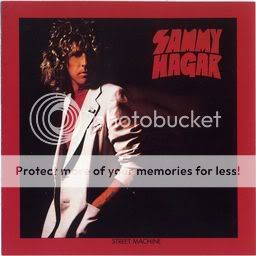
Among Sammy’s pre-VH solo work though, you’ll find one genuine gem.1979’s ‘Street Machine’ is a solid offering which no fan of late 70s hard rock should be without.The Red Rocker and his band are firing on all six here right from the opening number, the simple boogie-rocker ‘Growing Pains’.The no-nonsense rock vibe carries through ‘Trans Am (Highway Wonderland)’, where the rhythm section of Chuck Ruff (drums) and bassist Bill Church (who’d previously worked with Hagar in Montrose) are the real stars.Chuck’s drumming style is very natural; he knows how to rock out, but never in a way which upstages Hagar.Bill Church’s bass style here – and throughout ‘Street Machine’ generally – is solid.He could be compared to a hard rock John McVie: you know the style, a firm anchor – plodding but never dull.
‘This Planet’s on Fire’ (one of the album’s better known numbers) is a full-on rocker, driven by Gary Pihl’s circular riff on lead guitar.He also gets to turn in a fairly hard edged solo – this will undoubtedly be one of the standout tracks for those wanting Sammy and co to rock in the way that Montrose’s ‘Bad Motor Scooter’ and ‘Space Station #5’ had previously.The ballad ‘Child to Man’ offers one of Hagar’s strongest performances, but it’s Gary Pihl’s guitar touches which makes it so memorable.Its subtle bluesy notes compliment Hagar’s voice perfectly.Also more reflective, ‘Never Say Die’ provides another standout.Here, Hagar and the whole band are at their absolute strongest: Sammy’s voice retains its hard rock qualities but he sings like a man who’s been let down, his voice showing a passionate side not quite so evident elsewhere.
Musically, ‘Plain Jane’ is a decent slice of 70s power pop, matching handclaps and a singalong element with hard rock guitars, reminiscent of work by Rick Derringer on his ‘Face To Face’ LP (recorded at a similar time).Hagar’s voice though remains hard and a little husky, so it’s likely this’ll always be far more associated with the hard rock tag.
The rest of the album’s material also passes muster. ‘Wounded In Love’ and ‘Feels Like Love’ both offer decent mid-paced rock stompers; ‘Falling In Love’, driven by ringing guitars features backing vocals by Boston members Brad Delp, Barry Goudreau and Sib Hashain giving it a slightly overblown late 70s vibe and ‘Straight To The Top’ is a fun workout with more than a nod to fifties style rock ‘n’ roll.
The difference in quality between ‘Street Machine’ and any of Sammy’s previous solo albums is astounding. Although Hagar’s best solo albums wouldn’t appear until sometime later (1987’s self-titled album, aka ‘I Never Said Goodbye’ and 1997’s ‘Marching To Mars’), ‘Street Machine’ – like the Montrose debut – does a decent job in highlighting why Hagar was a hero to US rock fans a long time before his alliance with Van Halen.
February 2010
SAXON – Saxon
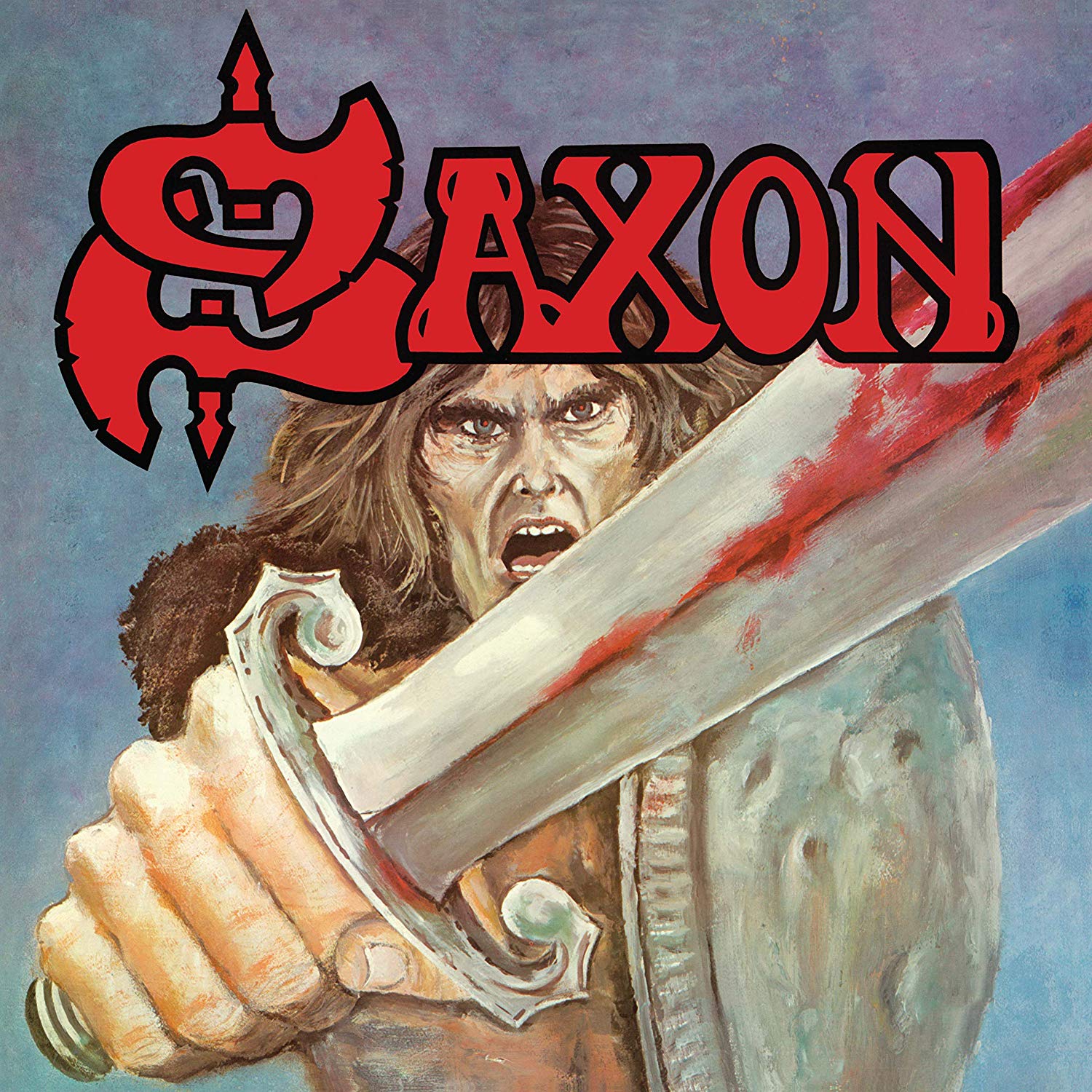 In the late 1970s, the New Wave of British Heavy Metal created a musical storm. Fusing the heavy edges of the 70s rock giants with the energy of punk (although as a sub-genre it owed little else to punk), a new musical scene was born. You couldn’t go a week without Sounds featuring someone NWOBHM related. Obviously, Iron Maiden remain the best loved of all the bands associated with the scene (save for perhaps Def Leppard; though, due to the Americanisms of much of Leppard’s material, Iron Maiden have remained the most true to the roots of the NWOBHM), but this debut by Saxon is a key album in the scene’s breakthrough; it’s regarded by many as the first album released by one of the big NWOBHM bands.
In 2009 this debut celebrated its thirtieth anniversary…and one of the first things you notice are the rough edges. It was clearly recorded on a small budget and in a hurry. In fact, you could be left wondering what producer John Verity did at the sessions, since the whole thing sounds like a demo. Things are often a little muddy and occasionally Biff Byford’s vocals feel a little lost.
That aside though, there are some decent songs here. The opener ‘Rainbow Theme’ is a short instrumental which leads into ‘Frozen Rainbow’ which reprises the theme at the end. Beginning with an open stringed bass riff (something bassist Steve ‘Dobby’ Dawson would make his trademark at live shows, leaving him with a free hand to point with – allegedly the main influence for Spinal Tap’s Derek Smalls), the piece leads into the main guitar riff before settling into the song. It could be seen as an odd choice for an opener as it’s an epic, slow piece, rather than a stomping track to get things underway. The high point here is the guitar solo, a great howling and moody offering from Paul Quinn, nodding to his previous band Coast’s more progressive tendencies. The track also allows an early insight into Biff’s vocal range – he’s a man with more to give than just a full rock belt.
Elsewhere, there are plenty of no nonsense rockers – ‘Backs To The Wall’ is based around a simple but effective guitar riff, coupled with ‘don’t let them get you’ themed lyrics; ‘Still Fit To Boogie’ is simple, but not as good as the lyrics are a little embarrassing now. Of the rockers, ‘Stallions of the Highway’ fares best, with it’s motorbike theme (which would recur throughout the band’s work over the next few years). If it’s complexity you’re after, the album’s rockers mightn’t do much for you. For those of you whom want something to get your teeth into, the album features a couple more brooding, epic style songs to keep ‘Rainbow Theme/Frozen Rainbow’ in good company. ‘Judgement Day’ (hands down, the best track on the album) thunders from the speakers and captures the band at full power. There’s a mid section where things get a bit gentle, again casting it’s musical net to include touches of 70s prog, but that’s just a build up to a climax, with twin lead guitar harmonies. For best results, check out the live b-side version of this track (included on the deluxe version of ‘Saxon’). Closing the album, ‘Militia Guard’ is the first of Saxon’s many war themed songs, and while the songwriting shows promise, it’s still the twin guitars which prove the high point. An interesting piece, this is neither the straight metal that Saxon would perfect on their next two records, or seventies indulgence, but a cut and paste mix of both. A huge closing statement, this sounds as if it were glued together from three or four musical ideas, but it’s to Saxon’s eternal credit that they make it work so well.
At just under half an hour, the original album and it’s eight songs fly by, with no messing. For those who want more, the 2009 reissue features 14 bonus tracks – including demos, BBC Session tracks and part of the band’s 1980 Donington Monsters of Rock appearance (the rest of which is featured on other Saxon reissues). It’s great to have the live tracks, as in most cases they’re superior to the studio versions. As for the demos, they’re presented here in a form which is almost identical to the finished album cuts, just a little rougher. The best of the bunch is ‘Big Teaser’, which features a guitar riff which gives a nod to Status Quo, something nowhere near as obvious on the finished album recording. The real gem among the bonus tracks is the BBC Session, where the band premier ‘Motorcyle Man’ and ‘747 (Strangers In The Night)’ – the latter being one of the band’s greatest achievements, and both tracks paving the way for the signature sound which made their next three LPs classics of the era.
‘Saxon’ might have a rough production, but most of the songs are rock solid. While more geared towards fans – new listeners should hear ‘Wheels of Steel’, ‘Strong Arm of The Law’ and ‘Power and The Glory’ first – there’s plenty of interest here…and it’s best moments win out purely on the basis that Saxon never recorded anything quite like ‘Frozen Rainbow’ and the middle of ‘Judgement Day’ again.
The birth of 80s metal starts here.
December 2009/June 2018
VARIOUS ARTISTS – Come Out & Play: American Power Pop Vol 1 (1975-78)
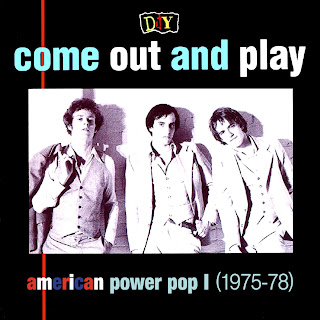
I kid you not when I tell you this selection of pure gold nuggets and curiosities from the USA’s first wave of post 60s power pop makes for pretty much essential listening. Taking their cues from The Byrds and Big Star, a whole suave of bands paid homage to their heroes and opened new musical avenues in the process.
Kicking off with (now) well known ‘Shake Some Action’ by Flamin’ Groovies, you might know what to expect. There are plenty of 60s influences here and while possibly one of the best known tracks to be included as part of this collection, it’s not the best by any means. That said, it’s still good and very representative of this bands mid-late 70s stuff. ‘Wayside’ by Artful Dodger has a more contemporary 70s feel and much less garage sound. If you don’t know these guys and like Cheap Trick, I have a feeling they’re worthy of investigating. Sadly, to the best of my knowledge (and at the time of writing this) their three albums are out of print and have never been issued on CD, so that’s about all I can say about them. I’d really love to hear more, so if anyone can shed any light, that’d be great.
I was never a great fan of Billy Squier, but have often thought I should check out his old band Piper, purely on the strength of their song here. ‘Can’t Wait’ is great pop, but as you might expect, has rockier guitars than some of the other bands here. It took me quite a while to appreciate how good this track is, as I’ve never been especially fond of Squier’s vocals, but its quirky musical arrangement has a complexity which makes it stand out more than some. That’s all relative though; don’t expect kitchen sink complexity of a Todd Rundgren standard. This CD offers two cuts by The Nerves, fronted by future Plimsouls man Peter Case. The first, ‘Hanging On The Telephone’ will be familiar to all, having been covered by Blondie who made the song a hit, despite not changing its arrangement in the slightest. The almost punky energy still makes this two minute song as vital as it was back in the late 70s. The second Nerves track, ‘When You Find Out’, is pure straight-up 60s R&B. Wearing influences clearly on their sleeves, this honest tribute to The Zombies and The Yarbirds is equally essential listening.
‘The Summer Sun’ by the almost legendary Chris Stamey is also very strong. It’s another sixties inspired song (as with most of this wave of power pop), with a strong chorus and vocal melodies. The over all arrangement doesn’t veer at all from very familiar territory. For a better example of what this man can do, check out ‘(I Thought) You Wanted To Know’ from ‘Shake It Up: American Power Pop Volume II’ [reviewed elsewhere on this site]. Cheap Trick, like the Flamin’ Groovies, will require no introduction. ‘Southern Girls’ is from their ‘In Color’ album; a classic of the power pop genre – maybe even a bona-fide classic in its own right.
I must be missing something here. I’ve read in a few places before that The Scruffs’ album ‘Wanna Meet The Scruffs’ is a classic. Based on the track here, The Scruffs leave me feeling somewhat underwhelmed. Musically, it sounds fine – a little Big Star, a little Pezband, but vocally it grates. The singer’s voice is strong, but has a slightly odd croony tone, like the vocalist from Prix, but not quite that bad. This is one of the few tracks here which I find myself skipping regularly, alongside The Names, who don’t do much for me for pretty much the same reasons.
I must be missing something here. I’ve read in a few places before that The Scruffs’ album ‘Wanna Meet The Scruffs’ is a classic. Based on the track here, The Scruffs leave me feeling somewhat underwhelmed. Musically, it sounds fine – a little Big Star, a little Pezband, but vocally it grates. The singer’s voice is strong, but has a slightly odd croony tone, like the vocalist from Prix, but not quite that bad. This is one of the few tracks here which I find myself skipping regularly, alongside The Names, who don’t do much for me for pretty much the same reasons.
Upon its single release, ‘Christi Girl’ by The Flashcubes supposedly wasn’t bought by many people. Some sources have claimed that it could be found in bargain bins in many of New York’s record stores. The song itself isn’t that bad. It has more than a nod to Gary Puckett rather than Big Star, which makes me think that had anyone actually heard it at the time, it may have reached a slightly broader audience than some power pop releases. Having missed out on success the first time around, The Flashcubes re-united in 1993 and recorded new material. You can read more about them at their official website.
After a twee intro, ‘All Kindsa Girls’ by The Real Kids is a cult classic. Showing the energy of the Flamin’ Groovies but less of an obvious sixties influence, this song has a proto-punk energy and as with The Nerves, should appeal to those who never quite understood the classic Ramones raw dumbness. As for this compilations title cut, performed by The Paley Brothers, one can assume they were either deathly serious or going for full sugar-overload with a knowing wink. There are handclaps, Phil Spector inspired glockenspiels, and a general infectiousness that’s as annoying as it is entertaining. It’s like hearing ‘Sugar Sugar’ by The Archies given a dusting down by mid seventies pop genius. I love it. I hate it. I love it.
Closing this compilation is the haunting ‘I Am The Cosmos’ by Big Star man Chris Bell. There’s a definite uneasiness to parts of this recording. While not obviously bleak like some of the songs from Big Star’s ‘Third’ (recorded after Bell’s departure, interestingly), and despite ringing guitars and a full band arrangement, there’s something in this song that’s a little unsettling It sounds like a man with the world on his shoulders, not quite beautiful, never ugly, always fragile. Not a fist-in-face cry for help, but it comes as no surprise that after leaving Big Star in Alex Chilton’s hands 1972, Bell attempted suicide a few times. He would eventually die in a car accident in 1978. ‘I Am The Cosmos’ is up there with the best of the Big Star stuff and can be easily found elsewhere on the ‘Big Star Story’ compilation CD.
This CD, issued by Rhino in 1993 is now out of print. You owe it to yourselves to try and track one down.
August 2007