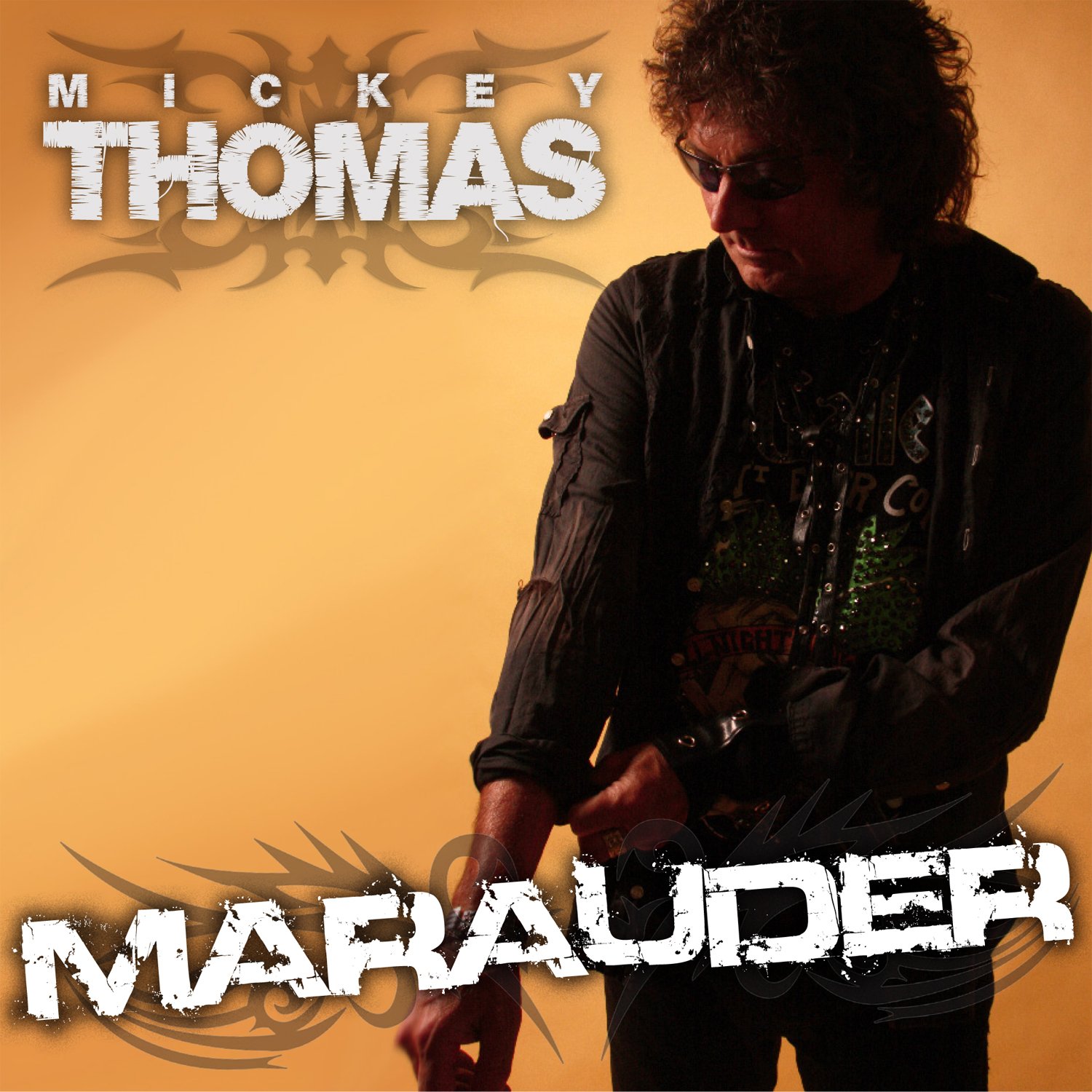
 After Mickey Thomas joined Jefferson Starship in 1979, they entered the most commercial phase of their career, with Thomas always seen as a key figure in pushing the band in a more pop direction (culminating in its Starship incarnation). It’s not entirely fair to blame Mickey Thomas for that, since he joined the band on the cusp of the new decade, and lots of bands turned rather more poppy in the 80s, so it likely would have happened to Jefferson Starship too, with or without the help of Mickey Thomas. Although all of a very 80s persuasion, some of his work with that band is great, however, with ‘Freedom at Point Zero (1979), ‘Knee Deep In The Hoopla (1985) and ‘No Protection’ (1987) all worth investigating.
Category Archives: Album & EP Reviews
Y LUV – How Chill Can You Let Go
 This Los Angeles quartet have already released two EPs (‘Nothing Matters’ and ‘So I Play’) and gathered favourable comparisons to Arctic Monkeys, The Killers and Kings of Leon. This third EP, released in 2011, features more glossy, well-produced indie-pop. Despite the band’s tendency to shift styles between songs, each of the numbers featured on the curiously titled ‘How Chill Can You Let Go’ features a bias towards a decent hook…and with radio-friendly material such as this, that’s obviously very important.
‘All Night’ has an electronic pulse beat which at first sounds slightly intrusive, but is made palatable by an echoing guitar sound which has a hint of early New Order. There’s a sense of something lurking, as if the song is about to break out into something bigger; by the time that bigger chorus appears, Y Luv adopt a musical style that’s comparable to The Killers. An okay number, but nowhere near the best on offer here. ‘Never Touch The Ground’ is far better all round, moving away from the electronic elements and adopting a more indie-pop quality. Marcello Dubaz provides a strong musical backbone with a quirky drum pattern and the band sound tight throughout, occasionally mining a similar musical territory to Irish indie-poppers The Fallen Drakes. A good number musically, but it is lead vocalist Freddy Janney who really shines here. The chorus in itself is a strong one, since it features a very calculated, easily sing-able ‘whoah-oh-oh’ which is destined to stick in the head.
Working around some fairly sizable guitar chords, the mid paced ‘Be Free’ is a little more ordinary. Once Janney hits the big notes, not always as tuneful as before, it’s easier to spot where any Kings of Leon comparisons may have been made. On the plus side, Luke Hanna’s more upfront bass sound is great here and absolutely pivotal in keeping the track moving. ‘Feel Sound’ is the EPs strongest track, without question. With verses which rely on staccato guitar loops, it’s hard not to be reminded of The Temper Trap – specifically their big hit ‘Sweet Disposition’ – but Y Luv take those sounds and expand on them. Eventually those loops build to a big, guitar-fuelled climax, full of crashing chords and new wave elements which sound like guitar-synths. Before that climax, the clean guitar work and harmony vocals show Y Luv in their strongest and most consistent light. ‘Super Heavy’ is more rock oriented than the other tracks, with lead guitarist Sam Nardella offering a retro riff with a medium sized groove. As reasonable as that simple riff is, it’s his fuzzy lead guitar parts which really catch the ear. Under those fuzzy leads, Hanna plays a few busy bass riffs, although never stepping too far outside his anchoring role.
Despite a middling start to this EP, Y Luv are a promising bunch, and there are a couple of songs on ‘How Chill Can You Let Go’ definitely worth investigating. It’s also worth mentioning, if you enjoy Y Luv, then checking out Dom Liberati’s ‘The Good Hurt’ is strongly advised too.
June 2011
ONLY LIVING BOY – Hide Nothing
 Named after the Simon and Garfunkel song, Only Living Boy have a sound which is incredibly retro. Not retro in a New York singer songwriter sense, as their name would imply; on ‘Hide Nothing’ – the band’s second full-length release – their sound is a fusion of many great pieces of late 60s/early 70s vinyl, with a strong bias towards a blues-rock fusion, often delivered with a distorted edginess.
The lead track ‘Lonely Puppy Blues’ captures their core sound very well within its four minutes – with Joe Cirotti’s emotive wail upfront, accompanied by mix of clean jangly guitar work and a huge stomping riff cutting between the vocal sections. Even with the fast paced rock-out which pulls the track to a close, there’s a more commercial edge at play than some of the other numbers. The title song brings a few more traditional blues grooves to the fore, particularly with its lead guitar fills. While Cirotti’s lead vocal is still heavily processed, the soulful cry within also hints at something a little older, a little more classic sounding. Musically, it’s an incredibly solid affair, with Trevor Newcomb’s drums remaining steady throughout, with moments of dominant ride cymbal. ‘Sunny Day Man’ opts for something a little different again – its huge riff hinting at a stoner groove, while its verses offer up a funky looseness which would befit Josh Homme during his lighter moments.
While each of those three numbers focuses on a different element of Only Living Boy’s work, there’s an old fashioned fuzziness running through the songs, which gives them a certain kind of consistency: this is the sound of a band meant to be listened to on vinyl. This feeling is hammered home during ‘Demon Shuffle Part 2’ with its jarring, grinding riff and classic soloing, which occasionally lapses into a garage-esque looseness. And it’s brave too – while the verses feature typically edgy distorted vocals and riffing, the chorus is a contrast, with almost Grateful Dead style harmonies lurking underneath the guitars.
‘Open You Up’ comes equipped with a driving riff which combines a Hendrixy/Cry of Love tone in places with solid staccato rhythms plus a dual vocal from Cirotti and bassist Eric Curley. A mid section opts for gentle atmospherics; the vocals are hushed, the bass gently wanders and a clean guitar plays lines full of whammy bar. After a couple of minutes of this, though, it starts to drag a tad (maybe it would work better in a live setting?). The Hendrix inspired riff provides the strongest link here – in addition to the obvious spaciousness, a lack of real hook means the track really doesn’t sustain its five minute duration. It’s not as if Only Living Boy are incapable of stretching things out to good effect, though, since ‘Priority One’ is almost the same length but makes for great listening throughout, thanks to a really solid groove underpinned by a swaggering bass line and drum patterns. Likewise, ‘Burning’ is home to some great moments and mood changes: a standard blues opening gives way to a 70s hard rock riff intercut with blues vocal sections. The band are on good form throughout this number – particularly Curley, who contributes some great lead bass work which, at times, is reminiscent of the blues-rock greats, his upfront style hinting at influences from Jack Bruce and John Paul Jones. With his heavily treated vocal lurking somewhere beneath the hard grooves, Cirotti’s input almost feels redundant – it really is the music which counts here.
Just when you think you’ve got Only Living Boy figured, they throw a curve ball. ‘Ronnie Ronzony’ is a fifty second burst of noise, heavily indebted to the 80’s US hardcore punk scene. Although there are moments of slide guitar amongst the shouting – and after a couple of listens, it’s still clearly the work of Only Living Boy – the mood of this track is best likened to classic bands like Circle Jerks and 7Seconds and would have fit in well during their early live sets. Initially, this track may have been unexpected as part of a garage-rock disc, but it really clears the cobwebs.
While ‘Hide Nothing’ has some great rock-out moments (especially ‘Burning’, ‘Sunny Day Man’ and ‘Demon Shuffle Part 2’), it’s on the more understated tunes Only Living Boy really come into their own as a band and stand out from the crowd. ‘Demon Shuffle Part 1’ is a number which is best described as a backporch affair, full of acoustic slide guitar, delivered with a hard twang. ‘Bag of Bullets’ shows a very mature sound with slow acoustic riffs; these are played in a very measured and sure fashion, underpinned by a solid drum line and occasional staccato work.
There is some great material on this album. Only Living Boy may not always have the directness and all-round punch of some other bands within their sub-genre, but that doesn’t seem to matter. On this second album, they fuse garage rock and garage blues sounds with occasional jam-band aesthetics to achieve some very enjoyable results.
June 2011
YES – Fly From Here
 As the first new studio album from Yes in a decade, ‘Fly From Here’ was an album eagerly awaited by many Yes fans. A new chapter in the ongoing Yes saga, the album is the first in thirty years not to feature long-serving vocalist Jon Anderson – the last and only Yes album not to feature him previously being 1980’s ‘Drama’.
Filling the vocalist’s position is Canadian Benoit David, a man whose previous credits include singing in a Yes tribute band. In choosing David, Yes have trodden a very dangerous path; as Judas Priest proved previously, replacing a well loved and long-serving vocalist with someone from a tribute band isn’t always the best way to go. However, listening to David’s performances on ‘Fly From Here’, he’s clearly a gifted performer – and perhaps most importantly, not just an Anderson clone. While, naturally, his vocal style has some similarity, it has almost as much in common with Trevor Horn’s ‘Drama’ performances at times, as well as bringing some of his own style.
In addition to being the first album since ‘Drama’ not to feature Anderson, there are other very strong comparisons to that sorely under-rated disc: ‘Fly From Here’ welcomes ‘Drama’-era members Geoff Downes and Trevor Horn back into the fold. Downes last played keyboards with Yes on the ‘Drama’ album and tour, a role he steps into once again here, while Horn is involved in a production capacity. A different vocalist and the presence of the Buggles chaps may have provided enough reason to make comparisons with ‘Drama’, but there’s another strong connection here – more of which later…
The album is presented in two halves, one being taken up by the epic title track and the other comprised of five distinctly separate numbers. The title track isn’t a total slog across it’s almost twenty five minutes, though, since track breaks have been provided; a couple of its sections could easily be approached as standalone numbers.
That title cut begins with an overture where Geoff Downes’s staccato piano work is punctuated by a heavy guitar chord, perhaps Yes’s most aggressive since ‘Machine Messiah’ back in 1980. The full band then joins: Alan White’s drumming provides an almost military air and Downes’s keyboards are a little pompous. All the while, Chris Squire’s bass work is presented in a dominant role, almost as if to remind the listener that no matter how many Yes-men come and go, whatever happens, it’s his band. After almost two minutes, we move into the main part of the suite.
The next part, ‘We Can Fly’ is, historically, very interesting. The bones of the song come from ‘We Can Fly From Here’, which was the first thing Trevor Horn and Geoff Downes wrote during their brief Yes tenure back in 1980. It was demoed and left on the shelf, and subsequently revisited on the ‘Drama’ tour. After Horn and Downes left Yes and reconvened Buggles, they attempted to finish the song a second time, expanding it to a two part suite, only then to then abandon it once again. Three decades later, it finds a new and final home. While the core of the track is very recognisable as being that number played live back in 1980, it’s bigger, more assured. The biggest change comes with regard to the early version’s fast, rather spiky sections. These have been slowed down and smoothed out, making them far better suited to a a space within Yes epic. Even though it’s not as edgy as before, Squire’s bassline remains the driving force. Downes’s keyboards add moments of prog parpiness which are not always especially refined, while Steve Howe’s guitar lines are wandery and not always the most tuneful, but still, they’re far better suited than his guitar parts present on the 1980 live take. Benoit David, meanwhile, is left fronting things and he does a very good job, it has to be said. On the quieter moments, his voice isn’t too dissimilar to that of Horn, so it’s easy to see why Yes chose this particular line up and moment in time to resurrect a thirty year old piece of music.
Part three, ‘Sad Night at The Airfield’, offers something a little less pompy. It begins with David’s vocal set against acoustic backing courstesy of Howe. David sounds like his own man here, not necessarily an Anderson/Horn impersonator, which works very much in his favour. As the track moves into its main musical theme, there’s something almost cinematic at play. The vocals are up front, with David backed by Howe and Squire in harmony, while Downes provides a solid blanket of sound. It’s not especially proggy, but doesn’t quite fall into the AOR bracket either. By the time the track builds to a climax, with Howe delivering a couple of short but perfectly formed solos – full of vibrato – it’s obvious that this line-up of Yes has plenty going for it. Part three, ‘Madman at the Screens’, moves from sweeping atmospheres, bringing a staccato arrangement with plenty of interplay between bass and keys. Once again, the slightly sharper elements make it almost impossible not to make direct comparisons with ‘Drama’. Song wise, it’s a little lacking after the first two parts of this musical suite, but there are features within the overall performance which are commendable, not least of all the vocal harmonies.
At this point – approximately twenty minutes in – Yes run out of steam. The next section, ‘Bumpy Ride’ is a short (mostly instrumental) piece which isn’t anywhere near as interesting as they probably think it is. Squire’s basslines provide the main thrust and while it may sound quirky on the surface, closer inspection shows it to be little more than a 4/4 arrangement, alternating with something which sounds like 4/4 with the odd beat missing (possibly 7/8?). Once the loop has played through a couple of times, things drop out for a quick vocal line and then it’s back to the beginning again. This is followed by a reprise of ‘Fly From Here’, just to remind the listener that this is a suite and should be enjoyed that way, despite parts of it being written three decades apart. As always with Yes songs which would have once taken up an entire side of plastic, this would have benefitted from a little trim here and there – mostly near the end – but it’s good moments are among Yes’s best in a long while.
The shorter pieces of music are a mixed bag. ‘Solitaire’, as its title suggests, is a Steve Howe solo piece. In the spirit of 1970’s ‘Clap’ and 1971’s lovely ‘Mood For a Day’, it captures Howe’s playing in a very reflective style; this rather jaunty little tune finds his fingers dancing on the fretboard with a lightness of touch that’s only really rivalled by Steve Hackett. Throwing in a few harmonics at the end, it encompasses everything that’s always been great about the acoustic side of Howe’s work. ‘The Man You Always Wanted Me To Be’ is an AOR workout which is quite pleasant and features some good harmonies, but beyond those harmonies, it’s rather ordinary and slightly one-paced. Also, given the smoothness of the vocals and Downes’s gentle keyboard work, Howe’s electric lead appears slightly jarring in a couple of places; he opts for his signature tones and, as such, his easily recognisable jazzy noodlings seem a bit out of place, particularly during the closing moments.
The poppy ‘Hour of Need’ showcases the more commercial side of Yes. Although only three minutes long, it is still host to many great features. Howe’s guitar lines shimmer, while the harmony filled vocals provide an upbeat quality. David’s high lead presents the only time here he feels it necessary to become a Jon Anderson impersonator, but due to the great feeling all round, the number doesn’t suffer for that. The only weak link is Downes’s overtly old school keyboard sound, which could have graced any number of 70s and 80s prog recordings. Luckily, he uses it sparingly. His keyboard work also sounds a little iffy on parts of ‘Into The Storm’, where it sounds very eighties; almost like a demo sketch at times, as if he’s thought “that’ll do until I can think of something better”. It’s another number which makes great use of three part harmonies and the rhythms are tight throughout, but its busy nature can become a little wearing after about the halfway mark. On the plus side, Steve Howe’s preferred guitar style – hovering between disjointed jazzy notes and vibrato lead – really works on this number and he’s given the last couple of minutes to fill; a job he does more than admirably.
The moody ‘Life On a Film Set’ presents the second piece which pre-dates the recording sessions for ‘Fly From Here’. In this case, the song is adapted from an old Buggles demo entitled ‘Riding a Tide’. As with ‘We Can Fly’, this is a vast improvement on the earlier attempt, even though the main structure remains the same. In this case, replacing a drum machine track with Alan White’s kit makes a world of difference. David’s vocal is faithful to Trevor Horn’s original demo take and Howe’s Spanish influenced guitar lines throughout the second half really bring an old musical idea to life. Musically, this number fits nicely alongside ‘Sad Night at The Airfield’; cinematic melancholy is definitely Yes’s trump card this time around.
Although there a couple of occasions where things lapse into over-indulgence, ‘Fly From Here’ manages to be a surprisingly accessible album, even when tackled in one sitting. In terms of quality, it’s certainly the band’s most consistent (and interesting) work since 1994’s ‘Talk’. For long-time fans, ‘Fly From Here’ provides closure on a much earlier chapter of this long-running band’s history, while simultaneously opening a new one…making it more than “just another Yes album”.
July 2011
VARIOUS ARTISTS – Rave On Buddy Holly
 Buddy Holly died tragically at age 22. In a pre-Beatle world, alongside Elvis Presley, he is undoubtedly one of music’s most important figures. He never had the luxury to time to grow and experiment as an artist, yet in his short career he produced songs which have spanned generations. Had he lived, in 2011 Holly would have been 75 years old. In a celebration of his career, ‘Rave On Buddy Holly’ brings together a host of classic and cult musicians to put their own stamp on his songs. The fact that the artists here hail from a wide range musical backgrounds is tribute in itself to how far-reaching Holly’s best-loved material has been.
As expected, the contribution from She & Him (featuring Zooey Deschanel & M Ward) is lovely. During their faithful run through of ‘Oh Boy’, Ward’s guitar work has a fantastic live sound, while Deschanel’s vocal has a breathy, natural quality. If you’ve loved the She & Him albums, then you’ll find this to be a worthy addition to their catalogue of recordings. In complete contrast, ‘Rave On’ in the hands of The Strokes’ Julian Casablancas gets rebuilt as a clanking electronic affair, absolutely doused in reverb, on both the music and vocals. It’s ugly, yet somehow, it’s compelling listening. The vocal melody from Holly’s original is almost intact, but otherwise it’s unrecognisable. [For a great version of this number, check out the self-titled album by The Real Kids].
Taking ‘That’ll Be The Day’ and twisting it into a low-key, rootsy affair is a brave move from Modest Mouse. Part back-porch stomp, part droning darkness, it becomes a number which has more in common with Califone, The Low Anthem or Wilco in a bad mood than it actually does with The Crickets. Kid Rock’s treatment of ‘Well All Right’ has a rather surprising tasteful quality and soulful air. Opening with parping trumpets and solid bassline, at first it sounds like the rest of the arrangement will kick in at any moment – and then it doesn’t! Completely free of drums, most of the percussion is provided by handclaps, over which Rock’s lead vocal is a strong one, almost having a John Mellencamp quality, albeit with more black vocal stylings. A well-arranged backing vocal really rounds things out to great effect. For a man who has based most of his career on bravado, this is startlingly restrained.
Paul McCartney’s reading of ‘It’s So Easy’ takes the bouncy, summery qualities of The Crickets’ 1958 recording and approaches them in a measured, rocky manner. The guitars have a fuzzy, slightly unsubtle edge, but they’re not as fuzzy as the lead vocal which is stylised and distorted. It probably would have been safer to for Macca to approach this in a by-numbers fashion – after all, he and John Lennon cut their teeth on old rock ‘n’ roll discs – but perhaps that would have been too easy. Whatever, it’s fantastic, and especially tough sounding for Macca. Offering no real surprises, garage band The Detroit Cobras turn the poppy ‘Heartbeat’ into a guitar jangling, sassy vocalled number, while restraining themselves enough for the song to retain its lovable, lightweight feel. While their treatment of the song is okay, given its simplistic riff, they could have used that as a base and created something more interesting with it then they have here.
Pop/rock darlings Florence + The Machine present an interesting take on ‘Not Fade Away’. The music is a little disjointed, very percussion heavy, with an upright bass sound like a stretching rubber band. Flo Welch’s lead vocal is as distinctive as ever, even though for the first half of the number she’s keeping things controlled. As the number progresses, she naturally gets louder and by the end is attacking the words at full pelt. The clanking percussion is joined by blues-rock guitar lines at the end, over which Welch offers a little vocal accompaniment. Perhaps what is most pleasing about this is it’s jam-session quality; very refreshing after the studio perfection of the bands multi-million selling ‘Lungs’ LP. The legendary Graham Nash contributes a very traditional version of ‘Raining In My Heart’, which centres on his vocal with subtle piano and strings backing. It’s pleasant, but certainly nothing more. Similarly ordinary is ‘Words of Love’ featuring Patti Smith. Her vocal showcases her trademark warble, yet the performance is so pedestrian. Like Graham Nash, it offers nothing objectionable, but it’s not the best thing featured on this tribute disc, not by far. Interestingly, My Morning Jacket’s cover of ‘True Love Ways’ is as faithful as possible, and as such, could have sounded as indifferent as Graham Nash’s number. However, there’s something in its heart-wrenching style which really suits Jim James’s crying vocal. Once his voice is given a more than suitable blanket of strings, it becomes a number which – while oft heard in various versions – becomes worth hearing again.
Perhaps most surprising, is soul vocalist Cee Lo Green’s re-working of the Leiber/Stoller number ‘(You’re So Square), Baby I don’t Care’. He’s avoided all temptation to turn the number into an overwrought, over-souled affair, or even worse, a nasty, sweaty R’n’B tour-de-force. The basis of his version features a Holly-worthy skiffle guitar, while the vocal remains fairly light and tuneful. With a suitably upbeat arrangement combined with a good all-round performance, Green has captured the essence of fun required, while still making it his own. A duet by Fiona Apple and Jon Brion on ‘Everyday’ is as faithful to the original as the duo could possibly manage, right down to plinking glockenspiels. Even so, it’s perfectly charming, suiting both vocalists rather well. Similarly, cult hero Nick Lowe is completely respectful to ‘I’m Changin’ All Those Changes’, with a cover that features solid skiffle guitar work and upright bass. Lowe’s vocal is very natural throughout, even with high “oo”s in a Buddy Holly style never sounding forced.
Despite being a longtime fan, not even Lowe’s performance captures Buddy Holly as well as alt-pop starlet Jenny O, whom for ‘I’m Gonna Love You Too’ really hits the spot. With breezy arrangement full of harmonies, shuffling drums and twanged guitars the musicians really seem to understand the mood required (and indeed, the spirit of the Holly recording) while Jenny’s vocal also has a quirkiness which is very well suited. As always with these things, it may not quite match the original version for all round greatness, but it’s a really enjoyable run-through, nevertheless.
A tribute album wouldn’t be the same without an absolute turkey, and that honour this time around goes to Lou Reed. New York’s favourite son takes ‘Peggy Sue’ (arguably Holly’s most famous song) and mangles it into a metallic mess. His guitar work has the subtlety of someone playing with a broken arm, while electronic treatments fill out the sound with dirgy noises. Over the top, Reed croons badly, going way off key regularly. A backing vocal which sounds like an old woman makes matters worse and a really aggressive guitar solo manages to hammer out any iota of class the tune ever had. Lou is fantastic – one of the world’s great storytellers – but this is almost a joke. Even X’s John Doe labouring his way through ‘Peggy Sue Got Married’ is better, and that’s pushing it. Doe’s vocals warble and squawk like a bad John Cale impersonator and his guitar work grates, but even he had the good sense to bring in a solid drummer and talented pianist to help take the focus off his wobbliness.
Those looking for completely straight ahead renditions of some of Holly’s best loved tunes might find approximately half of this disc a little challenging. Naturally some things work far better than others and there’s very little here that could be categorized as awful. Unlike the 2011 metal “tribute” to Frank Sinatra, at least most of these covers actually work in their own right, providing entertaining listening – and perhaps more importantly, these artists actually seem to understand (and like) Buddy Holly and what he bought to the world of music. ‘Rave On Buddy Holly’ is a definitely a worthwhile collection filler for anyone interested in any of the featured performers. Lou Reed fans, however, may find themselves feeling short-changed.
June 2011