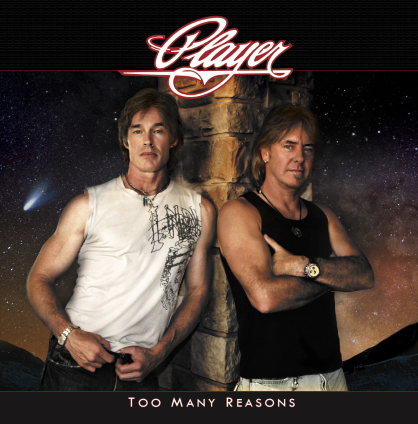
 Those of a certain age should already be familiar with some of Player’s previous work, since the pop-rockers scored a huge US hit in 1978 with ‘Baby Come Back’, a track which even entered the UK chart peaking just inside the top 40. In their 70s heyday, the band toured with Heart, Boz Scaggs and even scored a place as support band for the slightly worse-for-wear Eric Clapton on his ‘Slowhand’ tour.
Tag Archives: pop
STATUS QUO – Picturesque Matchstickable Messages
 In 1967, Britain was in the midst of a psychedelic musical revolution: The Beatles released an undeniable classic in ‘Sgt Pepper’, Steve Winwood’s Traffic released the rather more cult ‘Mr Fantasy’, while The Jimi Hendrix Experience and Cream fused a psychedelic spirit with blues influences on their respective albums, ‘Axis: Bold as Love’ and ‘Disreali Gears’. By 1968, the psychedelic vibe had started to fade slightly, although it was the year in which The Zombies released ‘Odessey and Oracle’, which despite poor sales at the time, is possibly the greatest piece of British psych-pop. In that same year, Status Quo released their debut, ‘Picturesque Matchstickable Messages’.
‘Pictures of Matchstick Men’ may feel like a well worn classic now and familiar to everyone, but what of the rest of that debut album? The opening track ‘Veils of Melancholy’ sounds rather like ‘Pictures of Matchstick Men’ with the notes played in wrong order, which probably says a lot about why it bombed when released as a single. But, while ‘Matchstick Men’ feels like a piece of late-sixties happiness, ‘Veils’ has an effect that’s slightly sinister. ‘When My Mind Is Not Live’ typifies the psych-pop movement, feeling like a Traffic and Tomorrow hybrid. ‘Gentleman Joe’s Sidewalk Cafe’ is rather more whimsical. Written by songwriter-for-hire Kenny Young (erroneously credited on occasion to Bob Young, who’d later be a regular Quo collaborator), this Kinks-esque number was originally scheduled to be the single. Although a decent album track, I’m not so sure about its single potential – they made the right choice releasing it on the flip-side of ‘Matchstick Men’. ‘Paradise Flat’, takes the psych elements slightly farther, complete with deep voice-over on the mid section. It’s hard to tell whether the voice over always sounded bad, or whether time has been unkind.
It’s interesting to note that Francis Rossi doesn’t play such a pivotal role on a lot of these songs, as he would in later years. Although the heavily phased guitars are important to the end product, it’s the electric organ which seems to dominate the early Quo’s multi-layered sound (courtesy of Roy Lynes, who remained with the band until 1970). Surprising as it may seem, the well-loved title cut isn’t the best track, nor is it the most psychedelic. That honour falls to Alan Lancaster’s ‘Sunny Cellophane Skies’. Rossi’s heavily treated guitar is the track’s driving force, coupled by multi-layered vocals, which evoke the period.
The album is padded out with cover material, all of which is more in keeping with 60s beat pop than psychedelia. In the 21st Century, that makes for okay listening for anyone with a liking for stuff of that retro style, but I suspect that in 1968, some of it felt a little ordinary. ‘Ice In The Sun’ and ‘Elizabeth Dreams’ (both written by Marty Wilde) are probably the best of the bunch with regard to the said cover material, while the Quo’s treatment of The Lemon Pipers’‘Green Tambourine’ isn’t too bad either. The cover of the Bee Gees’ ‘Spicks and Specks’ is horribly misjudged – while Gibb, Gibb and Gibb would prove themselves to be at the forefront of the songwriting masterclass, this isn’t one of their better late 60s tunes as it is, and it definitely doesn’t suit Status Quo.
‘Picturesque Matchstickable Messages’ contains some enjoyable music during its 34 minutes, even if it isn’t quite as inventive as some other albums of the period. The following year’s ‘Spare Parts’ followed a similar musical path, but had little commercial success. By the end of the decade, the psychedelic times were over. If Status Quo had thrown in the towel, they’d likely be remembered as one of Britain’s greatest cult bands.
[In 2009, ‘Picturesque’ was re-issued as a 2CD Deluxe Edition, featuring both mono and stereo mixes of the album as well as non-album singles and BBC Sessions. Also included are rare recordings by the pre-Quo band, in both their Spectres and Traffic Jam guises].
January 2010
RINGO STARR – Y Not

Ringo Starr needs no introduction. He’s one of the most famous rock drummers on the planet, if not the most famous. Many of his post-Beatles solo records have been criminally overlooked. This offering from 2010 is surprisingly good – almost as good as 2008’s ‘Liverpool 8’ – and it’s another disc featuring a roll-call of famous chums.
The album begins with a bluesy rocker, ‘Fill In The Blanks’, driven by guitar work courtesy of the Eagles’ Joe Walsh. Nostalgia is often a strong feature of Starr’s solo work and it’s a recurring theme throughout this album. ‘Peace Dream’ is a gentle tale of hippie ideals. It also recalls Ringo’s association with Lennon and John and Yoko’s Bed For Peace stunt.So much time can pass, but it seems that once you’ve been a Beatle, you’ll always be a Beatle. ‘The Other Side of Liverpool’ (co-written by Dave Stewart) concerns Ringo’s childhood, his father leaving and his formative years in the north of England.Like the title track of ‘Liverpool 8’ before it, this gives another simply written insight into Ringo’s life and has plenty of charm.
The bluesy ‘Can’t Do It Wrong’ (co-written with long-time collaborator Gary Burr) suits Ringo’s style perfectly and features some decent slide guitar and an appearance from Edgar Winter on saxophone.‘Everybody Wins’ is a definite stand out.A re-recording of an old b-side, this new arrangement makes good use of organ played by Benmont Tench.‘Time’ features some smart bass playing and fiddle – these flourishes make a striking change from the simplicity of Starr’s usual approach.
The title cut is quirky and initial listens may make the listener wonder what Ringo was thinking. The drum sounds and female backing vocals on this make it sound like a cast off from 1992. Repeated listens allow its better qualities to shine through: it features tabla and Asian vocals (an Asian slant is always fine on a Beatle-related release – I’m sure George would’ve approved) and another welcome upping in tempo. The soulful ‘Who’s Your Daddy?’ features all of Ringo’s All-Starr Band in top form.Guesting on lead vocals, Joss Stone does a top job…so much so, in fact that when Ringo’s vocal’s creep in (limited mostly to asking ‘Who’s Your Daddy?’) they sound funny – both in the peculiar and the ha-ha sense. It’s probable that Mr Starkey is expecting us to treat this as good-natured fun.
‘Walk With You’, the album’s lead single is, rather surprisingly, the album’s dullest track. It reaches little more than a plod and lyrically it’s a little trite (not an especially good effort from the oft-praised Van Dyke Parks, who gets a co-write here). You’d hope that Paul McCartney’s presence on bass and vocals would lift it little, but even Macca sounds slightly uncomfortable, his vocal in a key which is slightly too high. Other reviews of this album have suggested this track is the best thing on ‘Y Not’; it isn’t. Perhaps since this represents the first time Paul and Ringo have harmonized in such a way, those who think it’s the best track only think so because, in their hearts, they desperately wanted it to be so.
Granted, Ringo is not the greatest vocalist or songwriter and a couple of the songs here can feel a little one-paced, but he has enough optimism to make this a wholly charming and truly worthwhile experience. Overall, ‘Y Not’ is a worthy follow-up to the really solid ‘Liverpool 8’.
February 2010
GREGG ALEXANDER – Intoxifornication

It’s probably fair to say that if you heard Gregg Alexander or were aware of his work in the early 90s, you almost certainly discovered him by accident. This seems a pity as this, his second solo album, is a decent record. Not perfect by any stretch of the imagination, but like Prince (who seems an obvious influence on bits of the album), sometimes it’s the flaws which make it more interesting.
Alongside a handful of tunes featured in different form on ‘Michigan Rain’ (Gregg’s incredibly rare debut), this sophomore album features some new material. Pop-rock drum loops mixed with rock guitars provided the basis for the smut-driven ‘Smokin’ In Bed’ and ‘Electric Girlfriend’, both of which very much set the tone for this album. The title track, as you’d expect, follows suit, but benefits from a punchy guitar riff and a verse with a call and response vocal (it’s amazing what you can do with a ‘hey hey’ if you’re gifted enough), but it’s the pre-chorus which is the real star. Gregg was always meant to be on the radio – and once you hear this, you get the feeling that he presented this track (and indeed the rest of this album) with nothing but arrogant self-belief. ‘I Wanna Seduce You’ is slightly different, in that the slightly alternative leanings present all but vanish; this track is pure 80s chorus-driven goodness. It reminds me of a Def Leppard cast off except it’s better than that. ‘Save Me From Myself’ (one of the songs originally from ‘Michigan Rain’) provides a decent counterpoint to a lot of the more up-beat tunes and has a vocal delivered with anguish. Even though it’s never going to be a classic album, I’d say the only time the album really misses the mark is on the uncredited bonus track (listed on the Japanese pressing as ‘Wear Your Love Beside You’). I’m not sure what happened here, but Gregg’s voice sounds lethargic and the music sounds like it came from a tape which was slightly warped. I suppose it was an uncredited track for good reason.
After the release of the album Gregg co-wrote most of the songs on ‘Arrive All Over You’ the debut album by Danielle Brisebois (who’d provided backing vocals on ‘Intoxifornication’). As you may expect, her album continued where Gregg’s ended with a similar style of power pop, rock and tongue in cheek smut. Unsurprisingly, her album was greeted with similar indifference by the public at large. [At the time of writing, Danielle’s second album remains recorded but unreleased].
I’d owned ‘Intoxifornication’ for a couple of years and was convinced that only a few people in the UK would ever hear Gregg Alexander and then at the tail-end of the 1990s, something unbelievable happened. Out of nowhere, a band named New Radicals appeared. Their single ‘You Get What You Give’ was a monster hit. The vocals felt very familiar, but no, it couldn’t be…could it? Gregg Alexander fronting a hit band? Danielle Brisebois appearing on the album too?! Their time had finally come…and then, after a fairly short time in the spotlight, Gregg and Danielle retreated once again, but those with a keen eye and ear can spot Gregg writing songs for Ronan Keating, Rod Stewart, Enrique Iglasias and Danielle writing with Natasha Bedingfield, among others.
Good luck with tracking down any of Gregg or Danielle’s albums mentioned here; they’re worth it.
April 2008