TRAIN – Save Me San Francisco

Photobucket

Like most people in the UK, I first became aware of Train when the title cut from their second album ‘Drops of Jupiter’ became a hit. Mainstream UK success eluded the band for some time after that, but they continued to be major players in the US, with their brand of pop/rock (It is likely that elsewhere on the net you’ll see Train referred to as ‘modern rock’. I’m not going to make such claims since I feel that [a] The bulk of Train’s material is often too pop-based to be lumped in with other band’s who’ve gained such a tag; [b]that’s a rubbish term coined by people who enjoy melodic rock music but hated the term post-grunge and [c] the idea of branding anything ‘modern’ is a mistake; after all, it won’t always be modern – and what are you gonna call it then?). After enjoying ‘Drops of Jupiter’, I tracked down their debut, which also had a lot going for it. Although the slightly rockier edge of their third outing ‘My Private Nation’ gathered mixed responses from fans, it did nothing to damage their solid US following and the release of ‘For Me It’s You’ in 2006 continued their success.

2009’s ‘Save Me San Francisco’ reinstates the original Train line-up (last heard playing together on ‘My Private Nation’) and is produced by Martin Terefe – a producer known for his work with Jason Mraz, James Morrison and KT Tunstall. I find James Morrison to be a dullard, capable of churning out nothing more than easily listening tut and Jason Mraz is hopelessly overrated; however, I think most of KT Tunstall’s output is fab, so there was always hope that Terefe could work wonders for Train.

The single release ‘Hey, Soul Sister’ had major airplay on UK radio stations Absolute and BBC Radio 2, gaining the band a great deal of attention – perhaps the most they’ve ever had from UK audiences. Regardless of this, I hate the song. It’s lightweight, feel-good, here-comes-summer quality is extremely irritating – and having the main musical thrust (if that’s the appropriate word here, and I’m not sure it is) delivered on a ukulele does not help matters. Pat Monahan’s expressive voice also seems to have fallen foul of autotuning (and seemingly not the only time on this album, it must be said). It’s a surprise that this became a UK hit for Train at all; when I first heard it, I had trouble believing it was them. Although Train were never the most alternative of the late 90s radio-friendly bands, this song is so bland it hurts. File somewhere next to Jack Johnson and forget it.

Righto. With that out of the way, from the perspective of someone who owns the previous Train albums, how does the rest of ‘Save Me San Francisco’ shape up? I’m pleased to say that despite my dislike of the single and a small concern that Martin Terefe’s main concentration seems to be on Train’s most commercial aspects (leading to a few of the songs ending up a bit more Maroon 5 than I would have liked), the end result is pretty good – even if it never quite matches the best bits of the previous Train albums.

With an acoustic intro, ‘Save Me San Francisco’ instantly wrong-foots its listeners. Given the choice of producer, it was almost inevitable Train’s sound would lighten up a touch, but once the drums kick in, any big fears you may have had about the album being entirely too soft should be swept aside. What eventually develops over the course of just over four minutes is a decent and confident piece of melodic pop/rock with a slightly retro edge. While never as hard hitting as The Black Crowes, for example, this track has a similar bar-room quality, gathering momentum as it goes and eventually making good use of female backing vocals with a souly vibe. ‘If It’s Love’ goes for a quirky approach; initially, there’s a Collective Soul-esque rhythm, but the chorus is far more poppy. Striking a perfect balance between radio-friendliness and soft rock edge, once it finds its groove it has all the makings of a decent track, even if Monahan’s voice reaches slightly annoying pitch here and there and some of the verses’ lyrics decend into quirkiness for the sake of it.

‘Words’ marks the reappearance of female backing vocals and with the way they’re used evokes a soulful tinge, even though the song itself is pure pop; ‘Marry Me’ is complete acoustic sugariness and while the lyrics are syrupy, the sparse musical arrangement is effective. ‘Breakfast In Bed’ is the album’s other truly horrible affair, largely worked from a programmed loop somewhere between a bossanova nastiness and ‘In The Air Tonight’. However, that’s not its biggest crime: remind me to ask the band what “I wanna please you, I wanna Japanese you / You’re breakfast in bed” is all about. Very poor indeed. Some redemption comes from a heavily pounded drum kit during the end section, but it’s not enough.

If I had to pick a favourite track from ‘Save Me San Francisco’ it would be ‘Parachute’. It’s here Pat Monahan’s voice sounds at its most natural; the music is more dramatic – in fact, it’s great to hear guitarist Jimmy Stafford getting to play something a little harder. Overall, it’s far more in keeping with the rock side of Train’s radio friendly chops and probably could have fit snugly on to ‘My Private Nation’. ‘You Already Know’ also hits harder, but in a totally different way. A memorable chorus is laid over the top of choppy rhythm guitars and while it still has an air of slightly-too-calculated radio-friendliness, it represents part of the reason why Train’s popularity hasn’t wavered in the US.

Train have a sound which works for them on this album and rarely deviate from it (the most obvious stylistic difference being on ‘Hey, Soul Sister’); but overall, that more obvious pop sheen provides just enough variation from previous albums to keep the band from repeating themselves. Despite the album’s lead single being teeth-grindingly irksome and some of the songs occasionally blending into each other, ‘Save Me…’ is a worthy addition to the band’s catalogue, despite its faults. It features a couple of corkers among its eleven songs and on the strength of those, Train aren’t about to hit the buffers just yet.

May 2010
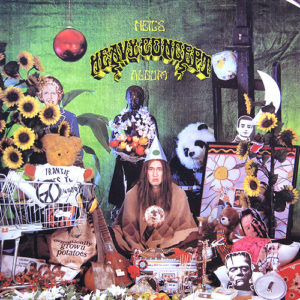
neil’s Heavy Concept Album

You’re probably thinking something along the lines of “isn’t this album a bit novelty for Real Gone?” and on the surface you might be right…but this album offers so much more than novelty quirks.

For those of you who don’t know, neil (often written in lower case) was a hippie character, played by Nigel Planer in the alternative comedy series The Young Ones. After that programme came to an end, Planer reprised the character and recorded this album, full of late 60s/early 70s hippie classics, interspersed with spoken word comedy pieces. What’s of greatest interest here though are the musicians involved – the cast list (in addition to a few of Planer’s comedy chums) features a handful of musicians from the early 70s Canterbury Scene. Dave Stewart (the Hatfield and the North man, not to be confused with the beardy one from the Eurythmics) has the greatest impact, playing lots of instruments as well as handling production duties. The first big question which needs asking is exactly how did Planer get these musicians involved? Did he know them personally?  Planer, unfortunately, has never gone on record to discuss the roll-call of famous faces and they almost certainly never met him at the recording sessions, but there they are.  It almost seems like a minor miracle.

Continue reading

THE CROSS – Shove It

cross

In the late 90s and throughout the 00s, Brian May and Roger Taylor seemed intent on squeezing every penny possible out of the name Queen and its branding. Via various hits collections, a lightweight sing-along musical and the despicable Queen + Paul Rodgers album and shows (surely the most expensive tribute/cabaret band ever), the name Queen has been continually dragged through the mud. With the latter, it would have been far less objectionable if they’d opted for a new start and a new band name – although I suspect May Rodgers Taylor wouldn’t have read very well on an album sleeve. Who knows what Freddie would have thought? I suspect he would have loved the idea of the camp musical – he may have even considered doing something similar himself had things turned out differently, but as for the Queen + Paul Rodgers thing, it’s anyone’s guess.

Anyway, all that aside, the original Queen recorded some brilliant music during their near twenty year reign. They had their off days (step forward ‘Hot Space’), but then every great band does. At their seventies best they recorded some of the most wonderfully grandiose music and throughout the eighties, some of their pop tendencies were unsurpassed. Three of the four members even had success with extra-curricular activities – although, rather unsurprisingly, Roger Taylor’s work often gets overlooked.

After a couple of lightweight solo outings – 1981’s ‘Fun In Space’ and 1984’s ‘Strange Frontier’, Taylor formed a pop-rock band, The Cross, featuring Rog on vocals and guitar as opposed to the drums. They would eventually record three albums, although it’s only their first – ‘Shove It’ – which has ever had a proper UK release.

The album’s title track combines the one two hard rock punch of Queen’s ‘Tear It Up’ with the Fairlight keyboard heart of ‘Radio Ga Ga’. While it shows great promise for attention grabbing and is littered with samples of old Queen songs, it is let down by a chanty vocal, a la ‘Guns In The Sky’ by INXS (featured on their ‘Kick’ masterpiece, also released in 1987). For those of you who are either too young to remember or otherwise have somehow blocked it from your memories, this edgy, technologically savvy approach seemed very much the fashion in the late eighties. Similarly ‘Love Lies Bleeding’ almost descends into a slightly cod rap delivery in places. It saves face by employing a brilliant sharply played rhythm guitar but ultimately there’s a feeling that it tries a little too hard.

The album’s lead single ‘Cowboys and Indians’ employs the softer edge of Taylor’s vocal at times, which combined with a very simple but effective rhythm guitar and female backing vocals makes the end result rather pleasing. Chances are you’ll wish Spike Edney would take his synthesized brass noises and parp off somewhere else. Although given the technology of the time it was easier to use synthesized horns than to hire a real brass section, there’s no substitute for the real thing. Also, like so much other stuff from the period, the bass is very low in the mix (as it is throughout most of the album) and it leaves the listener wondering how many of the bass parts aren’t provided by a keyboard somewhere, despite a real bass player being on board (one Peter Noone – not to be confused with the bloke who fronted Herman’s Hermits).

‘Stand Up For Love’ also shows a much better side of The Cross. While the electronic edges are still in place, Roger’s voice is given more clout by the use of female backing vocals in a soul/pop style and an appearance from some real horns. It aims for a punchy soul vibe, but still winds up sounding like 80s rock/pop due to the production sound and general approach. After one listen to the intro of ‘Love On a Tightrope’, you could be forgiven for thinking that it’s going to turn into ‘Radio Ga Ga’ at any given moment; it employs a similar Fairlight keyboard muscle – even going as far as using the same sounds in places (I’m sure with a very knowing wink from Roger). Another edgy, very 1987 guitar part is used here but used too sparingly; nearly all the good elements in this song are drowned by Spike Edney’s heavy handed synths. By the time it gets to a verse featuring lyrics from ‘When You Wish Upon a Star’ you know it’s barrel scraping time…

It shouldn’t work, but the spiky approach of ‘Rough Justice’ is fairly enjoyable – albeit in an eighties way. Roger and lead guitarist Clayton Moss lay down some sharp edges, while Peter Noone’s bass occasionally breaks into a funk slap between the simple rhythms (and it’s nice to actually be able to pick out something which sounds like a real bass here). Another stand out, ‘Contact’ employs a brilliant rhythm based guitar riff and a very mechanical approach all round, and from a songwriting perspective it’s strong also. There’s a clear definition between the verse and a well used pre-chorus; while for the chorus itself, the techy edge gives way to a gentler style of pop, not a million miles away from something Bowie could have offered during his overtly commercial 1983-87 period. The hard sax solo is something the track could have easily done without, though.

The big draw here is the early version of ‘Heaven For Everyone’. The Cross’s original single release featured Taylor on vocals, but for the album version, Freddie Mercury was bought in to perform the lead vocal. Listening to the album version from ‘Shove It’, it’s more than obvious that ‘Made In Heaven is a great song; however, the musical arrangement is in need of embellishment. The guitar work is fine and does the required job, but it’s lacking the grandiosity it deserves, while the drum sound sounds like a man bashing on a biscuit tin and the bass work is almost non existent, aside from occasional touches of not very well played fretless. As expected, Freddie’s vocal is totally professional and despite the music lacking in certain areas, he takes the job in hand and nails it. The version released by Queen in 1995 retains Freddie’s 1987 vocal, while Taylor, May and Deacon offer an arrangement far more suitable – far more Queen. The (unnecessary) spoken intro from The Cross’s recording is done away with and generally (as befits most great Queen arrangements) the music has a confidence – almost effortlessness – about it. Thanks to Queen’s 1995 re-creation, ‘Heaven For Everyone’ became known by all – not just the most die-hard of Queen fans. Although the Queen recording is arguably superior on every level, ‘Heaven For Everyone’ is still one of The Cross’s best songs.

‘Shove It’ is an album which could be best described using the well used phrase “of its time”. If approached as a totally eighties album, there’s not a lot wrong with most of it – and some of it is great at what it does. However, even at its mechanical best, you’ll find very little which comes close to the greatness of the Taylor penned ‘Radio Ga Ga’. Unless you’re a huge Queen fan with time on your hands, if you want no nonsense tunes driven by a Fairlight, it almost goes without saying you’re much better off sticking with your copy of ‘The Works’.

July 2010

TOM ALLALONE & THE 78s – Major Sins pt 1

78s

In February 2010, one of the finest bands of the previous couple of years broke up rather suddenly. Driven by an equal love of Brian Setzer, Elvis Costello and old Phil Spector discs, the 78s were set to bring rock ‘n’ roll music back to the people. The timing was right – after all, other bands like Baddies and the over-rated Vincent Vincent and the Villains were starting to make waves with sometimes similar types of retro cool. The band had even secured a deal with major label Nettwerk, who’d taken a gamble by making Tom Allalone & The 78’s their first UK signings. Sadly, the record company then showed less than no interest and give ‘Major Sins Pt 1’ no promotion whatsoever at its time of release.

Released in May 2009, their album showed a great deal of potential. Taking those aforementioned influences and trademark check shirts, the band deliver the album’s thirteen songs (many thinly veiled with references to their hometown and surrounding areas) with gusto – sure, there are slow numbers, but even those are brimming with self-confidence.

The album’s lead single ‘Hell Hath No Fury’ is a full throttle rock ‘n’ roll belter. A tale of being wronged by women, this track is largely driven by Richard Clarke’s twangy guitar riff and a shouty chorus. Similarly, ‘Gravesend Boys’ is chock-full of r ‘n’ r bluster and is another moment where the no-nonsense Stray Cats influence is at its most obvious. Combined with sexually charged lyrics regarding an unnamed local lass, it’s probably the track on the album I’m most likely to skip; it doesn’t make it bad – it was always an excellent live number – it’s more a case of ‘Hell Hath No Fury’ doing this kind of thing better. For simple, high energy rock ‘n’ roll, ‘The Jitterbug’ – an ode to sex on the dancefloor – is the album’s winner. Si Fawcett’s bass work is confident, Matt Evans’s drumming is suitably aggressive and the guitar riff is cutting. If you want to cut loose and listen to something that’ll make you want to jump up and down, look no further.

Despite the rock ‘n’ roll influences at the heart of the band’s core sound, it’s on a few of the album’s more complex tracks where the 78s really shine. ‘Casillero Del Diablo’ brings a Latin quality (not to mention a really memorable guitar part) and an excellent use of horns. Lyrically, it features some of Tom’s best work as he describes that nighclub where everyone seems to go, but nobody really should, since “the dance floor is a black hole” and the DJ swigs “petrol from an old hip flask”. Opting for a slightly more indie-rock feel and probably the track that’s most accessible to the widest audience (though always retaining their retro cool), ‘I’m Just The DJ’ explores the lonely world of the lonely man who spins the tunes while everyone around him has a good time. He provides the entertainment (in Tom’s world, this is provided while listening to ‘Gloomy Sunday’ on the earphones), but ultimately goes home alone. The album’s second single ‘Crashland’ is a fantastic soul inspired number with energetic use of brass. Trading in fifties rock for a sixties soul vibe is inspired and the band sounds equally comfortable here. The arrangement is faultless (this sounds like hype, but I honestly think it’s that good) and it features one of Tom’s greatest vocals. In short, it should have been a hit.

‘Wounded’ is another story of loneliness; this time it’s loneliness caused by a painful break-up. Musically, it’s one of the album’s simpler numbers, showing a big Chris Isaak style influence. Once again, it’s Tom’s knack with lyrics which makes it stand up. Lyrically, ‘Dogshit Street’ is Tom’s greatest achievement. Set to a gentle musical arrangement which makes great use of piano and slide guitar, this tells the heartbreaking tale of a girl subjected to a terrible upbringing, who in turn gives her kids a similar life (“Roach butts and roaches lie at your kids feet/You won’t change/ “You race home from Dover with goods you hand over to kids/A small girl that is sober is hard to win over”). When I first heard it, there was something in its frankness and downbeat nature which reminded me of Eels; musically, too, there’s a smidgeon of Mark Oliver Everett in there, though that’s most likely due to the piano and bells.

‘Sign On You Lazy Diamond’ provides another musical and lyrical high point. Its chorus is one of the album’s most memorable, while the story within regards a pushy mother and her insistence our protagonist should sign on and look for real work instead of looking at music for a career. But, as he says, “someday I’m gonna be somebody and prove that woman wrong”. The track is structured around a superb walking bassline from Si Fawcett and sharp rhythm guitar parts. It’s as good as anything you’ll ever hear in this style. ‘This Teenage Crush’ is an epic number with a strong Phil Spector vibe which evokes the sound of those classic girl bands and fifties doo wop. The rhythm section is used sparingly; the dramatic build up is provided by well arranged strings and an increased volume from the vocals and guitars until eventually the strings all but take over in this wall of sound.

Since the album lacked promotion, it seemed to be only the band’s die-hard followers and those who saw Tom and co supporting The Stereophonics or Imelda May (a tour the band got kicked off of for being too good) who took notice to any great level. Their future should have been so much brighter – and listening to the demos for the unfinished second album, the 78s sounded more confident in their approach than ever.

There’s something altogether familiar about the sole Tom Allalone & The 78s LP, ’the music has a timeless quality, largely due to their classic influences, but more than that, Tom’s lyrical ability and the band’s tendency to throw different influences into the mix makes great listening. Track down a copy of this album – you won’t regret it. Since it wasn’t a great hit at the time, it may eventually become a cult classic.

See the video for ‘Crashland’ here.
See an acoustic version of ‘Who’s Gonna Kiss Me at Midnight’ here.

June 2010

8-POINT ROSE – Primigenia

8 point

8-Point Rose is a band which rose from the ashes of Evermoore, a Swedish metal band who’d previously produced a couple of demos and toured Europe for seven years. The twin lead guitars, combined with the heavy drumming and the melodic, yet very 80s metal vocal stylings present during this album’s opening number tells you everything you need to know about power metal band 8-Point Rose almost in a heartbeat. Aside from a few extreme vocal growls here and there, they don’t especially deviate from their core sound during ‘Primigenia’s ten songs – but on the basis of this debut album, there’s very little reason why they should.

Between the bombast and heaviness of that opening number, ‘Resolve’, there are some great twin lead guitar parts. Those combined with a strong lead vocal and hook should be enough to convince you that ‘Primigenia’ has plenty in its favour. The chugging guitars and accompanying keyboard riff which opens ‘Out of the Shadows’ could suggest the band also have a liking for a lot of European progressive metal, though it’s only here ‘Primigenia’ lends itself to anything in that genre; once Marcus Nygren’s vocals put in an appearance, it’s obvious where 8-Point Rose’s strongest musical loyalties lie, since this number is another solid piece of melodic power metal. While, at first, it appears this track could be heavier than the opener, the chorus has a huge hook and is very accessible – a contender for the album’s stand out track.

‘Relentless’ shows the band in a slightly heavier mood. A track completely driven by Johannes Timander’s double bass drumming and the dual vocal featuring Marcus Nygren’s melodic wail contrasted Adam Johannson’s metal growl, it’s a number which brings more extreme influences to the fore; it doesn’t sacrifice melody completely – it’s just very heavy! ‘The Shadow’ is more in the Swedish melodic metal camp, complete with a huge chorus which makes best use of Nygren’s voice. Again, the more extreme vocal from Johannson makes an appearance during its mid section, though this is brief and doesn’t detract from a great melody and hook. And if you’re into big choruses, then ‘When Chaos Rules Our Lives’ will certainly appeal. While parts of the song are a little too aggressive, the chorus is fantastic. It has a very Swedish feel (and for those of you who’ve been into melodic rock for years, you’ll know exactly what I mean) which harks back to the late 80s/early 90s.

‘Endless Rage’ is also recommended listening, since it showcases everything which makes 8 Point Rose decent. The main thrust of the song comes from its power metal groove, which features extensive use of double bass drums and a solid lead vocal, but it’s the mid section which provides most interest. After a gentle interlude, the listener is treated to a gorgeous solo – long, soaring notes at first, before breaking into a superb twin harmony followed by a great metal solo which remains tuneful and never resorts to outright shredding and showiness.

After opening with a great twin lead which is slightly reminiscent of Iron Maiden’s more epic moments (during their ‘Seventh Son’ period, mainly), ‘The Shadow’ doesn’t quite live up to promise as it slips into grandiosity with a slightly overwrought vocal. This could have been forgiven with a more interesting musical approach, but up against the rest of ‘Primigenia’, this is very pedestrian. It’s with moments such as this I understand why 8-Point Rose have been likened to other power metal bands like Dream Evil. Generally speaking, they’re much better than that, though, as most of this album shows.

The closing number, ‘Name of Time’ features the band at their absolute heaviest. Here, 8 Point Rose channel the more extreme parts of their sound. Adam Johannson contributes more vocals, so that alone is going to ensure it’s harder nature. I’m not especially a fan of his aggressive vocal style, but generally it’s not overused on most of the album and – as said previously – it’s always balanced by Nygren’s traditional metal vocal. The aggressiveness of this track makes it the album’s weakest in terms of both melody and structure, but since most of ‘Primigenia’ is so strong, it doesn’t matter too much.

Great songs, solid sound and a decent production make this debut by 8-Point Rose one of 2010’s best melodic/power metal releases. If you like your metal with a huge sound and a European slant, you need to grab this.

June 2010