EDWARD O’CONNELL – Our Little Secret

Packaged in sleeve featuring a great homage to Nick Lowe’s solo debut ‘Jesus of Cool’, this release by Edward O’Connell has a sound which is almost timeless. Its songs could have been recorded at any point after the mid-eighties and performed by anyone aged between 25 and 60.
If you’re a fan of Tom Petty, it’s likely you’ll find an instant affinity with this album’s opening number ‘Acres of Diamonds’, since it could have been pulled straight off his ‘Full Moon Fever’ record. Granted, O’Connell may be wearing an influence on his sleeve here, but the end result is expertly delivered. With a crisp sound, all ringing guitars and retro-pop hooks, it’s unlikely that if this fell into the hands of Petty the end result would have sounded any better. ‘I Heard It Go’ features a similar sound, but is slightly more upbeat; it’s catchy chorus and slide guitar part evokes parts of George Harrison’s ‘Cloud 9’ album (again, it’s that Jeff Lynne produced Wilbury sound which begs the comparisons).

Continue reading

RABBIT IN THE BLOOD – Little Ray of Sunshine EP

Rabbit in the Blood is an acoustic based duo featuring Neil Luckett – a singer-songwriter best known for his work with alternative rock band tvfordogs – and composer, songwriter and producer Mark Lord. It pushes asides the hard rock and power pop edges of Neil’s band in favour of gentleness, of warmth and acoustic finger-picking. Musically, it may appear light upon the surface, but there’s something sinister lurking beneath.

The title cut has a very European feel, thanks to some keyboard work evoking an accordion sound, while the addition of strings (arranged by Mark Lord) is a nice touch. It’s a positive and upbeat musical arrangement, but looking closer, the lyrics are a cry of desperation, especially as the protagonist’s happiness seems to depend entirely upon the one closest to him. ‘Do You Feel the Sun’ makes great use of harmony vocals against the finger-picked guitar. Musically, it has a much deeper feel than the opener; the arrangement has a haunting ‘Scarboro Fair’ quality and Luckett’s guitar work is brilliant but not too showy. It’s song which looks for the positive, but again there’s a melancholy air.

‘A Day at the Beach’ has a musical and vocal fragility. On the surface, the lyrics deal with unhappiness; the narrative would suggest that it’s no ordinary seaside trip – if we go, we may never come back. If the kite doesn’t lift our troubles away, if we can’t dig deep enough to find the answers, we’re headed for a new life on the sea bed… Looking deeper, I think the seaside is just a metaphor for a “happy place”; that place of carefree innocence; a place where we feel safe and without responsibility…if we could throw the shackles of the real world away, forget everything and go back to a happy place, would it change things for the better? If we stayed somewhere without responsibilities, would it be possible to reconnect with the happy feelings buried inside us, or are they buried so deeply, there’s no chance of escape?

‘The House of The Dead Stereo’ has a similar reflective quality, telling a tale of somewhere once full of music, happiness and laughter; a place fondly remembered, but a place now soundless and empty. It captures a feeling of going back somewhere and it having somehow changed, even though you desperately want that place to feel the way it always did. ‘The House of the Dead Stereo’ is a piece I believe could resonate with those who often see things through rose-tinted glasses. Musically, it starts gently but builds to a climax with an upbeat drum shuffle, while an out of tune trumpet creeps in and helps to keep things off-kilter. There’s a sadness surrounding the sounds of happiness and the laughter from ghosts of the past here – and it’s that unsettling quality which makes this EP alluring.

Despite sounding musically light, ‘Little Ray of Sunshine’ is a downbeat journey which takes the listener through moods of with unhappiness, depression and disappointment. For those of you who like acoustic work and songwriting to think about, this EP should be on your list of things to check out.

Visit Rabbit in the blood here.

March 2010

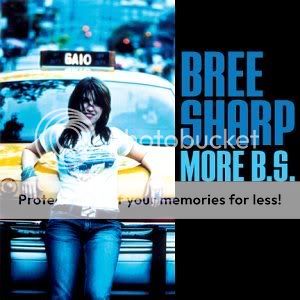
BREE SHARP – More B.S.

A few years ago, I picked up Bree Sharp’s debut album ‘A Cheap And Evil Girl’ on a whim. I’d not heard a note of it, but it was dirt cheap and allegedly both Bob Dylan and Elvis Costello had said they were fans, so I figured I ought to hear it. As it turned out, the album was good, alternative-rock singer-songwriter stuff. Bree’s voice may have been everyone’s cup of tea, being rather edgy…almost exactly like Jepp (about whom you’ll find next to nothing on the net – if anybody can help, send us an email!), but generally it was a solid debut.

This, her sophomore effort, (minus the title for its Japanese release) kind of takes up the baton where ‘Cheap…’ left off. There’s very little difference in the tone and as before, there are obvious stand out cuts, some solid moments and a couple of absolute clunkers. Of songs I’d rather forget, the cover of Don Henley’s ‘Boys Of Summer’ is misjudged and doesn’t really suit Bree’s vocal style at all. A definite skipper… ‘Sleep Forever’ also grates a little, as the hooks aren’t that obvious and the drum pattern isn’t so inspiring. Since that closes the album, it’s easy enough to turn off the CD early!‘Lazy Afternoon’ is very chorus driven and the backing vocals prepare the listener for what you think is going to be a killer chorus and then somehow, it falls a little flat. It’s not unpleasant, but it feels like filler.

With the album’s weak tracks out of the way, what of the rest? ‘Everything Feels Wrong’ has a big chorus though, so it follows ‘Lazy Afternoon’ very well. Like a fuzzy-rock Sheryl Crow, complete with between-verse ‘doo doo doo’ moments, this was very much meant for radio play. It’s the best track here, hands down. ‘Dirty Magazine’ is this album’s oddity. Musically, it’s at odds with the pop-rock style – it’s got a twangy rock ‘n’ roll edge, although it’s not at all rock ‘n’ roll. It has an old fashioned country twang too, but there’s no way you’d ever call it country…and the lyrics may hint at the edgier side of Bree’s debut, but somehow, it doesn’t quite work. ‘Morning In A Bar’ is gentler all round, more atmospheric and sounds like the album’s hangover cure – probably quite deliberately – although as penultimate track, it feels misplaced, as it’s more of a closing statement.

‘Galaxy Song’ – nursery rhyme la-la’s aside – represents the kind of thing Bree is best at. It’s mid paced, semi-acoustic and hints at KT Tunstall, although tougher sounding and recorded a few years before KT hit the big time. ‘The Last Of Me’ is also a high point – a song which takes typical post-break up themes and looks for strength, presents the listener with more semi-acoustic goodness. On the strength of this track alone, I’d like to know whether Bree has had much radio play in the US, aside from her debut’s ode to wanting David Duchovny. It’d be a shame if not, since she’s clearly written better, less throwaway songs.

Overall, ‘More B.S.’ is actually pretty decent. Maybe I only think of it as being not quite as good as the debut purely because ‘The Boys Of Summer’ makes me cringe. …And there’s nothing quite as edgy here as ‘Gutter Mouth’ or ‘Cheap And Evil Girl’. But then, as much as I like it, Bree’s debut was never perfect.

November 2007


MIRAH – Advisory Committee

For the uninitiated, Mirah Yom Tov Zeitlyn (not to be confused with Mirah, a Danish pop star), is an American singer songwriter. Typically, she uses sparse arrangements and electronic loops. ‘Advisory Committee’ is probably one of her best known releases, though still, at the time of writing this, she’s still very much a cult artist. Most of her work to date has been issued on the K Records label, based in Olympia, WA. Typically of that label, most of Mirah’s work has a lo-fi feel with a DIY ethic.

This album offers fourteen songs in total and feels very much like an album, as opposed to a collection of songs. ‘Cold Cold Water’ was released as a single, though listening might leave you wondering why. There is no obvious hook here, though musically it follows a tried and tested quiet verse, loud chorus formula. Though unlike others who’ve popularised this technique, there aren’t guitars upfront – there are strings, voice and pounding drums. The arrangement seems unstable, almost feeling like its swaying about. A bold move for both opening cut and single and promises a great deal for the album as a whole. ‘Monument’ is gentle folk-pop and it’s here that you’ll probably realise you’ll either love or hate Mirah’s vocal style. There’s an innocence at play, it seems, but thankfully she never adopts that faux little girl squawk that Joanna Newsom seems to think is somehow endearing.

‘After You Left’ is fuzzy. Droning but gentle, there’s something here which makes Mirah sound distant; the track itself sounds like a work in progress that somehow made the finished album. ‘Light The Match’ is largely based around the accordion. Never my favourite instrument, this isn’t so easy to listen to, but balanced against the strings here, this song has very much an Eastern European feel. It doesn’t feel as personal as some stuff here, but maybe that’s the accordion forcing me not to listen quite as closely as I might. ‘Special Death’ features prominent xylophone sounds in the intro, when combined with the light vocal and guitar instrumentation feels quite spooky; it doesn’t quite live up to initial promise, truth told, but the use of strings in the backing arrangement is effective, as it’s so sparse. Not so sure about the Christmassy bells. It’s on stuff like this where Mirah begins to feel like the anti-Feist, offering a sometimes similar gentility, but not always beauty.

‘Recommendation’ is a short track based around a programmed drum loop, very mechanical with a nod towards the early 80s new wave. Lyrically, it seems to concern parting, but the song is over almost as soon as has begun, leaving the listener wanting more. Strangely, for something which doesn’t feel like a focal point, its one of the album’s stand outs. ‘Body Below’, in contrast, is four minutes worth of fuzz guitar and feedback drone, coupled with hushed vocals. Pavement and Sonic Youth may be obvious comparisons (especially the latter), but this experimental approach works well for Mirah here. ‘Mt. St. Helens’ begins with a gentle, almost lullaby vocal. After this, as a listener, it’s expected that the arrangement will pick up a little. It does, in a fashion, as Mirah hammers on her acoustic guitar, which seems to be in a muddy tuning. As always here, I’m left with the feeling that it’s not the music that’s important, but at that point, electronic loops play backwards and are at complete odds with the once hushed voice and acoustic sounds. ‘The Sun’ employs a similar guitar tuning and in this case, it doesn’t seem to work. There might be a nice twee tune in here somewhere, but the off-centre vocal and guitar work obscure the melodies. The end part of the song is electric indie-rock and works better, but it’s not memorable in the way a few of these songs are. ‘The Garden’ employs a similar clunkiness to the end of ‘Recommendation’, but with little else to focus your attention on, this is far to stark for music in the usual enjoyable sense; but yet, it’s not out-there enough to be considered even slightly avant-garde.

‘Advisory Committee’ is not an album which can be recommended to everyone, hovering as it does somewhere between twee and discordant. Like some of the works by The Magnetic Fields, though, this is very rewarding to patient listeners.

November 2007