BRAINDANCE – Fear Itself


When I first heard this band back in the mid-nineties, they sounded like the most intense, frenzied and adventurous band to be associated with the progressive metal scene. Back then, aside from a handful of American bands breaking through (spearheaded as always by the mighty Dream Theater), it was still a very much niche subgenre.

Obviously, since that time, the prog-metal scene has become huge, with lots of bands springing up; mostly from mainland Europe and mostly with female singers fusing progessive metal roots with gothic metal and neo-operatic influences. In 1995, one of the first bands I heard doing anything similar were Braindance and over a decade later, they still remain somehow more inventive than any of their contemporaries.

Hailing from NYC, Braindance aren’t your typical prog-metal band. Progressive metal it may be, but the band bill themselves as ‘cinematic new romantic progressive new age gothic metal fusion’. Intrigued? Slightly confused? (Anyone who says ‘no’ is a liar).

Aside from their refusal to be musically pigeon-holed, they also create a mystique around themselves. According to an early press release from the mid-nineties, their then bassist, Eiki Matsumoko, claimed to be ‘a multi-disciplined warrior transplanted from Japan, who proceeds with a focused attack unparalleled in the realm of electric energy’. It would appear that everyday sanity is all but a past luxury for this man. Based upon his work on the earlier Braindance releases, he is, however, an excellent bassist; as you’d imagine, his complicated bass parts compliment the work of Braindance’s drumming bod, Notorious (who remained with the band until 1998), perfectly. Notorious (I’ll bet his real name is Lionel), plays a combination of acoustic and electronic drums and by the time I discovered Braindance, he’d been playing in bands on the NY club scene for over a decade. His style of playing is strong, but occasionally erratic, as you’d expect from someone specializing in this style of progressive metal.

Sebastian Elliot (vocals), is a singer with a fantastic range. Sounding like a cross between Queensryche’s Geoff Tate and the late Geoff Mann of UK cult prog-pop heroes Twelfth Night, would ensure that he would be a great front man for many prog outfits; for Braindance, however, this is not enough. For maximum effect, he also sings in a very deep baritone, bringing in a strong goth-metal influence (Type O Negative spring to mind regularly).

Vora Vor is the band’s guitarist and by 1995 was a veteran of the NY rock club scene and classical concert stage. Her playing can only be described as amazing. Playing heavy, crunching riffs interspersed with fast, widdly (technical term) solos, she gives the band a serious cutting edge. Left with the difficult task of holding the band together is Robynne Naylor (the last to join the band in 1996), who creates a blanket of swirly keyboards for Vora to play over.

The first commercial release for Braindance was the cassette only EP, ‘Shadows’, in 1994. Boasting five tracks in over 40 minutes, the band
takes the listener through a variety of moods, each one as intense as the one before. The opening number, ‘Awareness’, kicks in with a woman screaming followed by a chunky Dream Theater style riff, followed by trippy keyboard work. This mixture of light and heavy is typical of the band’s work on this early release (which finally became available as mp3s in 2008).

Of the other songs featured on the EP, ‘To Live In Shadow’ carries on from where ‘Awareness’ finished; ‘All Fall Down’ has to be Braindance’s answer to Queensyche’s ‘Silent Lucidity’ (so that’ll appeal to the soppies among you) and ‘Tears’ is a six minute soundscape of keyboards, which is preferable to it being a cover of that crappy song from Rush’s ‘2112’.

That brings us up to speed and Braindance’s debut full length CD, ‘Fear Itself’. While there are lots of elements here which are similar to the ‘Shadows’ EP, for this album the band have opted for a far more goth-metal approach, with the Type O Negative influences more upfront.
The album begins with a man giving a huge speech regarding aliens landing on Earth and throughout the album, samples are used to great effect. There are samples here of Darth Vader (yay!) and Richard Briers. How did a goth-prog-metal fusion band from New York end up with a Richard Briers sample?!

‘Crime & Punishment’ focuses on the bands electronica influnces. A keyboard led piece, it manages to feel both cinematic and ambient.
With only a keyboard, a pulse beat and samples to carry it, you’d think it’d drag and feel like filler, but somehow it holds the listener’s attention and provides respite from the more intense moments of ‘Fear Itself’. This leads into ‘One’, a brooding ballad which sounds like Pete Steele fronting Dream Theater. The mid section, featuring chorus vocals works excellently with both male and female voices. The only downside is that is rather brief. The title track is mostly instrumental and has a pulsing nature on the slower sections. While essentially a showcase for Vor’s guitar, it features brief, Yes-inspired vocals.
‘Compound Fracture’ is a very much a centrepiece for ‘Fear Itself’. This thirteen minute epic features some fantastic guitar work. Rhythmically, it’s one of the album’s most complex pieces.

For me, the true standout moments include the slightly arabic feel on the vocal melodies of ‘Only A Moment’ and the goth-pop of ‘Voices Are Calling’, which turns all neo-progressive rock at the end, like a hybrid of Shadow Gallery and classic Yes (reprising the vocal section from the title track). In reality, though, ‘Fear Itself’ is a disc with something to offer most fans of progressive metal.

If you’d like to know more about Braindance, visit their website.

January 2010 (Some material written for Fastlane magazine, late 1996)

MAGDALLAN – Big Bang

Although he’d been previously known for his work with Joshua and Shout in the late 80s, I was a little late in discovering Ken Tamplin, first hearing a track by him on a record company CD sampler in the early part of 1994. After hearing that track (‘Dancing on a Volcano’, from the ‘Tamplin’ LP), I knew I had to hear more of his stuff. Later that same year, a friend lent me a copy of this Magdallan album.He originally lent it to me thinking I’d like it, since he thought the first track was a bit prog-metal influenced.  He hadn’t remembered Ken Tamplin was the band’s vocalist!

Of course I liked it – but not for the “prog metal” reasons my friend thought I would [aside from its general speed and a slightly edgy, metallic guitar riff, I’m not even sure why he thought it was prog metal. It’s likely he confused them with Magellan].In fact, my liking of this album had nothing to do with that first track; I found its full-on bombast a bit of a turn off. I was, however, more than impressed by the band for various other reasons.  Firstly there was that Ken Tamplin connection (this album gave me a proper introduction to his work and I continued to buy his albums for a good few years afterwards), but also I liked the other band members: I’d been familiar with Lanny Cordola and Ken Mary previously, as they’d been members of House of Lords, a band whose first couple of albums I’d rather liked.  So, since Magdallan featured a few musicians I was potentially interested in, I’m not sure how this album had managed to slip under my radar for a couple of years…

If I’m honest, I still don’t like that opening track, ‘End of the Ages’, much at all. While Ken Tamplin’s voice is strong, the band spends the best part of the track trying to outplay each other at full pelt.While the level of musicianship should be respected, the approach taken seems to be at the expense of the song.While some of Lanny Cordola’s guitar solos here are very good, when they’re combined with the fast rhythm section, it becomes very tiring.As a track, it’s far too demanding on the listener.Hats off to Brian Bromberg, though, for a jaw-dropping bassline.

With that out the way, the rest of ‘Big Bang’ is fantastic.  If you’re looking for huge melodic rock: look no further!‘Radio Bikini’ (not sure why they chose that name) is the stuff that late 80s rock radio was made of.  It couples a huge chorus with a mid-paced rock riff, topped off with the kind of huge harmony vocals which would make Mutt Lange proud.  ‘Shake’ opts for a funkier edge, led by bass player Brian Bromberg, whose work here is inspired, since it has a huge presence and manages to firmly stay within the hard rock parameters despite showing a strong funk influence, rather like the work of Marcel Jacob (sadly missed).

‘Wounded Hearts’, a big Whitesnake style ballad, feels much simpler again.  It features another top vocal performance from Tamplin.Also less demanding is ‘Love To The Rescue’, a pumping hard rock workout; once again, Cordola grabs an opportunity to really show some chops in the guitar solo department, although unlike most of ‘The End of the Ages’, he’s a bit more restrained. The title cut has a confident swagger and, once again, the multi layered vocals are used to fantastic effect.  Bromberg’s bass work goes for a funky edge again here and Lanny turns in an off-kilter guitar solo which raises a smile.  This would have been the ultimate attention grabber before the horns were laid on!  The Led Zeppelin inspired, acoustic blues stomp of ‘Old Hard Line’ captures the whole band on top form.Tamplin’s blues rock vocal style is faultless, Ken Mary settles into an understated drum groove, Bromberg’s bass playing has warmth, but it’s Lanny who stands out the most: his acoustic work is second to none – really stylish.  A few bluesy vibes carry over to ‘Dome of the Rock’, but, this time, the band return to full-on rock mode.  Bromberg’s contribution is superb, his busy bass runs lying behind a decent riff laid down by Lanny.Multi-layer vocals are the icing on the cake – somewhere between Queen circa 1974 and early Journey, they turn a decent rock tune into a pomp fan’s dream.  Choirs of vocals swamp ‘House of Dreams’, the album’s ultimate lighters-in-the-air big hair rock moment.As with ‘Wounded Hearts’, the slower pace allows Ken Tamplin’s vocal to really shine.

Dozens of sampled voices played through a keyboard (a la ‘Leave It’ by Yes) kick off ‘Cry Just a Little’ before things settle into a standard rock groove.Again, the backing vocals are huge and is in good company with the rest of the album.  Lanny throws in a really metallic guitar solo – and not to be outdone, Bromberg’s bass playing is really complex throught.  Musically, this is quite demanding on the listener, but by this point of the album it shouldn’t be a mystery why these musicians are so well respected by melodic rock fans.

If you’ve never heard ‘Big Bang’ you’ll probably have half an idea what an album featuring Ken Tamplin backed by most of House of Lords could sound like.If you like your melodic rock to be larger than life and well produced (allegedly this cost about a quarter of a million dollars to make), then you’ll love this.

March 2010


KISS – Music From The Elder

Throughout the late 70s, it seemed KISS could do little wrong. In the US, their albums sold by the truckload and fans filled large stadiums to witness their face-painted theatrics. In 1979, nodding towards then current musical trends, KISS added disco elements to their brand of hard rock. This seemed to be a good move, as ‘Dynasty’ became another top seller and its single ‘I Was Made For Loving You’ became one of KISS’s best selling singles outside the US. Attempts at re-creating a similar formula for 1980’s ‘Unmasked’ were less successful, despite a couple of stand-out tracks. Drummer Peter Criss quit the band mid way through the albums sessions and things were generally not as rosy.

It was time for a re-think. Very much in favour after his work on Pink Floyd’s ‘The Wall’, producer Bob Ezrin (who’d previously worked as producer on KISS’s 1976 fan favourite ‘Destroyer’) was bought on board to produce the next album – the overblown concept piece ‘Music From The Elder’.

‘Music From The Elder’ follows a half-baked story about a futuristic world and a battle between good and evil. It’s best to not concentrate too much on that and just take the songs at face value.  The songs themselves, don’t always feel like traditional Kiss songs – Ezrin’s orchestral arrangements and slick production swamps the album, as if he is the fifth band member here; this is obvious right from the introductory fanfare. His influence becomes absolutely unavoidable as Paul Stanley croons his way through ‘Odyssey’, which is pure musical theatre and not in the usual fun KISS style. Ace Frehley is said to have become rather unhappy with the musical direction ‘The Elder’ was taking but despite that, his contribution ‘Dark Light’ is quite strong, while Paul’s ‘The Oath’ demonstrates a hard rock style KISS would further explore on their 80s albums. The only track here which comes anywhere near the band’s previous anthem style is closing number ‘I’.
Gene’s lament ‘A World Without Heroes’ (co-written with Paul Stanley and Bob Ezrin, with a contribution from Lou Reed) and the more aggressive ‘Mr Blackwell’ are the essential tracks (it’s not very often you’ll find me picking Gene’s songs as KISS album highlights).

Upon release, many fans felt indifferent towards the album; sales were down and it marked the first time KISS did not tour. Some reviews were positive, though: Rolling Stone called the album ‘better than anything the band has recorded in years’.

Time has been kind to ‘Music From The Elder’. Ezrin’s production still sounds superb and musically, KISS are in good shape. Eric Carr makes his debut and turns in a good performance, despite supposedly sharing Frehley’s uncertainties about the concept album. Granted, some of the songs aren’t as catchy as previous outings – the concept approach means that sing-along anthems aren’t so evident. That aside, it’s a decent album none the less and I’m never sure why it tops fans’ ‘worst album’ lists. Bloated and pompous it may be, but there’s nothing here anywhere near as embarrassing as ‘Burn Bitch Burn’ (Animalize, 1984), ‘Bang Bang You’ (Crazy Nights, 1988) or ‘Domino’ (Revenge, 1991), so surely it deserves to be treated just a little better?

January 2010

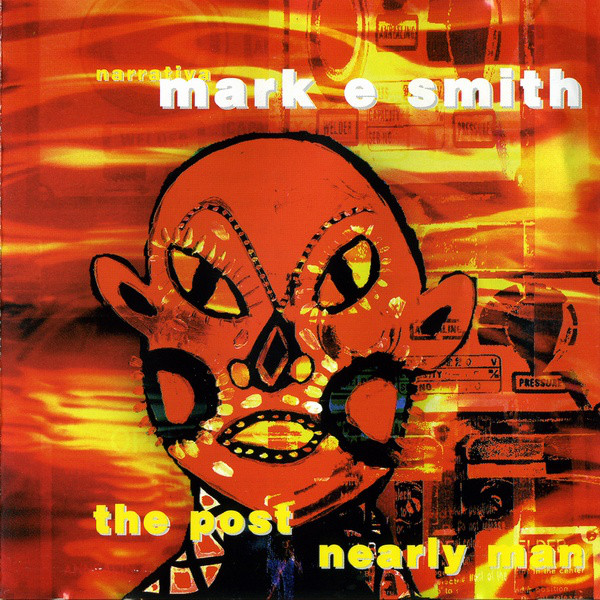
MARK E. SMITH – The Post Nearly Man

Modern Energy…and what it means to you and I” spouts Mark E Smith at the beginning of one of the tracks on this CD. A man with a skewed take on life, you may be forgiven for thinking a spoken word release from The Fall’s front man (and only constant member) could be an interesting prospect indeed. He goes from mentioning energy – something this collection of ramblings severely lacks – to mentioning Richard and Judy and then “Fred West’s sweaty family” in the space of less than a minute. As he does so, it becomes obvious that rather than being an outing of interesting beat or slam poetry as championed by Tom Waits, Henry Rollins or that under-rated wordsmith Mike Doughty, this is little more than a vanity project from a man who’d rather confuse and frustrate than entertain.

Continue reading

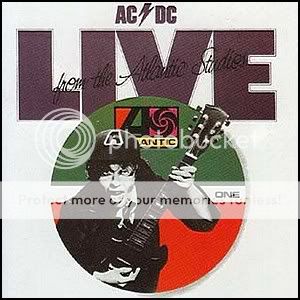
AC/DC – Live From The Atlantic Studios

Following 1980’s multi-million selling ‘Back In Black’, Brian Johnson helped steer AC/DC to uncharted heights.  The band have headlined festivals the world over, filled arenas and held an enduring popularity.

No matter how good or how popular the band became in the 80s and beyond, the material AC/DC released in the 70s is among their very best.  On recordings like ‘High Voltage’ and ‘Let There Be Rock’, their style is a little looser and the rock ‘n’ roll ethic hasn’t yet given way to the band’s slightly more metallic tendencies explored throughout Brian Johnson’s tenure fronting the band.

The studio albums are great, but it’s on the live albums where the early AC/DC really hit home. It’s often said that 1978’s ‘If You Want Blood’ is one of the great live albums of the age – that’s a theory with which it is hard to argue and the 2CD soundtrack to the ‘Let There Be Rock: Live In Paris’ film has some cracking performances.  However, it’s ‘Live From The Atlantic Studios’ which captures the band on most consistent, lean and mean form.  The intimate setting really gives the performance spark.

Bon’s voice is strong throughout the 40-odd minutes; he’s in good spirit, chatting with the small audience between numbers. ‘Live Wire’, ‘Problem Child’ and ‘High Voltage’ set the stage and the Aussie live wire sounds really focused; Phil Rudd and Cliff Williams are impeccably strong in their understated role as rhythm section.  What really works here, though, is the volume of the guitars; ‘Live At The Atlantic Studios’ has a feeling throughout of a studio run-through and as a result, the eight numbers don’t offer much difference to the band’s recordings in terms of performance, but that bit of extra volume means these tracks stomp over many of their studio equivalents.  Solid renditions of ‘Dog Eat Dog’ and ‘Hell Ain’t a Bad Place to Be’ maintain the spirit well, but it’s during the second half of the set that AC/DC relax a little and the fun really begins.

An extended version of the bluesy rocker ‘The Jack’ appears here in its best rendition, largely due to having retained the original album lyrics – much preferred over the sexually themed ones, full of schoolboy humour (pun intended) used on ‘If You Want Blood’ and other live performances.  An extended arrangement allows the band to really fall into a solid blues groove, with Angus turning in a fine solo en route. The band close their set with the double rock ‘n’ roll whammy of ‘Whole Lotta Rosie’ and ‘Rocker’.  Both numbers by this point had been established as crowd-pleasers, but during ‘Rocker’ especially, you can feel the sweaty atmosphere, as Angus and co tear it up.  It would have been fantastic to have been there: it’s such a great shame this set never filmed for posterity.

For those of you who have the studio albums and have loved them for many years, there’s little else to add, as you know exactly what you’re in for.  AC/DC at their most powerful, in front of a tiny audience?  If you want a snapshot of a hugely influential band at their most vital, ‘Live From The Atlantic Studios’ gives you what you need.

Bon Scott (09.07.46 – 19.02.80)

February 2010

*’Live At The Atlantic Studios’ is available as part of the AC/DC ‘Bonfire’ 5CD box set.