IRON MAIDEN – Number Of The Beast

By the time Iron Maiden entered the studio to record their third album, they had no previously unused material in their archive. Bruce Dickinson (aka ex-Samson vocalist Bruce Bruce) had also become the band’s frontman, replacing Paul Di’Anno, who’d provided vocals on Maiden’s first two full-length releases. The band and producer Martin Birch (who’d produced their previous album, ‘Killers’) were effectively starting from scratch. What resulted is probably one of the finest heavy metal albums of all time. It’s certainly the album where Iron Maiden’s “classic” sound found its feet.

Telling a tale of Viking hordes, of plundering, rape and pillage, ‘Invaders’ opens the album with a real statement of intent. The band approach the number at full pace; Steve Harris employs an unmistakably aggressive bass style, while Clive Burr turns in one of his most powerful drum performances. Dickinson’s wailing vocal shows itself to be almost the polar opposite to Paul Di’Anno’s raw, punk-influenced vocal style – and he announces his presence rather unsubtly. A strong opening, certainly, but there’s far better to come… ‘Children of the Damned’ (inspired by the movie of the same name) is the album’s gentlest track. In some ways it feels like it appears slightly too early on the LP, but provides a brilliant contrast to the opening number. It highlights the softer end of Bruce’s vocal range, as well as proving how effortlessly he hits the long vibrato-edged notes. Adrian Smith guitar work appears in both its extremes, offering some gorgeous soaring guitar work during the song’s intro and a blistering guitar solo towards the end. A couple of other songs from the album have outshone this one in terms of longevity, but musically, ‘Children of the Damned’ shows a great maturity and is one of the album’s standouts.

Inspired by the cult 60s series starring Patrick McGoohan, ‘The Prisoner’ returns things to a fast pace. The track begins with the famous sample of McGoohan’s “I am not a number…I am a free man” and Burr’s pounding drums, before kicking into high gear. Steve Harris’s bass playing here is upfront and high in the mix, but surprisingly he never opts for his favourite galloping approach. The track also features fantastic guitar work from both Adrian Smith and Dave Murray. A co-write between Steve Harris and Adrian Smith, ‘The Prisoner’ has a more melodic chorus than a lot of other songs here. I presume that was Smith’s big contribution, as his writing has sometimes shown a slight AOR/melodic rock influence. A sequel to ‘Charlotte The Harlot’ from Iron Maiden’s self titled debut appears in the form of ’22 Acacia Avenue’. Supposedly based on someone the band knew, lyrically it provides a low point for ‘Number of the Beast’ with its tales of red-light wrong-doing. Musically, though, the band is in fine form, yet again. A slow lead guitar break midway acts as the song’s climax.

The two single releases culled from ‘The Number of the Beast’ (‘Run To The Hills’ and the title song) have remained solid fan favourites. While neither of the songs are as complicated as some of the material Maiden would go on to record, both tracks typify the band’s classic sound. The ‘Number of the Beast’ song is interesting, if only for the fact that it’s lyrically better than most things from this album (supposedly inspired by a nightmare Harris had), yet musically isn’t quite as good as some of the album’s other tracks. However, that doesn’t stop it being enjoyable and it remains one of Maiden’s best known songs. The anthemic nature of ‘Run To The Hills’ has allowed it to become one of the tracks most associated with the NWOBHM and become a staple for rock compilations. Musically, this employs a galloping bassline; something which recurs throughout various other Maiden tracks and a sound very easily identifiable with Harris. Both ‘Run To The Hills’ and ‘The Number of the Beast’ have been almost permanent fixtures in the band’s live set since 1982.

‘Hallowed Be Thy Name’ is more grandiose, hinting at a more complex musical approach. Lyrically, it tells the tale of a man waiting to die. He waits in his cell for someone to take him to his execution. Dickinson’s vocals are soft and slightly reflective at first, identifying with the dying man’s plight, before building to his trademark wail. The music builds in tandem, soft to begin with, then adding some excellent twin guitar leads. Most of the track focuses on a mid paced, classic heavy metal sound; it builds gradually, always making fantastic use of those twin harmonies on the guitars, until it reaches its peak, as the whole band play their hearts out – parts of the end section are as fast as anything ‘Number of the Beast’ has to offer. Clive Burr hammers out a relentless drum rhythm as Smith and Murray offer up a couple of top guitar solos; all the while, the whole thing is being anchored by Harris’s bass work, always solid and never showy.

‘The Number of the Beast’ offers only one obviously weak track: ‘Gangland’ (written by Smith and Burr) sounds throwaway compared to the rest of the album. Clive Burr’s drumming is solid and, as always, Bruce’s vocal is great, but the opening guitar riff sounds slightly jarring. That’s enough for the track to never really recover, but it’s also a bit weak lyrically.

‘Number of the Beast’ became a platinum seller, reaching number one on the UK album chart. It’s now rightly regarded as one of the great musical milestones of the New Wave of British Heavy Metal.

[The remastered CD features ‘Total Eclipse’ as a bonus track.]

February 2010

KLARK KENT – Kollected Works

Between 1978 and 1980, using the pseudonym Klark Kent, the world-famous drummer Stewart Copeland (hi-hat god) released a 10” EP and a handful of singles. On these tracks, he performed everything, allegedly with no outside help. These releases sold moderately in the UK. Klark Kent’s career made little impact, barring his best-known release, ‘Don’t Care’, which charted briefly. Each of these singles is now hard to find, especially in decent condition.

In the mid 90s, the (almost) complete recorded works of Copeland masquerading as Klark Kent were given a CD reissue as the ‘Kollected Works’. It featured all the tracks from the 10″ and 7″s, as well as a few unreleased tracks (including ‘Strange Things Happen’ and ‘Love Lessons’, recorded a few years later, in the mid-eighties).

The CD appeared and then disappeared seemingly as quickly and now fetches stupid amounts of money whenever it changes hands, but is it worth it? Are Copeland’s extra-curricular offerings – part vanity, part novelty – actually worth listening to?
I’d say they were. I may be a little biased when it comes to Stewart Copeland, but I feel these recordings still have plenty of spark and make for decent listening, especially if you’re a Police fan.

In the past, rumours have circulated that some of these tracks were scheduled for inclusion on The Police’s debut LP ‘Outlandos D’Amour’ – but such rumours have never been confirmed, as far as I know. It’s worth keeping that in mind when listening, especially considering some of these songs are more than reminiscent of the Copeland penned ‘On Any Other Day’ (as featured on the second Police LP, ‘Regatta De Blanc’).

The best known track, ‘Don’t Care’ still has a sneer. Maybe it’s been softened a little over the years, but alongside ‘Where’s Captain Kirk’ by Athletico Spizz 80, remains one of the essential post-punk singles. ‘Rich in a Ditch’ is okay as far as it goes; an obvious chorus is saved from being ordinary, by Copeland’s unmistakable rhythms working between snare and hi-hat effortlessly. ‘Grandelinquent’ is classic Copeland. An instrumental piece, naturally heavy on the percussion, it falls somewhere between The Police instrumentals ‘The Other Way Of Stopping’ (although a fair bit slower in places) with atmospherics, similar to ‘Behind My Camel’ (from 1980’s ‘Zenyatta Mondatta’). There’s an interesting jazzy piano break and great percussion at the end which sounds like bottles…

‘Too Kool To Kalypso’ features a similar vocal delivery to the aforementioned Police song ‘On Any Other Day’ and is often thought to be a high point of this collection. While the percussion is good, I find the kazoo interludes (yes, kazoo) push this too far towards novelty. However, it’s not as much like that ‘On Any Other Day’ as ‘My Old School’, which almost feels like an earlier attempt at writing something in that vein. I wouldn’t be surprised if someone told me this was written with inclusion on that second Police album in mind. Another instrumental cut, ‘Theme For Kenetic Ritual’, differs from other tracks in that it’s not quite as percussion based, centring instead around a guitar riff. As such, while pleasant, it’ll never quite hit the spot in the same way as ‘Grandelinquent’, especially with the kazoo making a return appearance at the end. ‘Strange Things Happen’ has a reggae vibe and is one of the tracks most reminiscent of The Police, although it’s nowhere near as polished.

At the time of writing, you’ll never find this on CD without having to sell your internal organs to raise the asking price and it’s a bit much to hope for another reissue. It should be heard though, especially if you like The Police. Unless you’re a Copeland obsessive though, it’s unlikely you’d choose to listen to it instead of those early Police LPs, no matter how good some of the material genuinely is.

See Klark perform ‘Don’t Care’ on Top of the Pops here.
See the video for ‘Away From Home’ here.

October 2007

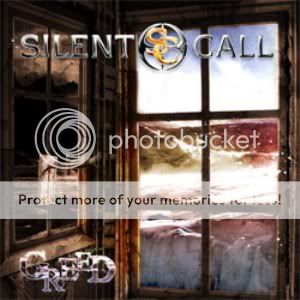
SILENT CALL – Greed

Sometimes when a label which chiefly deals with AOR and melodic acts releases something they term “progressive metal”, it’s not usually progressive metal as such.  It’s more likely to be a bunch of Yngwie Malmsteen enthusiasts/ex-collaboators churning out similar neo-classical work, but delivered with a slightly bigger punch (see Artension and Ring of Fire for starters).  With Silent Call, this is not the case. ‘Greed’ is their second release and frankly, it’s a monster.  Throughout the album, each member of the band gives their all, but the real stars are Andi Kravljaca (ex-Seventh Wonder) on vocals and guitarist Daniel Ekholm.

Continue reading →

HARD – Time Is Waiting For No One

‘Time Is Waiting For No One’ is the second international release (but fourth release overall) by the part Swedish, part Hungarian melodic metal outfit Hard – a band fronted by Björn Lodin of Baltimore. It’s one of those albums where once you’ve taken note of their rather unsubtle moniker and band logo, you’ve got a fair idea of what it sounds like before hearing any of the songs.

Kicking things off, the title cut is a fast-paced riffer, showcasing Hard’s brand of melodic metal. The rhythm section is punchy and the guitar riffs are edgy, but any good qualities are killed by Lodin’s vocal performance, which is all squeal and no real passion – he’s been likened elsewhere to Marc Storace of Krokus and I can see why…and, no, I never liked Storace either. ‘Lonesome Loneliness’ (hey, what other kind is there?) has a swaggering approach and overall holds up as a solid piece of hard rock, although not groundbreaking. ‘Into the Fire’ features some fantastic metal guitar work and cracking rhythms, but generally, there’s little here to make a lasting impression.

‘The Pace and The Flow’ is a rock ballad with a bluesy edge. Surprisingly Björn Lodin’s vocals are far better here; he’s not forcing his voice so much and the end result feels more natural. Similarly with ‘Nona’ everything flows nicely and the vocals are both tuneful and well-suited to the material. ‘My Kind of Woman’ pulls out of the starting grid at full throttle, like a twisted cousin of early Deep Purple. It’s a track that shows initial promise: Zsolt Csillik and Zsolt Vamos’s guitar parts are superb once again, especially if this kind of melodic metal is your bag, but it’s let down by poor songwriting. ‘Shine On Me’ combines a driving hard rock riff and funky edges to fantastic effect. The vocals have an edge, but remain tuneful, if still an acquired taste. There’s a strong Bang Tango influence here and this track should appeal to fans of that very under-rated band.

Overall, although this album has a few good qualities, most of it does little for me. If Hard could’ve concentrated on the softer or funkier elements of their sound, it could’ve been very different indeed. Some bands in the world have a lot going for them. Judging by this album by Hard, it would seem their greatness hasn’t yet arrived.

March 2010

STATUS QUO – Picturesque Matchstickable Messages

In 1967, Britain was in the midst of a psychedelic musical revolution: The Beatles released an undeniable classic in ‘Sgt Pepper’, Steve Winwood’s Traffic released the rather more cult ‘Mr Fantasy’, while The Jimi Hendrix Experience and Cream fused a psychedelic spirit with blues influences on their respective albums, ‘Axis: Bold as Love’ and ‘Disreali Gears’. By 1968, the psychedelic vibe had started to fade slightly, although it was the year in which The Zombies released ‘Odessey and Oracle’, which despite poor sales at the time, is possibly the greatest piece of British psych-pop. In that same year, Status Quo released their debut, ‘Picturesque Matchstickable Messages’.

‘Pictures of Matchstick Men’ may feel like a well worn classic now and familiar to everyone, but what of the rest of that debut album? The opening track ‘Veils of Melancholy’ sounds rather like ‘Pictures of Matchstick Men’ with the notes played in wrong order, which probably says a lot about why it bombed when released as a single. But, while ‘Matchstick Men’ feels like a piece of late-sixties happiness, ‘Veils’ has an effect that’s slightly sinister. ‘When My Mind Is Not Live’ typifies the psych-pop movement, feeling like a Traffic and Tomorrow hybrid. ‘Gentleman Joe’s Sidewalk Cafe’ is rather more whimsical. Written by songwriter-for-hire Kenny Young (erroneously credited on occasion to Bob Young, who’d later be a regular Quo collaborator), this Kinks-esque number was originally scheduled to be the single. Although a decent album track, I’m not so sure about its single potential – they made the right choice releasing it on the flip-side of ‘Matchstick Men’. ‘Paradise Flat’, takes the psych elements slightly farther, complete with deep voice-over on the mid section. It’s hard to tell whether the voice over always sounded bad, or whether time has been unkind.

It’s interesting to note that Francis Rossi doesn’t play such a pivotal role on a lot of these songs, as he would in later years. Although the heavily phased guitars are important to the end product, it’s the electric organ which seems to dominate the early Quo’s multi-layered sound (courtesy of Roy Lynes, who remained with the band until 1970). Surprising as it may seem, the well-loved title cut isn’t the best track, nor is it the most psychedelic. That honour falls to Alan Lancaster’s ‘Sunny Cellophane Skies’. Rossi’s heavily treated guitar is the track’s driving force, coupled by multi-layered vocals, which evoke the period.

The album is padded out with cover material, all of which is more in keeping with 60s beat pop than psychedelia. In the 21st Century, that makes for okay listening for anyone with a liking for stuff of that retro style, but I suspect that in 1968, some of it felt a little ordinary. ‘Ice In The Sun’ and ‘Elizabeth Dreams’ (both written by Marty Wilde) are probably the best of the bunch with regard to the said cover material, while the Quo’s treatment of The Lemon Pipers’‘Green Tambourine’ isn’t too bad either. The cover of the Bee Gees’ ‘Spicks and Specks’ is horribly misjudged – while Gibb, Gibb and Gibb would prove themselves to be at the forefront of the songwriting masterclass, this isn’t one of their better late 60s tunes as it is, and it definitely doesn’t suit Status Quo.

‘Picturesque Matchstickable Messages’ contains some enjoyable music during its 34 minutes, even if it isn’t quite as inventive as some other albums of the period. The following year’s ‘Spare Parts’ followed a similar musical path, but had little commercial success. By the end of the decade, the psychedelic times were over. If Status Quo had thrown in the towel, they’d likely be remembered as one of Britain’s greatest cult bands.

[In 2009, ‘Picturesque’ was re-issued as a 2CD Deluxe Edition, featuring both mono and stereo mixes of the album as well as non-album singles and BBC Sessions. Also included are rare recordings by the pre-Quo band, in both their Spectres and Traffic Jam guises].

January 2010