HELL IN THE CLUB – Let The Games Begin

hell

Although ‘Let The Games Begin’ is Hell In The Club’s debut release, a few of the band members are well-known faces on the Italian metal scene. Vocalist Davide “Dave” Moras is best known as for his work with fantasy metal outfit Elvenking, while bassist Andrea “Andy” Buratto and drummer Federico “Fede” Pennazzato are both members of power-metallers Secret Sphere. Rounding out the line-up is session guitarist Andrea “Picco” Piccardi. This side-band was put together after Andy decided he wanted to move away from the sound of Secret Sphere and perform sleaze-rock anthems inspired by Skid Row, Mötley Crüe and Ratt.

For the most part, if that’s the spirit they were attempting to capture, then this album is a success. Although some tracks work better than others, the love of the band’s original influences shines through – and often without sounding like flat-out imitation.

Of the best numbers, ‘Raise Your Drinkin’ Glass’ is a mid-paced stomper, where Dave gets to stretch his vocal a little. The opening riff has a slight AC/DC vibe, but as the song progresses, it carries a great amount of the spirit from ‘Shout At The Devil’ era Mötley Crüe. Underneath the crunching riff, an acoustic rhythm overdub has been added, thickening out the final sound; Andy’s bass work is rock solid and very high in the mix in places. Throw in a decent solo and and a slightly groove-oriented bridge and it makes a great rock workout. A funky riff lies at the heart of ‘Daydream Boulevard’ where Hell In The Club are extremely tight. The rhythm work is unfussy but great, the solo work even greater. The band already packs a hefty punch, but Fede’s occasional drum fills are immense. Dave’s vocals more than hold their own against the verse riff, while during the chorus, there’s an effective interplay between his lead and the backing vocals. I could point out that a few of the lyrics are a might sexist, but there’d be little point. If you’re still reading (and interested), you’ll already have a fair grasp of Hell In The Club’s schtick and know what to expect!

‘No Appreciation’ is much harder with heavy riffing on the verses, giving way to a shout-along chorus driven by gang vocals. It’s impossible not to think of early Guns n’ Roses on occasion, especially as Dave slips the words “Sunday dress” into the first verse! The funky mid-section has a G N’R slant also – which is very welcome here – and Picco’s soloing is fluid, if a little short. ‘Natural Born Rockers’ carries another sledgehammer riff that’s pure eighties sleaze rock and, like ‘No Appreciation’ the reverbed shouting gang vocals which creep in from time to time really capture the mood. While there are better numbers on ‘Let The Games Begin’, this one highlights the energy the band are capable of generating, as does ‘Rock Down This Place’ with its sweary refrain. I’m not a fan of songs with the word “rock” in the title, but it’s clear such numbers here have been designed to energize a live audience.

Among the no-nonsense rockers, the album features couple of slightly lighter numbers. ‘On The Road’ highlights more melodic leanings. The clean-toned guitar work during the verses is superb, against which the lead vocals are well delivered. The chorus itself contains another big hook, making it one of the best tracks on offer. Although the influences are obvious, ‘Star’ showcases another fantastic group vocal arrangement. For the opening section of the song, Picco’s electric guitar work rings out over the acoustic base, while during the numbers closing moments, the group vocals collide against a full-on, electric melodic rocker, where Picco’s soloing is top notch. It may never gain the accolades of Poison’s Every Rose Has It’s Thorn’ or Mötley Crüe’s ‘Home Sweet Home’, but this track certainly deserves to find a home among cult classics like Tuff’s ‘I Hate Kissing You Goodbye’.

I must confess, when I saw the band name and album art, I expected leather-trousered 80s metal played in a tired fashion with nothing much to recommend it. I take it back. While my album collection contains a whole bunch of albums which sound not unlike this – mostly purchased between 1987-92 – Hell In The Club deliver almost as well as those heroes and inspirations. If the sound of the late 80s LA scene still does it for you, then hopefully, most of this album should really hit the spot.

January 2011
AUGUST CHRISTOPHER – A Brand New Day

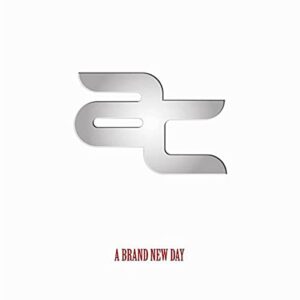
August Christopher is a Nashville based band which has a sound which encompasses many different elements, but could best be described as rock/pop with a leaning towards country rock. They’ve gained a reputation for being a hard working band and have secured support slots in the past with various bands, but appearances with Lynyrd Skynyrd, Train, Seven Mary Three and Nickelback would certainly be among their more high profile.

This third August Christopher release is a concept disc about “a man struggling with his alter-ego, walking a tightrope of good and evil”. As always with concept albums, this isn’t always completely clear. Concepts aside, though, ‘A Brand New Day’ features some good quality material. A couple of tracks fall short of the mark, but generally, the album presents a solid set of tunes.

Continue reading

MORITZ – Undivided

moritz

I first became aware of Greg Hart in the mid 90s when he teamed up with ex-Ya Ya vocalist Sam Blue and Airrace’s bassist Toby Sadler to form the short lived band GTS. Their debut release ‘Tracks From The Dustshelf’ contained a few great pieces of Brit AOR, though I have to confess, as good as the album may have been, I much preferred the unfussy approach of their original demo recordings. I backtracked and checked out one of Greg’s previous bands, If Only, subsequently finding myself completely underwhelmed, despite having read good reviews.

A few years previously, Hart was the guitarist with Moritz, a Brit-AOR band who were contemporaries of Airrace, FM and Virginia Wolf. They released a couple of self-released singles and played regular shows at London’s Marquee, but failed to gain any record label interest. Various Moritz recordings dating from between 1986-88 were belatedly issued on a compilation album, ‘City Streets’ in 2008.

Following the cult success of ‘City Streets’, the original members of Moritz – Pete Scallan (vocals), Greg Hart (guitars), Mike Nolan (guitars), Ian Edwards (bass) and Andy Stewart (keys) – decided to reunite. Augmented by Mick Neaves on drums, and delivered long after their heyday, ‘Undivided’ is the band’s first full album.
It may have been delivered over two decades later than planned, but fear not, this album features all the hallmarks of mid-80s melodic rock and the original Moritz sound, with no other influences creeping in. While musically, it’s still has much in common with Moritz of old, fans may notice that Pete Scallen’s vocals aren’t quite as strong as they once had been, now sounding a little rougher around the edges due to the ravages of time.

The title cut is one of the strongest examples of Moritz’s songcraft, as they combine a hard hitting riff with huge chorus vocals. The mid-paced stomping style shows obvious influences from Survivor and while the chorus could have been a little more interesting, big backing vocals lend its main hook plenty of punch. The mid-paced power ballad ‘Should’ve Been Gone’ is top notch, making good use of choppy guitars and very 80s keyboard sounds. It’s almost certainly something you’ll have heard time and again (and quite often on songs called ‘Don’t Walk Away’), but Moritz more than give it their best shot. While the production is a little homegrown and Pete Scallen’s lead vocal style isn’t quite as smooth as some, the overall arrangement is classic AOR, and the featured guitar solo is superb.

‘Who Do You Run To’ features another great chorus featuring harmony vocals from Jackie Bodimead (ex-Girlschool) and acoustic guitars overlaying the electric rock elements. Listen beyond the obvious hook and you’ll also notice that Andy Stewart’s piano work is rather busy, giving an already fairly cluttered number an extra layer; when all thrown together it works rather well. I wish I could be as enthusiastic about the album’s second power ballad ‘Can’t Stop The Angels’, which aside from a superb guitar solo, is incredibly stale. Scallen over-sings constantly throughout a rather cheesy number and as a result everything feels overdone. Swathes of keyboards open ‘World Keep Turning’ and continue to play a huge role as they pump their way through a great number which utilises the best elements of mid-80s melodic rock. It’s another number which brings a decent chorus and although it’s very by-numbers, it’s one which captures Moritz in good form. a great chorus. Against the keys, the rhythm section keep things grounded and the guitar riff is suitably crunchy. The hugely pompy ‘Power of the Music’ is also recommended listening, with its huge vocal arrangement and pumping bass, settling somewhere between Boston and Angel for a number which gives a knowing nod to AOR of the 1970s. Despite harbouring great feel good intentions, Scallan’s vocal style and a rather cutting solo make the track a little less smooth than its main influences, but overall, it’s a very tight performance.

Vibrato-led guitars step to the fore for ‘Can’t Get Away’ – the album’s only cover tune. Written by Laurence Archer, the song has a history, having first been demoed by Phil Lynott in 1984 (recordings of which exist in almost unlistenable quality). It appeared regularly in live sets by Lynott’s Grand Slam (of which Archer was a member), but did not get recorded properly until 1986, when it finally appeared on Archer’s 1986 solo release ‘LA’. Listening to that recording, it’s clearly a great song, but is marred somewhat by Archer’s woeful vocal performance – he growls and croaks his way through its four minutes, killing any spark it may have had. Thankfully, Moritz give ‘Can’t Get Away’ the kind of treatment it really deserves: the guitar fills during the verses are perfectly balanced by some top keyboard stabs and the guitar solos (Nolan and Hart, bother differing greatly in tone) are a definite high point. Scallen’s vocal performance runs rings around Archer’s, though undoubtedly, it still doesn’t have that charisma it could have had, if only Lynott had recorded a definitive version. It’s pure speculation, though. Although most of Moritz’s own songwriting is okay (barring the pretty ropey ‘Same But Different’), in terms of arrangement and hook, this track is a cut above – a really classy example of 80s melodic rock.

Aside from their take on ‘Can’t Get Away’, you won’t find anything here from Moritz that could hold a candle to ‘Can’t Stop Loving You’ or as infectious as the ‘Hearts On The Line’ demo from their ‘City Streets’ release. However, it still contains some decent – albeit old school – rock tunes. It features a few clunkers too, but when the album’s good, it hits its mark. On the negative side, it has the sound of a polished demo and there are more than a few occasions I really wished they had a different vocalist. It’s unlikely to make Moritz stars in the genuine sense, but for die-hard AOR buffs – particularly those who witnessed the band live back in the day – ‘Undivided’ is a welcome release. As good as this may be in places, though, we can only but wonder how much better Moritz would have sounded, had they been given the opportunity to record for a major label and get an album released back in ’87…

January 2011

Posted in aor

THIN LIZZY – Vagabonds Of The Western World


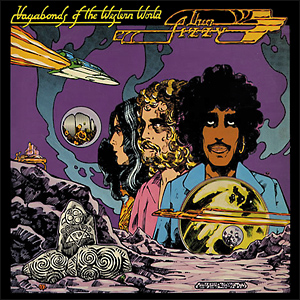
By the end of 1972, Thin Lizzy had attracted a cult audience, but also had two albums under their belt which were commercial failures. Early 1973 bought a change in their fortunes when their reworking of the Irish folk song ‘Whiskey In The Jar’ (released as a single in November ’72) became a huge hit. Eventually reaching #6 in the UK chart, it gave them massive exposure on radio and even scored them an appearance on ‘Top of the Pops’. The song also became a German top 10 hit and a number one single in Ireland.

Continue reading

DAG – Righteous

dag

It was the summer of 1994. It feels like yesterday, yet it feels like so long ago. One of my best friends had just opened a record store. I met new people, some of whom I still think about now, some of whom have been forgotten. It was there I met my girlfriend (I don’t remember that though; and she wouldn’t become my girlfriend until over a decade later). And it was there, I first heard this monster album by Dag. It became an in-store favourite for a long time.
So, why is that relevant? It’s relevant since this is one of those albums which always makes me think back to the first time I heard it…

Looking like Pearl Jam, replete with plaid shirts, Dag found themselves signed to Sony at the tail-end of the alternative rock boom. At that record store, we thought we knew what to expect as we put the disc in the player. We were very wrong. Instead of retro riffing, we got funk. Lots of funk.

Although featuring a few harder edges than than the 70s funk played by black musicians for largely purist funk audiences, the Parliament-Funkadelic influences are still very much there on this album – and not too sugary. In that respect, Dag went against the then current mainstream and opted for retro of another kind…and they were heroes for doing it – at least in that record store. As far as I know though, the album buying public remained apathetic.

Two of the album’s highest points, ‘Sweet Little Lass’ and ‘Your Mother’s Eyes’, feature a swagger and grubbiness on loan from Prince and George Clinton. Throughout the album, bassist/vocalist Bobby Pattison performs like a hero, but his brilliance is particularly evident during these two songs: his vocals are soulful; his bass playing has a solid groove and strong presence. ‘Sweet Little Lass’ is driven by a slightly distorted, dirty rhythm. Its grinding heaviness is instantly captivating and should appeal to listeners who enjoy the pre-disco vibes of Parliament and Funkadelic. ‘Your Mother’s Eyes’ is a little lighter, although still heavy on the funk. Pattison’s vocals are lighter too and the end result provides a decent snapshot of Dag’s best traits – even with a keyboard making odd squonking noises throughout.

There are moments when I’ve been reminded of Maggie’s Dream (another favourite which somehow fell through the cracks), especially on tracks like the wah-wah drenched ‘Home’ where the funk is still very much at the fore, but rather more subdued than the Clinton-isms displayed elsewhere. ‘Lovely Jane’ is closest in spirit to Jamiroquai (who, of course, were million sellers in the UK with their Stevie Wonder obsessed acid-jazz-funk grooves), but even Jamiroquai, in turn, would have been at odds with the then-current musical scene. Dag employ more guitar work in the overall mix than you’re likely to find on an early Jamiroquai or early Brand New Heavies disc. In fact, the track features a blistering guitar solo, which is surely another aspect culled from Parliament and ‘Maggot Brain’ era Funkadelic…after all, they were never shy of using a guitar to add some serious chops where necessary.

The title track has a wah-wah cop show style guitar played against parping horns (making their first obvious appearance) and it’s hard to hear it without imagining seventies blaxploitation movies about coke-fuelled law-enforcers with huge facial hair. The funkiest thing on the album (and possibly one of the funkiest things ever recorded) is ‘Plow’, which revisits a dirty bass and solid groove – but the real star is Doug Jervey, whose clavinet work really carries the song and gives an obvious nod of approval to Stevie Wonder. Fantastic stuff. ‘As’ features a James Brown horn sound and a groove he might have enjoyed during his Popcorn years, although far looser and not carrying the intensity he may have managed. Throw in an edgy horn solo and you’ve got Dag at their most sassy. Play this before or after ‘Plow’, then repeat as often as is necessary for best results.

The album only carries one dud and even then it’s only the high standard of the other stuff which makes it so. ‘You Can Lick It (If You Try)’ is more Prince meets Morris Day than anything. Although solid, if there’s a contender for “most likely to get skipped track”, this is the one. The music is straight out of one of Prince’s “romantic scenarios”, and although the lyrics aren’t anywhere near as suggestive as his one-time dirty mind (pun intended) could muster without trying, it’s the high vocals which make this one a little grating if you’re not fully prepared.

In short, though, you need ‘Righteous’ as it’s, uh, righteous. It should be cheap somewhere by the time you’ve finished reading this.

September 2007/July 2010