THE FAULTS – Patients EP

On The Faults’ debut EP (a self-titled release from 2011) the band’s two members, Oli (gtr/vox) and Tom (drums) hammered their way through four reverb-drenched songs, sticking rigidly to the confines of the two-man setup.  While their work didn’t actually bring anything of a new slant to the garage rock genre, the tunes were played with absolute conviction and with a great energy.  Their second release, ‘Patients’ brings the keen garage rock fan much more of the same.

Beginning this second EP in a really unsubtle fashion, ‘Patience’ opens with raucous drums and hammered guitar, over which Oli wails like a man possessed by demons, his voice fuzzed up to create an extra level of intensity. While fans of garage-based noises are likely to dig this, be warned: the general looseness displayed means they’re in danger of sounding more like The Strokes in a slightly drunken stupor than The White Stripes or New York’s mighty Dead Exs at their best.  Much better, ‘Peace of Mind’ mashes an early sixties Phil Spector inspired beat with a guitar jangle that’s almost got a Mexicana vibe – like something from a spaghetti western played in a garage.  Between the disjointed pieces of music, the voice has a very strong presence, bawled with very little restraint. The combination of interesting tune and vocal forcefulness makes this one of the EPs better offerings.

‘Chivalry’ is a standard issue garage rocker where, between the crashing cymbals and the threat of a lead guitar break which never manages to surface, The Faults’ play firmly to their strengths.  Slowing things down and potentially becoming a touch more interesting in doing so, ‘Summer’ brings in a slight tone of sixties pop to the song writing. With the shift in pace, Oli’s voice gets a brief opportunity to stretch out on some longer, croony notes.  Despite a stronger focus on the voice and stripping back the drums, the general tone stays within their fuzzed up remit – yes, it may sound a little poppier in its construction, but everything still comes with a truckload of reverb…and if you’ve dug The Faults’ thus far, chances are, you’ll dig this too.  The strongest – and most easily accessible track – ‘Leather Jacket’ brings more of a trashy rock ‘n’ roll aesthetic to The Faults’ sound, all groove-led drumming and spiky guitar.  Think Jon Spencer Blues Explosion circa ‘Orange’ (though with Spencer’s drunken Presley-isms replaced by something less stylised) and you’ll know where this is headed.  Upbeat and sweaty, this is the Australian duo’s finest (almpst) two minutes.

Even though perhaps three of the five songs aren’t quite as instant as ‘Quarter’ from The Faults’ previous release, there’s some ragged fun to be had from ‘Patients’.  It is not as sharp as it could have perhaps been, but rest assured, it gets better with each play. ‘Leather Jacket’, meanwhile, is a killer track – certainly great enough to make up for anything potentially lacking elsewhere.

October 2012

Napalm Death release new video

British grindcore legends Napalm Death have released a new “tour video” for the track ‘Everyday Pox’.

The track is taken from their 2012 release ‘Utilitarian’ and features avant garde musician John Zorn on saxophone.

The clip can be seen below. To watch interviews with ND frontman Barney, click here.

New video interview with Napalm Death’s Barney posted online

A new video interview with Mark ‘Barney’ Greenway has been posted on YouTube. In a chat with Loudwire Rock, the Napalm Death frontman discusses the band’s 2012 release ‘Utilitarian’ and more. The resulting interview can be seen in the first embedded clip below.

An older interview with Barney discussing ‘Utilitarian’ with Italian website MetalItalia.com can be seen in the second clip.

Clicking on the YouTube logo in the bottom right of each embedded box will take you to each interviewers’ YouTube channel.

‘Utilitarian’ – Napalm Death’s fifteenth studio album – was released in February 2012.

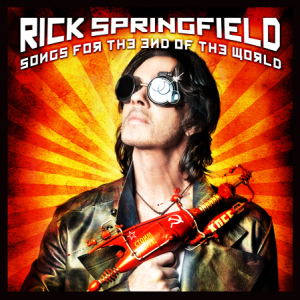
RICK SPRINGFIELD – Songs For The End Of The World

In 1980, Rick Springfield’s fifth album ‘Working Class Dog’ shifted the Australian singer away from the teen market and into the pop/AOR market, its lead single ‘Jessie’s Girl’ subsequently propelling him to stardom.  During the next few years, he released album’s of a similarly high calibre, ending his most high profile period with the classic ‘Rock of Life’ in 1988.  Springfield then disappeared from the music scene for almost a decade, eventually returning with the band Sahara Snow, whose one album may (or may not) have been compiled from unused material written for ‘Rock of Life’s abandoned follow-up.

Releasing albums sporadically – under his own name – from then on, Springfield’s work adopted a slightly harder sound at times, but essentially retained many of the kind of pop/rock hooks which proved a winning formula back in the eighties.   In that respect, 2012’s ‘Songs For The End of The World’ will provide the longtime fan with few surprises – but those only familiar with Springfield’s eighties work may be surprised at the relative chunkiness of a few of these tunes.

Each of the album’s core twelve songs are all superb.  A huge production sound plus some well-written pop/rock material proves a winning combination. Following some crisp sounding guitar chimes, Rick chooses to open ‘Our Ship’s Sinking’ with some huge and very welcome whoahs.  In contrast, the verse which follows, at first, sounds a little lower key than such whoahs may have suggested. The real clincher comes with the chorus: harmonies are abound on a rather catchy hook, where – guitar sound aside – everything follows the classic Springfield mould, so much so, this could have fit happily onto ‘Rock of Life’.  With a slightly new wavish edge – perhaps as a nod to ‘Jessie’s Girl’, though just as likely an extension of Springfield’s natural style – ‘I Hate Myself’ is punchy and poppy all at once, while a gang vocal choir hammer home a chorus which only needs to be heard once before making an impact.  Similarly Ready for radio, ‘Love Screws Me Up’ is nice an simple, a chiming guitar part paving the way for a shameless chorus of “na na nas” – if you like things cheesy (in a good way, obviously), this is a tune you’ll love. If you’ve followed Rick Springfield’s career thus far, you’ll know what you’re in for.  If you’ve never been swayed by the man’s prior work, well…you’re probably not actually reading this.  [As an aside, is there any chance of power pop man Kurt Baker recording a cover, please?]

More reflective, ‘Gabriel’ has a strong acoustic basis, but it’s not long before a ringing guitar boosts everything into bigger sounding melodic rock territory.  It’s all very much of a tried and tested musical formula, but that doesn’t weaken its overall impact.  In terms of writing unpretentious pop/rock fare, Mr. Springfield makes it sound so effortless…but then, at this point in his career, he’s had about four decades of practice.  The big power ballad ‘You & Me’ is loaded with rhythmic guitars and keyboards, shined up to the max without sounding unnatural.  While a slight filter has been applied, this tune boasts one of Springfield’s most distinctive vocals, instantly recognisable as the voice behind ‘Jessie’s Girl’, ‘Living In Oz’, ‘Alyson’ and many other eighties classics.  In terms of musical arrangement, there’s nothing new here, just old-school pop/rock with a strong AOR bent.  As with most of ‘Songs For The End of The World’, fans will not be disappointed.

With regard to the albums (slightly) rockier outings, ‘Wide Awake’ blends Springfield’s pop core with edgier elements perfectly, since the verses are incredibly angry by his usual standard, but the chorus ushers in studio-treated choirs of vocals which may as well be singing any number of his straight-up pop tunes from decades past.  My Last Heartbeat’ is a guitar-driven winner, featuring a chuggy riff which is balanced out by a techy multi-tracked vocal and a world of keyboard noises, while ‘Depravity’ is a fast paced offering where slightly muddy guitars power away, while cleaner leads provide a great compliment.  Of greatest interest on this number is the lead guitar break which, instead of taking the usual tuneful approach, fills a few bars with tortured squeals and a few technical effects.

This album has only one fault – and it has nothing to do with any of the material, but rather more to do with marketing and record company greed surrounding its release.  There has been four different versions of ‘Songs For The End of The World’ pressed, each with a different sleeve and content.  Three of the issues include bonus tracks: a UK/Euro CD (exclusive bonus track, ‘My DUI’), a CD available from Best Buy stores in the US (three exclusive bonus tracks, but ‘My DUI’ is absent) and a version sold via iTunes includes another bonus track that’s also exclusive.  For those keeping score, this means that in addition to the album’s twelve songs, there is another half a disc’s worth of songs floating around out there.  Adding further insult to injury, all versions come with downloadable content partly exclusive to each edition.  Whatever happened to music actually being a genuine art form as opposed to some kind of fan-fleecing business model? This kind of marketing rip-off must stop!  [See also the Daughtry debut: 9 bonus tracks spread across four editions…just ridiculous.]

Not wishing to let corporate greed sour what is a near faultless collection of tunes, ‘Songs For The End of The World’ is recommended listening to nearly everyone who enjoys chorus driven singalongs.  It absolutely stomps over any other similar(ish) radio-friendly pop/rock you care to name…and that’s no lie.  Releases this sharp and exciting from such “veteran” performers are rare and it deserves to put Springfield higher up the ladder in terms of public recognition. Since he was 63 at the time of making this recording, though, it might be a little late to make a pop idol “comeback”…

November 2012
ISSA – Can’t Stop

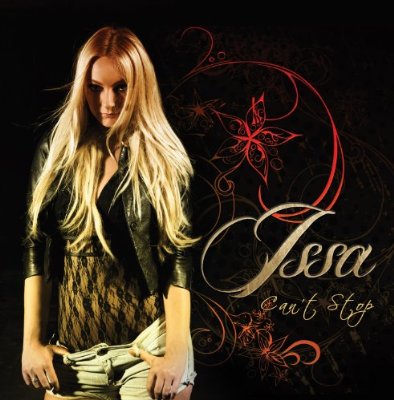
Instead of capitalising on her very enjoyable second album (2011’s ‘The Storm) with another set of specially written melodic rock tunes, on this third outing, Norwegian songstress Issa and her band venture into the wobbly world of the  covers album.  It would have been easy for Issa to wheel out a few of AOR’s best-loved tunes and consider that a job well done, but the results on ‘Can’t Stop’ are more interesting than that.  Instead of plumping for the genre’s hits, Issa puts her mark on the near misses, the should-have-been hits.  The choice of material is excellent – this dig through the archives of melodic rock offers tunes just obscure enough for some listeners to be hearing a few of these songs for the first time, while reminding the more seasoned melodic rock fan of a few overlooked gems in their treasured vinyl collections.

Although the highlights on this disc are many, ‘Can’t Stop’ is a release that preaches to the converted, but with that in mind, many long-term AOR fans will enjoy hearing these tunes covered almost verbatim.  Although a near faultless selection, it’s possibly ‘If You Ever Fall’ which stands up the strongest. Originally recorded by Mystic Healer – a project helmed by AOR legend Mark Mangold (released via the now defunct MTM label in 1998) – it already had a decent pedigree.  In the hands of Issa, an already superb number is given a great rendition.  Harnessing the song’s power and delivering it at a slightly different pitch, Issa’s vocal gives the track a very Robin Beck slant.  Almost as good – and one of the records most obscure picks – ‘Heat of The Night’ (a tune released by Worrall in 1991) is a vast improvement here.  The Worrall recording showed promise but was low-budget and very trebly sounding.  Issa’s 2012 recording has a wonderfully full sound with plenty of bass, a truckload of classic sounding keyboards tinkling away in the AOR tradition and, perhaps most importantly, a powerful vocal.  Making the best of a memorable hook, Issa takes a once okay tune and pushes it up to a level worthy of her female melodic rock predecessors.  …And, of course, if you’re interested in this project, that’s exactly what you’d want from it.

The title cut originally appeared on the Aviator album back in 1986, and since that album is somewhat of a cult classic, it’s great that the team behind this release have chosen to resurrect it.   The eighties production has been downgraded to the slightly woolly sound present on a lot of Frontiers releases, meaning the drum sound isn’t so crisp and there’s little to no separation between the rhythm guitars and bass, but the lead vocal is strong and the unashamedly 80s keyboards are present and correct. Production quibbles aside, each of the band members does their utmost to try and make this as memorable as the Aviator recording, particularly keyboard player Allesandro del Vecchio and guitarist Mario Percudani who launch into a musical duel for the instrumental break.

Sadly, Issa’s recording of Tower City’s ‘I Won’t Surrender’ doesn’t fare quite as well as most of the tunes here.  It’s nothing to do with the performance, since the brilliance of the song still shines through; the big issue here concerns the production values.  The crisp brilliance of Akron, Ohio’s finest Def Leppard impersonators has been compressed somewhat, almost reduced to a second division mushy sounding recording in comparison.  Thankfully, much like the Worrall and Regatta tunes, ‘State of Love’ (originally recorded in the mid 90s by Mark Free for Now & Then Records) stands up well to both a female vocal and the slightly compressed production.  One of the tougher songs from Free’s slightly drippy solo album, it sounds just lovely here – the combination of stabbing keys, noodling bass and occasional twin lead guitars embodying something close to genre perfection.

A hugely underrated band (especially considering they had Thin Lizzy’s Scott Gorham at the helm), 21 Guns are represented by two numbers ‘Just a Wish’ and ‘These Eyes’.  Regardless of the outcome, anybody wishing to applaud the genius of Scott Gorham should be applauded in return, but thankfully, both tunes fare extremely well.  On ‘Just a Wish’, Issa’s style really suits the power ballad format, but it’s not her fist-clenched emotion that’s this track’s strongest feature: although brief, Percudani’s guitar solo has plenty of presence.  …And as he launches into a string of long and emotive notes during the song’s fade, you may find yourself wishing they’d let him play just a little longer. ‘These Eyes’, in contrast, was a great emotionally charged rocker in the hands of 21 Guns and very little has changed here.  This cover version includes a fatter bassline than the original recording could muster, while the main keyboard riff – played in a slightly lower register – sounds more like a sampled xylophone!   Despite best efforts, Percudani’s guitar solo isn’t quite up to Gorham’s original take, but that doesn’t detract from both 21 Guns covers being among ‘Can’t Stop’s highlights.

Elsewhere, Issa pays tribute to other works wholly unknown outside the AOR community with covers of songs originally by Unruly Child, Atlantic, Tangier and Boulevard, each with a deserving reverence, adding a few extra reasons for most melodic rock fans to give ‘Can’t Stop’ a listen.

Given the improvement between Issa’s first album (2010’s by-numbers ‘Signs of Angels’) and her second release (2011’s ‘The Storm’), the odds were quite high on Issa’s third album being a winner.  It’s not quite up there with the genre’s very best, but some carefully picked songs and solid band performances makes it one of 2012’s melodic rock highlights.  If nothing else, ‘Can’t Stop’ should be enough for genre buffs to dig out those Aviator, Mystic Healer and Regatta albums they have pugged away…

October 2012