GREGG ALEXANDER – Intoxifornication

It’s probably fair to say that if you heard Gregg Alexander or were aware of his work in the early 90s, you almost certainly discovered him by accident. This seems a pity as this, his second solo album, is a decent record. Not perfect by any stretch of the imagination, but like Prince (who seems an obvious influence on bits of the album), sometimes it’s the flaws which make it more interesting.

Alongside a handful of tunes featured in different form on ‘Michigan Rain’ (Gregg’s incredibly rare debut), this sophomore album features some new material. Pop-rock drum loops mixed with rock guitars provided the basis for the smut-driven ‘Smokin’ In Bed’ and ‘Electric Girlfriend’, both of which very much set the tone for this album. The title track, as you’d expect, follows suit, but benefits from a punchy guitar riff and a verse with a call and response vocal (it’s amazing what you can do with a ‘hey hey’ if you’re gifted enough), but it’s the pre-chorus which is the real star. Gregg was always meant to be on the radio – and once you hear this, you get the feeling that he presented this track (and indeed the rest of this album) with nothing but arrogant self-belief.   ‘I Wanna Seduce You’ is slightly different, in that the slightly alternative leanings present all but vanish; this track is pure 80s chorus-driven goodness. It reminds me of a Def Leppard cast off except it’s better than that. ‘Save Me From Myself’ (one of the songs originally from ‘Michigan Rain’) provides a decent counterpoint to a lot of the more up-beat tunes and has a vocal delivered with anguish. Even though it’s never going to be a classic album, I’d say the only time the album really misses the mark is on the uncredited bonus track (listed on the Japanese pressing as ‘Wear Your Love Beside You’). I’m not sure what happened here, but Gregg’s voice sounds lethargic and the music sounds like it came from a tape which was slightly warped. I suppose it was an uncredited track for good reason.

After the release of the album Gregg co-wrote most of the songs on ‘Arrive All Over You’ the debut album by Danielle Brisebois (who’d provided backing vocals on ‘Intoxifornication’). As you may expect, her album continued where Gregg’s ended with a similar style of power pop, rock and tongue in cheek smut. Unsurprisingly, her album was greeted with similar indifference by the public at large. [At the time of writing, Danielle’s second album remains recorded but unreleased].

 I’d owned ‘Intoxifornication’ for a couple of years and was convinced that only a few people in the UK would ever hear Gregg Alexander and then at the tail-end of the 1990s, something unbelievable happened. Out of nowhere, a band named New Radicals appeared. Their single ‘You Get What You Give’ was a monster hit. The vocals felt very familiar, but no, it couldn’t be…could it? Gregg Alexander fronting a hit band? Danielle Brisebois appearing on the album too?! Their time had finally come…and then, after a fairly short time in the spotlight, Gregg and Danielle retreated once again, but those with a keen eye and ear can spot Gregg writing songs for Ronan Keating, Rod Stewart, Enrique Iglasias and Danielle writing with Natasha Bedingfield, among others.

Good luck with tracking down any of Gregg or Danielle’s albums mentioned here; they’re worth it.

April 2008
 

COYOTE SHIVERS – Coyote Shivers

CD

Canadian-born Francis Coyote Shivers is one of those people whose career never seemed to get off the ground in the traditional sense. In the UK, at least, he’s only really known for playing Berko in the film ‘Empire Records’ and even then, most of his scenes only seem to be in the longer cut of the film. He is, however, of most importance to the final scene, performing the not-quite-anthemic ‘Sugarhigh’ on the record store roof.

What, then, can we say about his self-titled album? Trashy. But is it trashy in a glitzy and cool way like Beat Angels and other post-glam acts, or just plain trash? The hard truth is, well, it’d like to be the former but often ends up falling short. ‘Guilty’ has a rock ‘n’ roll heart which could appeal to fans of Gilby Clarke (ex-Guns n’ Roses) and ‘Happiness Is A Warm Bong’ is cool, with a nod toward early Replacements and the previously mentioned ‘Sugarhigh’, so it could be argued the Coyote’s influences are present and correct.

Sadly, the song writing is often lacklustre and the attitude on show doesn’t quite cover up the weaknesses. Of the twelve songs, half of them would have been binned by Paul Westerberg and Tommy Stinson at the demo stage. ‘If’ kind of reminds me of The Stooges, but Shivers doesn’t quite have the charm of Iggy Pop to make it truly work. Pure adrenalin makes ‘Bisexual Girl’ stand out, provided you can get past the lyrics, which hover somewhere between a joke and vulgar.

Despite a couple of stand out tracks, this is one of those albums which comes with little to recommend it, especially when so many others out there do this kind of thing so much better. Why, then, do I play this some days and almost connect with its disposable non-sentiments?

Worth it for ‘Sugarhigh’, but generally, you’re better off with Coyote’s ‘1/2 A Rock ‘n’ Roll Record’ EP, which boasts the genuinely great ‘Plus One’, and mercifully, the show’s over in less than half the time.

September 2007

TOMMY TUTONE – Tommy Tutone

Originally formed as Tommy and the Tu-tones, but later settling on the shortened Tommy Tutone name, in the US, these guys are probably hailed as one of the great one hit wonders, their anthemic ‘8675309/Jenny’ (from their second record) remaining a popular chorus driven radio favourite. This self-titled debut (originally issued in 1980) on the whole seems to have aged quite well. Unlike some of the bigger power pop bands, like Flamin’ Groovies and Pezband, TT didn’t opt so much for the retro sound and 60s harmonies, appearing at the time to be more in line with their new-wave contemporaries, so that might be why it feels such a surprise to hear something which still has spark.

The lead track and single, ‘Angel Say No’ marries early Cars style rhythm guitar work with a nod to Phil Spector in the drum depot, a catchy enough chorus replete with typical power pop harmonies. At the time it was only a minor hit in the US. You can only wonder why, as it sounds pretty good these days (equal to, or if not better, than a lot of the stuff on the Rhino power pop comps, reviewed elsewhere on this site). Was it a lack of marketing that meant this slipped through the cracks, or was it a saturated market? After all, on the surface, Tutone offer very little that many other bands of a similar ilk were pumping out at the turn of the decade. ‘Cheap Date’ on the other hand, is far less obvious. The time signatures aren’t quite where they seem to be, the finger-clicks and other overdubs add nothing and leaves everything to the chorus, which features vocals which seem a little out. The cod-reggae leanings were very popular with post-punk and new wave bands at this time, but clearly they’re not something which feels natural here.

‘Girl In The Backseat’ is pretty solid. While not living up to the promise of ‘Angel Say No’, still offers a quirkiness somehow reminiscent of mid 70s Rick Derringer. While not quite first rate power pop, it has some pleasing guitar work and an unashamed over-egging in the backing vocal department, which proves, while they never had enough courage to go full-on pomp in an Earth Quake style, they were never quite as post-punk as bands like The Real Kids. ‘The Blame’ is a winner. Following on from the slightly poppier feel of ‘Angel Say No’, it’s Tommy Tutone at their best. Here, the balance between catchy song writing, simple musicianship and final arrangement is near perfect.‘Rachel’ is solid also – in the old teen tradition, songs about girls seem to score highly! A similar mix of vocals to the other good stuff here, it’s something these guys should have concentrated on and the handclap overdubs just set things off nicely. While on the whole there’s little else to add with regard to ‘Dancing Girl’, the guitar sound in the closing part is noteworthy in it’s new wave approach, not far removed from the style played by Andy Summers on The Police debut, ‘Outlandos D’Amour’. ‘Fat Chance’ dates the album a little, as they attempt the slightly more retro sounding power pop, but the 80s keys and production values make this feel a little fake. Whatever the Flamin’ Groovies special ingredient for making albums sound really 60s was, it’s missing here. Not that they’re musically that similar, but being reminded of doo-wop homage ‘In Your Letter’ by REO Speedwagon doesn’t help.  It’s probably their ‘well meaning and fun’ ideal which that’s off-putting!

There’s nothing memorable in the long term as ‘8675309/Jenny’ on this debut, but mostly it’s a solid listen, one which (as already stated) has weathered the passing years remarkably well. It’s currently available on CD with ‘Tutone 2’ as a 2-on-1 CD: With that in mind, if you only know ‘Jenny’, it might be time to check them out.

October 2007

MIRAH – Advisory Committee

For the uninitiated, Mirah Yom Tov Zeitlyn (not to be confused with Mirah, a Danish pop star), is an American singer songwriter. Typically, she uses sparse arrangements and electronic loops. ‘Advisory Committee’ is probably one of her best known releases, though still, at the time of writing this, she’s still very much a cult artist. Most of her work to date has been issued on the K Records label, based in Olympia, WA. Typically of that label, most of Mirah’s work has a lo-fi feel with a DIY ethic.

This album offers fourteen songs in total and feels very much like an album, as opposed to a collection of songs. ‘Cold Cold Water’ was released as a single, though listening might leave you wondering why. There is no obvious hook here, though musically it follows a tried and tested quiet verse, loud chorus formula. Though unlike others who’ve popularised this technique, there aren’t guitars upfront – there are strings, voice and pounding drums. The arrangement seems unstable, almost feeling like its swaying about. A bold move for both opening cut and single and promises a great deal for the album as a whole. ‘Monument’ is gentle folk-pop and it’s here that you’ll probably realise you’ll either love or hate Mirah’s vocal style. There’s an innocence at play, it seems, but thankfully she never adopts that faux little girl squawk that Joanna Newsom seems to think is somehow endearing.

‘After You Left’ is fuzzy. Droning but gentle, there’s something here which makes Mirah sound distant; the track itself sounds like a work in progress that somehow made the finished album. ‘Light The Match’ is largely based around the accordion. Never my favourite instrument, this isn’t so easy to listen to, but balanced against the strings here, this song has very much an Eastern European feel. It doesn’t feel as personal as some stuff here, but maybe that’s the accordion forcing me not to listen quite as closely as I might. ‘Special Death’ features prominent xylophone sounds in the intro, when combined with the light vocal and guitar instrumentation feels quite spooky; it doesn’t quite live up to initial promise, truth told, but the use of strings in the backing arrangement is effective, as it’s so sparse. Not so sure about the Christmassy bells. It’s on stuff like this where Mirah begins to feel like the anti-Feist, offering a sometimes similar gentility, but not always beauty.

‘Recommendation’ is a short track based around a programmed drum loop, very mechanical with a nod towards the early 80s new wave. Lyrically, it seems to concern parting, but the song is over almost as soon as has begun, leaving the listener wanting more. Strangely, for something which doesn’t feel like a focal point, its one of the album’s stand outs. ‘Body Below’, in contrast, is four minutes worth of fuzz guitar and feedback drone, coupled with hushed vocals. Pavement and Sonic Youth may be obvious comparisons (especially the latter), but this experimental approach works well for Mirah here. ‘Mt. St. Helens’ begins with a gentle, almost lullaby vocal. After this, as a listener, it’s expected that the arrangement will pick up a little. It does, in a fashion, as Mirah hammers on her acoustic guitar, which seems to be in a muddy tuning. As always here, I’m left with the feeling that it’s not the music that’s important, but at that point, electronic loops play backwards and are at complete odds with the once hushed voice and acoustic sounds. ‘The Sun’ employs a similar guitar tuning and in this case, it doesn’t seem to work. There might be a nice twee tune in here somewhere, but the off-centre vocal and guitar work obscure the melodies. The end part of the song is electric indie-rock and works better, but it’s not memorable in the way a few of these songs are. ‘The Garden’ employs a similar clunkiness to the end of ‘Recommendation’, but with little else to focus your attention on, this is far to stark for music in the usual enjoyable sense; but yet, it’s not out-there enough to be considered even slightly avant-garde.

‘Advisory Committee’ is not an album which can be recommended to everyone, hovering as it does somewhere between twee and discordant. Like some of the works by The Magnetic Fields, though, this is very rewarding to patient listeners.

November 2007

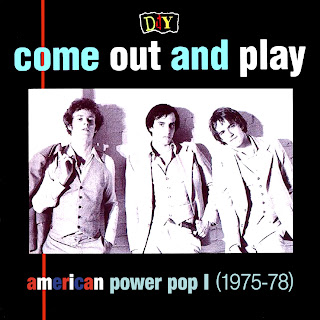
VARIOUS ARTISTS – Come Out & Play: American Power Pop Vol 1 (1975-78)


I kid you not when I tell you this selection of pure gold nuggets and curiosities from the USA’s first wave of post 60s power pop makes for pretty much essential listening. Taking their cues from The Byrds and Big Star, a whole suave of bands paid homage to their heroes and opened new musical avenues in the process.
Kicking off with (now) well known ‘Shake Some Action’ by Flamin’ Groovies, you might know what to expect. There are plenty of 60s influences here and while possibly one of the best known tracks to be included as part of this collection, it’s not the best by any means. That said, it’s still good and very representative of this bands mid-late 70s stuff. ‘Wayside’ by Artful Dodger has a more contemporary 70s feel and much less garage sound. If you don’t know these guys and like Cheap Trick, I have a feeling they’re worthy of investigating. Sadly, to the best of my knowledge (and at the time of writing this) their three albums are out of print and have never been issued on CD, so that’s about all I can say about them. I’d really love to hear more, so if anyone can shed any light, that’d be great.
I was never a great fan of Billy Squier, but have often thought I should check out his old band Piper, purely on the strength of their song here. ‘Can’t Wait’ is great pop, but as you might expect, has rockier guitars than some of the other bands here. It took me quite a while to appreciate how good this track is, as I’ve never been especially fond of Squier’s vocals, but its quirky musical arrangement has a complexity which makes it stand out more than some. That’s all relative though; don’t expect kitchen sink complexity of a Todd Rundgren standard. This CD offers two cuts by The Nerves, fronted by future Plimsouls man Peter Case. The first, ‘Hanging On The Telephone’ will be familiar to all, having been covered by Blondie who made the song a hit, despite not changing its arrangement in the slightest. The almost punky energy still makes this two minute song as vital as it was back in the late 70s. The second Nerves track, ‘When You Find Out’, is pure straight-up 60s R&B. Wearing influences clearly on their sleeves, this honest tribute to The Zombies and The Yarbirds is equally essential listening.
‘The Summer Sun’ by the almost legendary Chris Stamey is also very strong. It’s another sixties inspired song (as with most of this wave of power pop), with a strong chorus and vocal melodies. The over all arrangement doesn’t veer at all from very familiar territory. For a better example of what this man can do, check out ‘(I Thought) You Wanted To Know’ from ‘Shake It Up: American Power Pop Volume II’ [reviewed elsewhere on this site]. Cheap Trick, like the Flamin’ Groovies, will require no introduction. ‘Southern Girls’ is from their ‘In Color’ album; a classic of the power pop genre – maybe even a bona-fide classic in its own right.
I must be missing something here. I’ve read in a few places before that The Scruffs’ album ‘Wanna Meet The Scruffs’ is a classic. Based on the track here, The Scruffs leave me feeling somewhat underwhelmed. Musically, it sounds fine – a little Big Star, a little Pezband, but vocally it grates. The singer’s voice is strong, but has a slightly odd croony tone, like the vocalist from Prix, but not quite that bad. This is one of the few tracks here which I find myself skipping regularly, alongside The Names, who don’t do much for me for pretty much the same reasons.
Upon its single release, ‘Christi Girl’ by The Flashcubes supposedly wasn’t bought by many people. Some sources have claimed that it could be found in bargain bins in many of New York’s record stores. The song itself isn’t that bad. It has more than a nod to Gary Puckett rather than Big Star, which makes me think that had anyone actually heard it at the time, it may have reached a slightly broader audience than some power pop releases. Having missed out on success the first time around, The Flashcubes re-united in 1993 and recorded new material. You can read more about them at their official website.
After a twee intro, ‘All Kindsa Girls’ by The Real Kids is a cult classic. Showing the energy of the Flamin’ Groovies but less of an obvious sixties influence, this song has a proto-punk energy and as with The Nerves, should appeal to those who never quite understood the classic Ramones raw dumbness. As for this compilations title cut, performed by The Paley Brothers, one can assume they were either deathly serious or going for full sugar-overload with a knowing wink. There are handclaps, Phil Spector inspired glockenspiels, and a general infectiousness that’s as annoying as it is entertaining. It’s like hearing ‘Sugar Sugar’ by The Archies given a dusting down by mid seventies pop genius. I love it. I hate it. I love it.
Closing this compilation is the haunting ‘I Am The Cosmos’ by Big Star man Chris Bell. There’s a definite uneasiness to parts of this recording. While not obviously bleak like some of the songs from Big Star’s ‘Third’ (recorded after Bell’s departure, interestingly), and despite ringing guitars and a full band arrangement, there’s something in this song that’s a little unsettling It sounds like a man with the world on his shoulders, not quite beautiful, never ugly, always fragile. Not a fist-in-face cry for help, but it comes as no surprise that after leaving Big Star in Alex Chilton’s hands 1972, Bell attempted suicide a few times. He would eventually die in a car accident in 1978. ‘I Am The Cosmos’ is up there with the best of the Big Star stuff and can be easily found elsewhere on the ‘Big Star Story’ compilation CD.
This CD, issued by Rhino in 1993 is now out of print. You owe it to yourselves to try and track one down.
August 2007