MORITZ – Undivided

moritz

I first became aware of Greg Hart in the mid 90s when he teamed up with ex-Ya Ya vocalist Sam Blue and Airrace’s bassist Toby Sadler to form the short lived band GTS. Their debut release ‘Tracks From The Dustshelf’ contained a few great pieces of Brit AOR, though I have to confess, as good as the album may have been, I much preferred the unfussy approach of their original demo recordings. I backtracked and checked out one of Greg’s previous bands, If Only, subsequently finding myself completely underwhelmed, despite having read good reviews.

A few years previously, Hart was the guitarist with Moritz, a Brit-AOR band who were contemporaries of Airrace, FM and Virginia Wolf. They released a couple of self-released singles and played regular shows at London’s Marquee, but failed to gain any record label interest. Various Moritz recordings dating from between 1986-88 were belatedly issued on a compilation album, ‘City Streets’ in 2008.

Following the cult success of ‘City Streets’, the original members of Moritz – Pete Scallan (vocals), Greg Hart (guitars), Mike Nolan (guitars), Ian Edwards (bass) and Andy Stewart (keys) – decided to reunite. Augmented by Mick Neaves on drums, and delivered long after their heyday, ‘Undivided’ is the band’s first full album.
It may have been delivered over two decades later than planned, but fear not, this album features all the hallmarks of mid-80s melodic rock and the original Moritz sound, with no other influences creeping in. While musically, it’s still has much in common with Moritz of old, fans may notice that Pete Scallen’s vocals aren’t quite as strong as they once had been, now sounding a little rougher around the edges due to the ravages of time.

The title cut is one of the strongest examples of Moritz’s songcraft, as they combine a hard hitting riff with huge chorus vocals. The mid-paced stomping style shows obvious influences from Survivor and while the chorus could have been a little more interesting, big backing vocals lend its main hook plenty of punch. The mid-paced power ballad ‘Should’ve Been Gone’ is top notch, making good use of choppy guitars and very 80s keyboard sounds. It’s almost certainly something you’ll have heard time and again (and quite often on songs called ‘Don’t Walk Away’), but Moritz more than give it their best shot. While the production is a little homegrown and Pete Scallen’s lead vocal style isn’t quite as smooth as some, the overall arrangement is classic AOR, and the featured guitar solo is superb.

‘Who Do You Run To’ features another great chorus featuring harmony vocals from Jackie Bodimead (ex-Girlschool) and acoustic guitars overlaying the electric rock elements. Listen beyond the obvious hook and you’ll also notice that Andy Stewart’s piano work is rather busy, giving an already fairly cluttered number an extra layer; when all thrown together it works rather well. I wish I could be as enthusiastic about the album’s second power ballad ‘Can’t Stop The Angels’, which aside from a superb guitar solo, is incredibly stale. Scallen over-sings constantly throughout a rather cheesy number and as a result everything feels overdone. Swathes of keyboards open ‘World Keep Turning’ and continue to play a huge role as they pump their way through a great number which utilises the best elements of mid-80s melodic rock. It’s another number which brings a decent chorus and although it’s very by-numbers, it’s one which captures Moritz in good form. a great chorus. Against the keys, the rhythm section keep things grounded and the guitar riff is suitably crunchy. The hugely pompy ‘Power of the Music’ is also recommended listening, with its huge vocal arrangement and pumping bass, settling somewhere between Boston and Angel for a number which gives a knowing nod to AOR of the 1970s. Despite harbouring great feel good intentions, Scallan’s vocal style and a rather cutting solo make the track a little less smooth than its main influences, but overall, it’s a very tight performance.

Vibrato-led guitars step to the fore for ‘Can’t Get Away’ – the album’s only cover tune. Written by Laurence Archer, the song has a history, having first been demoed by Phil Lynott in 1984 (recordings of which exist in almost unlistenable quality). It appeared regularly in live sets by Lynott’s Grand Slam (of which Archer was a member), but did not get recorded properly until 1986, when it finally appeared on Archer’s 1986 solo release ‘LA’. Listening to that recording, it’s clearly a great song, but is marred somewhat by Archer’s woeful vocal performance – he growls and croaks his way through its four minutes, killing any spark it may have had. Thankfully, Moritz give ‘Can’t Get Away’ the kind of treatment it really deserves: the guitar fills during the verses are perfectly balanced by some top keyboard stabs and the guitar solos (Nolan and Hart, bother differing greatly in tone) are a definite high point. Scallen’s vocal performance runs rings around Archer’s, though undoubtedly, it still doesn’t have that charisma it could have had, if only Lynott had recorded a definitive version. It’s pure speculation, though. Although most of Moritz’s own songwriting is okay (barring the pretty ropey ‘Same But Different’), in terms of arrangement and hook, this track is a cut above – a really classy example of 80s melodic rock.

Aside from their take on ‘Can’t Get Away’, you won’t find anything here from Moritz that could hold a candle to ‘Can’t Stop Loving You’ or as infectious as the ‘Hearts On The Line’ demo from their ‘City Streets’ release. However, it still contains some decent – albeit old school – rock tunes. It features a few clunkers too, but when the album’s good, it hits its mark. On the negative side, it has the sound of a polished demo and there are more than a few occasions I really wished they had a different vocalist. It’s unlikely to make Moritz stars in the genuine sense, but for die-hard AOR buffs – particularly those who witnessed the band live back in the day – ‘Undivided’ is a welcome release. As good as this may be in places, though, we can only but wonder how much better Moritz would have sounded, had they been given the opportunity to record for a major label and get an album released back in ’87…

January 2011
Posted in aor

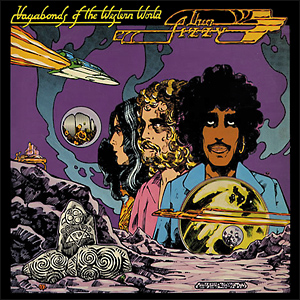
THIN LIZZY – Vagabonds Of The Western World


By the end of 1972, Thin Lizzy had attracted a cult audience, but also had two albums under their belt which were commercial failures. Early 1973 bought a change in their fortunes when their reworking of the Irish folk song ‘Whiskey In The Jar’ (released as a single in November ’72) became a huge hit. Eventually reaching #6 in the UK chart, it gave them massive exposure on radio and even scored them an appearance on ‘Top of the Pops’. The song also became a German top 10 hit and a number one single in Ireland.

Continue reading

DAG – Righteous

dag

It was the summer of 1994. It feels like yesterday, yet it feels like so long ago. One of my best friends had just opened a record store. I met new people, some of whom I still think about now, some of whom have been forgotten. It was there I met my girlfriend (I don’t remember that though; and she wouldn’t become my girlfriend until over a decade later). And it was there, I first heard this monster album by Dag. It became an in-store favourite for a long time.
So, why is that relevant? It’s relevant since this is one of those albums which always makes me think back to the first time I heard it…

Looking like Pearl Jam, replete with plaid shirts, Dag found themselves signed to Sony at the tail-end of the alternative rock boom. At that record store, we thought we knew what to expect as we put the disc in the player. We were very wrong. Instead of retro riffing, we got funk. Lots of funk.

Although featuring a few harder edges than than the 70s funk played by black musicians for largely purist funk audiences, the Parliament-Funkadelic influences are still very much there on this album – and not too sugary. In that respect, Dag went against the then current mainstream and opted for retro of another kind…and they were heroes for doing it – at least in that record store. As far as I know though, the album buying public remained apathetic.

Two of the album’s highest points, ‘Sweet Little Lass’ and ‘Your Mother’s Eyes’, feature a swagger and grubbiness on loan from Prince and George Clinton. Throughout the album, bassist/vocalist Bobby Pattison performs like a hero, but his brilliance is particularly evident during these two songs: his vocals are soulful; his bass playing has a solid groove and strong presence. ‘Sweet Little Lass’ is driven by a slightly distorted, dirty rhythm. Its grinding heaviness is instantly captivating and should appeal to listeners who enjoy the pre-disco vibes of Parliament and Funkadelic. ‘Your Mother’s Eyes’ is a little lighter, although still heavy on the funk. Pattison’s vocals are lighter too and the end result provides a decent snapshot of Dag’s best traits – even with a keyboard making odd squonking noises throughout.

There are moments when I’ve been reminded of Maggie’s Dream (another favourite which somehow fell through the cracks), especially on tracks like the wah-wah drenched ‘Home’ where the funk is still very much at the fore, but rather more subdued than the Clinton-isms displayed elsewhere. ‘Lovely Jane’ is closest in spirit to Jamiroquai (who, of course, were million sellers in the UK with their Stevie Wonder obsessed acid-jazz-funk grooves), but even Jamiroquai, in turn, would have been at odds with the then-current musical scene. Dag employ more guitar work in the overall mix than you’re likely to find on an early Jamiroquai or early Brand New Heavies disc. In fact, the track features a blistering guitar solo, which is surely another aspect culled from Parliament and ‘Maggot Brain’ era Funkadelic…after all, they were never shy of using a guitar to add some serious chops where necessary.

The title track has a wah-wah cop show style guitar played against parping horns (making their first obvious appearance) and it’s hard to hear it without imagining seventies blaxploitation movies about coke-fuelled law-enforcers with huge facial hair. The funkiest thing on the album (and possibly one of the funkiest things ever recorded) is ‘Plow’, which revisits a dirty bass and solid groove – but the real star is Doug Jervey, whose clavinet work really carries the song and gives an obvious nod of approval to Stevie Wonder. Fantastic stuff. ‘As’ features a James Brown horn sound and a groove he might have enjoyed during his Popcorn years, although far looser and not carrying the intensity he may have managed. Throw in an edgy horn solo and you’ve got Dag at their most sassy. Play this before or after ‘Plow’, then repeat as often as is necessary for best results.

The album only carries one dud and even then it’s only the high standard of the other stuff which makes it so. ‘You Can Lick It (If You Try)’ is more Prince meets Morris Day than anything. Although solid, if there’s a contender for “most likely to get skipped track”, this is the one. The music is straight out of one of Prince’s “romantic scenarios”, and although the lyrics aren’t anywhere near as suggestive as his one-time dirty mind (pun intended) could muster without trying, it’s the high vocals which make this one a little grating if you’re not fully prepared.

In short, though, you need ‘Righteous’ as it’s, uh, righteous. It should be cheap somewhere by the time you’ve finished reading this.

September 2007/July 2010

“Real Gone’s end of year round up: 2010”

We’ve reached the end of REAL GONE’s first full year online and it’s been great. I would never have imagined at this point a year ago the blog would have gained such momentum. REAL GONE has gathered increasing support from bands and music fans across the world and it’s getting stronger all the time.

2010 was a good year for music, but there were a few clear winners:

THE SILVER SEAS – Chateau Revenge
Such a fantastic disc – one of the finest examples of power pop/retro pop ever. Not a band song in the bunch and a couple that are so good they almost defy words.
(A big thank you must go to Leon, without whom I wouldn’t even have heard The Silver Seas, let alone made their 2010 disc ‘Album Of The Year’. You can find him on twitter @gabblerdictum)

ORANJULY – s/t
You’ll have probably read plenty of good reviews of this one over the Summer and beyond. Certainly deserving of its praise, Brain King’s fusion of Brian Wilson, Jellyfish, Ben Folds and Weezer features some great songs, earning it a place among the year’s finest offerings.

STATE COWS – s/t
Here’s one I didn’t see coming: a perfect homage to late 70s/early 80s AOR from Sweden. Smooth westcoast grooves haven’t sounded this good for years. In fact, despite being recorded in 2010, it sounds like an authentic vintage gem. If you’ve not heard it, it’s a must.

ROBERT PLANT – Band of Joy
I’ll admit this is an obvious choice, likely to grace many and of year lists. The fact is, though, Robert is a legend and he sounds so inspired and comfortable playing this kind of Americana. It could even be better than his ‘Raising Sand’ collaboration with Alison Krauss.

SKUNK ANANSIE – Wonderlustre
I liked SA as a live band before, but never found myself too excited by their recorded work. However, this comeback disc is so solid – and mature. Before it was released, if you’d told me it would be one of the year’s best albums, I may not have believed you.

Those were the winners, but there’s a bunch more which also made a big impression: Grinderman’s second disc ; certainly more focused than their debut, but lacking absolutely none of their ferocity. A great singer songwriter, Edward O’Connell, who proved with ‘Our Little Secret’ it’s still possible to record and release a major-label quality album without a huge budget. Stone Sour’s ‘Audio Secrecy’ was surprisingly enjoyable, full of great choruses – the kind I wouldn’t have dreamed anyone from Slipknot would be capable of writing, making it one of the year’s best metal discs. A rather personal album, Mark Bacino’s New York themed ‘Queens English’ was a little different from his previous work…a definite grower. I’ll also have to admit that I’ve warmed to ‘Postcards From a Young Man’ by Manic Street Preachers a great deal since writing my original review. Sure, I’d pick angry Manics over commercial pop/rock Manics most of the time, but there’s no denying ‘Postcards’ has some cracking songs on it. …And lastly, a thumbs up for Sweden’s Genuine Fakes, whose debut showed great promise. Their super-charged rendition of Beyonce’s ‘Irreplaceable’ was the year’s best cover version.

And now…the general backslapping and obligatory thanks list:

Thanks to the various blogs and websites that have been friendly and provided links and support; especially to all those who recognised we’re in this together and I’m not going to steal their audience (a concept that not all website owners understand)! Thanks to Curt at Powerpop Overdose, since many of his loyal supporters are now regular visitors to REAL GONE, and also to Dave at Left and to the Back (one of the most entertaining blogs out there) for also sending traffic my way. A special thank you also to Emma at M Is For Music, who kindly reproduced some of the work from this blog at her site and helped bring my writing to a bigger audience. My gratitude also goes to those who’ve supported REAL GONE by visiting regularly: I know there are a bunch of people out there who’ll read absolutely everything that gets published here.

Lastly, thank you to the various bands and artists who’ve lent support by sending out copies of their albums for review. Without them, it just wouldn’t be the same. Here’s to 2011 – cheers!

BEN FULLER – Aquarian Son EP

aquarian son

Ben Fuller believes that every place he visits and every person he meets has a story and that visiting new places fills him with new energies he puts into music. It’s likely it’s that kind of wandering spirit, hippie ethos which gives his debut EP an upbeat vibe.

‘Ashes’ opens the EP with a 4/4 semi-acoustic workout which is musically strong. While the music is great (incorporating elements of Ryan Adams and the many other Americana-pop singer-songwriters and bands out there) and Fuller’s song writing seems to be built on solid foundations, his vocal is an acquired taste. There’s something about it which seems like a product of the studio – an unnatural shininess detracts from Fuller’s performance. Something which should have a natural sound feels a bit too “perfect” and in doing so has lost a lot of heart. ‘Handsome Lover’ offers a decent slab of pop/rock with a tougher edge than most of the EP; the lower end of Fuller’s vocal range steers away from the previous irritation. It’s hard not to listen to it and not be reminded of Jakob Dylan and The Wallflowers, which, as most people know, is never a bad thing.

Although slightly slower, ‘Favourite Song’ hovers somewhere between the two styles of the previous songs. The chorus retains the decent punch and the verses have a gentle feel. With the help of its decent-ish chorus, this should have been a highlight, but Fuller’s voice isn’t that great here – as with the opening track, it sounds too clean; almost a little cartoonlike. I’m still unsure as to whether some studio trickery has been employed… There’s always a possibility his natural voice carries an unnatural timbre, of course – look at Paulo Nutini. Actually, let’s not.

Musically, ‘Inside Out’ is a great example of jangly, slightly retro pop – the kind Counting Crows are capable of, that is, on the rare occasions they’re not wading knee-deep in an overly wordy mope-athon. The ringing guitars and an unfussy drum rhythm keep things buoyant and the track has enough peaks and troughs to stop it from ever becoming stale. Once again, though, Fuller’s vocal style has a quirkiness which may not always appeal, but that’s easy to gloss over when everything else is decent.

As a sort of tribute to Fuller’s roots, on the surface, ‘California’ carries a chirpiness which strives for that perfect radio hit for the summer and in doing so it’s effective. Usually, I’m not a fan of the almost beach styled pop, but thanks to a simple chorus and a great guitar part, it manages to be a winner. However, if we look at that simple chorus a bit closer, this ode to California doesn’t necessarily seem to be all together positive. It appears to be a statement of how California thinks of itself as above others: “We don’t want nobody, we’re California!” It’s infectiousness ensures this is memorable long after listening, making it one of the EP’s strongest cuts.

‘Aquarian Son’ occasionally has a poppier edge than a lot of other stuff of a similar ilk and Fuller’s voice can be incredibly irritating at times. However, largely due to Fuller’s knack for writing uncomplicated melodies and having a decent band in tow, most of the songs really stand out. While it’s not as introspective as some of Ryan Adams’s gentler works, it’s not hard to imagine that some of his fan base could find something to latch onto while listening to this EP; or maybe if you’re a big fan of the lighter moments of Train’s work (most obviously their ‘Save Me, San Francisco’ album) this will have some appeal.

June 2010