READYMADE BREAKUP – Readymade Breakup

readymadebreakupWith a solid fusion of alternative rock riffs and power pop harmonies, Readymade Breakup’s sound will undoubtedly bring to mind several bands you’ve heard before. Their first two albums (2007’s ‘Isn’t That What It’s For?’ and 2008’s ‘Alive On The Vine’) have their moments, but the third album by this New Jersey band – now down to a four piece following the departure of keyboardist Matt Jaworski – demonstrates a stronger gift for great songcraft and musicianship.

The album opens with a simple drum pattern and fairly angry rhythm guitar work. This kind of relative simplicity could have appeared lumpy, but bassist Gay Elvis plays a fairly busy bassline to flesh things out. When then the chorus kicks in. It’s not as hooky as you’d expect, but even so, Paul Rosevar’s lead vocal is very strong. By the time the harder alternative edges hit the chorus for the second time (via a bridge full of Beatle-esque harmonies), it’s obvious they may be on to something. A similar mid-pace drives ‘Just’, where the band embrace lots of great 90s sounds, but it’s the more aggressive styles of The Posies (circa ‘Amazing Disgrace’) and Ty Tabor’s short-lived Jughead project from 2002 which are among the most obvious, thanks to the collision of chunky riffs with a wall of power pop harmony vocals.

‘Waiting For You’ is the first of a few real standouts, dominated by a busy drum pattern intercut with huge guitar chords. It’s at this point Readymade Breakup really start to hit their stride; their brand of alt-rock showing hints of the lighter Foo Fighters material. ‘Unzip My Face (I Miss You)’ follows swiftly and its faster pace is very welcome. While a simple chorus brings with it a great hook, musically, it’s Gay Elvis’s rumbling bass and Spicy O’Neil’s crashy drumming style which provide the best moments. While some solid backing harmonies and an occasional piano hint at the noisy end of power pop, it’s another slice of 90s retro, alternative rock = the kind which Readymade Breakup seem to deliver so well.

After an acoustic opening, ‘Good Things’ is another upbeat number – and one which features all of Readymade Breakup’s best elements in just over three minutes. A solid electric riff compliments the acoustic rhythm, and although the full-on riffs all but dominate afterwards, the acoustic work can still be heard rounding out the sound of the quieter moments. As before, Gay Elvis’s bass playing is superbly busy throughout and O’Neil’s drumming features a couple of quirky moments. With a fantastic mix of riffs and harmonies (and a rather raucous guitar solo from Jim Fitzgerald), this is the sound of Readymade Breakup at their best. The more discerning listeners among you may hear something reminiscent of oft overlooked 90s alternative band Mother May I during the noisier sections. The album is worth checking out for this track alone.

The closing number finds Readymade Breakup leaving one of their best for last. ‘Erased’ is a mid-paced workout, full of lush harmony vocals, punctuated by occasional ringing guitar. There’s not so much of a chorus here as on some of the previous numbers, but those harmonies and a slightly more adventurous arrangement make up for that – particularly on a funky bridge section featuring Rosevar laying down some funky electric piano. The band eventually delivers some louder, more typical rock riffs before the fadeout.

After a slow start, ‘Readymade Breakup’ proves to be a very strong release indeed, tougher in places than some of Readymade Breakup’s previous outings. The fusion of alternative rock and power pop might not always be of interest to the more pop-oriented listeners among you…but for those who like alternative rock with a focus on strong song-writing and big harmonies, this is an album which could be a cult classic.

May 2011

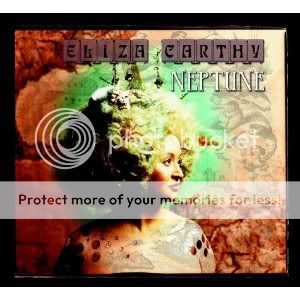
ELIZA CARTHY – Angels & Cigarettes

carthyBeing the daughter of English folk legends Martin Carthy and Norma Waterson (and the niece of Lal and Mike Waterson), you could say that music was very much in Eliza Carthy’s blood. It would also seem natural for her career to explore avenues of traditional (and traditional sounding) English folk music. She gained great praise for her double release ‘Red:Rice’ in 1998 – the first part fusing her folk songwriting with modern drum loops and the second being stripped back, venturing down a more traditional folk route.

Her fourth album (and US debut) ‘Angels & Cigarettes’ presents Carthy at her most commercial; the songs are more in the adult singer-songwriter pop mould than usual, although her folk influences are occasionally present.

The opening number ‘Whispers of Summer’ is largely representative of this album’s shift away from folk music. Eliza’s voice is still very much in the heavily accented folk vein and her gently played fiddle may put in an appearance, but this is tempered by an unobtrusive drum loop and backing vocals whose ‘oohs’ aren’t particulary folky. A far cry from the likes of ‘The Snow It Melts The Soonest’ or the jigs and reels present on ‘Rice’, it feels like one of the album’s folkiest numbers, but it’s barely folk. It’s one of the only times Eliza gets anywhere near her trademark fiddle style and then that’s only a flourish rather than its main feature.

‘Perfect’ is lightweight pop which manages to remain charming due to Eliza’s lilting folky vocal; ‘Fuse’ makes excellent use of strings and Eliza’s voice carries much sadness. ‘Breathe’ is fantastic with its use of piano and Massive Attack style drum loop. The real star here is Barnaby Stradling whose bass playing is superb and adds much needed warmth. ‘Train Song’ is dark and brooding, where the vocals are used to create beautiful harmonies over the strings, in turn used sparingly to create atmosphere. Similarly, the bass-led ‘Whole’ works well due to being very musically understated. The end result is brilliant, but (as with a lot of ‘Angels & Cigarettes’) it’s not necessarily what some Eliza Carthy fans are looking for; it could just as easily have been a Beth Orton number. A cover of Paul Weller’s ‘Wildwood’ suits Carthy’s vocal style very well and is further proof that ‘Angels & Cigarettes’ seemed largely pre-occupied with the idea of being a cross-over album, introducing Carthy to an adult pop audience and hopefully breaking the US in the process.

If you’re not much of a fan of English folk in its purest forms but don’t mind a little creeping in, ‘Angels & Cigarettes’ offers your best entry point into Carthy’s work – and especially so, if you have a passing fancy for Kirsty MacColl or Beth Orton, for example. Eliza’s rendition of ‘Wildwood’ is worth your time alone.

February 2010

THE WINDUPDEADS – Army Of Invisible Men

windupdeadsAlready having had tunes featured on popular US TV shows ‘Gossip Girl’ and ‘One Tree Hill’, Stockholm based band The Windupdeads have already been given a fair amount of exposure in media terms. They’ve also been favourably compared to Radiohead and Muse, though listening to their second full-length ‘Army of Invisible Men’ (released on OK!Good Records), this comparison would appear to be lazy journalism forced by the unnecessary need to pigeonhole the band.

Granted, Richard Olsen may have an early Thom Yorke strain to his vocal style occasionally – and thankfully, he’s not possessed by the hideous untrained wailing practiced by Muse’s Matt Bellamy – but in honesty, that’s about as far as any comparisons go. The Windupdeads lack any of the experimentalism practiced by latter-day Radiohead too (and that’s potentially a good thing) and the bulk of their music settles for a fairly safe brand of rock/pop.

The Snow Patrol/Fray-esque ‘Used Cars’ shows The Windupdeads in a good light, working a memorable chorus around a breezy drum part with lots of understated cymbal work. The verses are tuneful in a radio friendly way, all building to a mid section which features some sharp guitar work which (under layers of studio trickery) never really breaks into a full solo. ’59:1’ begins with multi-tracked vocals and new wave keyboards, and in doing so, promises a great deal. Those vocals eventually make up the bulk of a decent chorus, but the verses themselves aren’t so strong. The drums do little more than mark time and Marcus Von Boisman’s guitars are limited to rhythm work, fleshed out with swirly keyboards (interesting that keyboards would have such presence when nobody is credited for them), over which Olsen delivers a lightweight vocal. It’s a track saved by its chorus; it’s a shame they couldn’t beef up the rest of the arrangement just a little.

Undoubtedly the album’s strongest track, ‘Quiet Down’ has a great intro with multi-tracked guitars and a moody verse with Jonas Westholm’s bass upfront. Olson’s vocals are stylised at first sounding like he’s singing down a telephone, but by the time his full voice is heard, it’s easy to hear where the knee-jerk Radiohead comparisons are coming from. Olsen channels his inner Thom Yorke for a ‘Bends’-era style vocal over a subtle waltz time signature. The Windupdeads certainly sound more assured here – and it’s a style which suits them very well. ‘Blood On Her Hands’ opens with a very mechanical feel which runs through the rest of the track, with Olsen’s heavily filtered vocals taking on a very staccato quality for the verses. Things pick up for the chorus, which utilises a fairly simple hook, but overall, the end result feels somewhat empty.

‘Don’t Let Go’ features another of the album’s best choruses. The musical simplicity – effectively a stomp – gives Westholm’s bass another moment in the spotlight and although the featured guitar solo isn’t brilliant, it’s nice to actually hear one, since most of The Windupdeads’ material doesn’t really offer much in the way of instrumental breaks. The mid-paced ‘Perfection’ makes great use of keyboards in lieu of affording a full string section, before falling away to allow Olsen’s vocal to take a dominant role. By the time the chorus rolls around, he’s augmented by soft backing vocals and chiming guitars all of which have a pleasant quality.

And that’s the word which best sums up The Windupdeads: they’re pleasant. There’s nothing objectionable in what they do, but despite any comparisons to Radiohead and Muse, there’s very little that’s edgy or alternative on show. ‘Army of Invisible Men’ is the work of solid musicians delivering material that sounds like it was made for American television dramas; a band making music for an audience looking for something that gives them more of a challenge than Keane…just.

May 2011

Posted in pop

THE CARS – Move Like This

the cars‘Move To This’ may be the first new material recorded by The Cars since their forgettable swansong ‘Door To Door’ back in 1987, but after a few bars of their 2011 comeback release, it’s like they never really went away. The keyboard bleeps which cut through the main riff of the opening number ‘Blue Tip’ are unmistakably the work of Greg Hawkes and frontman Ric Ocasek’s spiky vocal style is even more distinctive. More impressively, not much of an attempt has been made to change or update The Cars’ signature sound here – ‘Blue Tip’ could have opened a Cars disc in the late 80s.

The four surviving members – Ric Ocasek (vocals/rhythm guitar), Greg Hawkes (keyboards, bass, backing vocals), David Robinson (drums) and Elliot Eason (guitar/backing vocals) sound as sharp as ever and Jacknife Lee’s production job is as lavish as either Roy Thomas Baker or Mutt Lange’s previous efforts with the band. After ‘Blue Tip’ opens with a keyboard bass augmented by jagged rhythm guitars, Hawkes chimes in with the mechanical keyboard sounds, making this sound like a number which sounds like it could be a ‘Candy-O’ leftover. To balance out the shameless new-wave elements on the verses, the chorus has a fuller sound where Elliot Easton gets to deliver a simple guitar riff. The Cars always had a knack for great hooks and ‘Blue Tip’ has a decent one, but it takes a couple of plays to sink in, since initially it’s a little overshadowed by those keyboard noises and the general excitement of a new Cars record.

‘Sad Song’ utilises handclaps and a rhythm guitar in a way which recalls ‘My Best Friend’s Girl’ and its chorus section riff has echoes of ‘You’re All I’ve Got Tonight’. Both elements are given a dusting down and a new slant though, and here Hawkes’s keyboards have a fantastic full sound, brilliantly complimented by Robinson’s drumming, which has a hard edge without ever becoming aggressive.
A similar mood can be heard on ‘Hits Me’, which showcases the best elements of each of the musicians – Hawkes’s keyboards maintain their retro futurism, while Easton’s staccato guitar style dominates. The slow number ‘Soon’ – in a better, fairer world – would be a number which previously would have been a vocal spotlight for Ben Orr [Orr passed away in 2000 after a battle with pancreatic cancer]. Despite his edgier style, Ocasek manages to rein his voice in a little and deliver a sympathetic, soft vocal. Musically, its simplicity is the key; the rhythm guitars have a lovely ringing sound which carries the tune throughout and Greg Hawkes’s keys offer a few subtle bell noises. He can’t resist an old-school keyboard solo in the middle though; but even then, it sits on the good side of tasteful.

The quirky pop rock workout ‘Free’ has a slightly harder quality, which in places is reminiscent of Ocasek’s 1997 solo release ‘Troublizing’ with its more modern take on a retro sound (but certainly none the worse for that), while it’s occasional stabbing guitar riff tips the hat to ‘Bye Bye Love’ from The Cars’ debut album. The chorus is strong, with Ocasek backed up by Hawkes and Easton on a pleasing backing vocal. ‘Drag On Forever’ has a gentle chug which manages to stay buoyant thanks to a lead guitar part creeping in between the verses, with Easton delivering long, full notes. The whole track is swamped by the sound of Christmas bells, which can seem a little jarring – maybe that was Greg Hawkes’s way of lightening the mood a little… ‘Take Another Look’ is the album’s most lightweight number, harking back to the most commercial moments of ‘Heartbeat City’. David Robinson’s electronic drums underpin a smooth arrangement full of harmony vocals on a very, very Ben Orr-esque number.

It may not be as classic as The Cars self-titled 1978 debut or as over-polished as parts of their 1985 million-selling ‘Heartbeat City’, but ‘Move Like This’ is streets ahead of 1980’s difficult ‘Panorama’ or 1987’s ‘Door To Door’. Original bassist/second vocalist Ben Orr is sadly missed in a couple of places, but the four surviving original members deliver an album which celebrates the past without ever sounding self-congratulatory. Comebacks can sometimes sound forced or stale (especially if that comeback is solely money oriented), but for ‘Move Like This’, there’s no hint of that. The chemistry between Ocasek, Hawkes, Easton and Robinson sounds magical, with their formulaic, somewhat predictable sound often working as a great strength. An album with so much riding on it could have been disappointing, but for long-time fans this is a welcome return and an essential purchase.

May 2010

VARIOUS ARTISTS – Sin-Atra

PhotobucketOver the course of the 90s and 00s, the melodic rock and metal market has been swamped with metal tribute albums, often featuring a host of well known performers. Such releases are often workmanlike affairs with the featured artists never really making the most of their talents. Occasionally, you’ll find a surprisingly good one, as was the case with ‘Dragon Attack’, a metal tribute to Queen (something which really ought to have been awful, yet somehow retained a sense of fun and a great deal of charm).

‘Sin-atra’ – a metal tribute to Frank Sinatra, masterminded by ex-Kiss/Skull man Bob Kulick and Mr Big’s Billy Sheehan – didn’t sound like a very good idea on paper, and in reality, it still isn’t. Most of the performances take things into the realms of the ridiculous and while there are a lot of gifted vocalists featured, half of them have not survived the project with any dignity.

The tribute begins with perhaps Sinatra’s best known song, the ubiquitous ‘New York, New York’, left in the hands of the superbly talented and unique Devin Townsend. Over a juggernaut riff, Townsend adopts a really over the top metal voice – the kind you’ll find on the heavier parts of his ‘Infinity’ and ‘Ziltoid’ albums. In a powerful croon, he declares he’ll be “king of the hill, top of the heap, infinite overlord of all space and time…”. As expected, Townsend takes more of a lead than some of the other performers, with parts of his performance featuring his signature sound, multi-tracked guitars and keyboard drone. Equally cool, Mr Big’s Eric Martin gives ‘Lady Is a Tramp’ a decent send off with an arrangement which wouldn’t sound too out of place on his ‘Destroy All Monsters’ album from 2003. Martin’s voice has always been one of the best in melodic rock, and here is no exception. Following a decent staccato opening riff, things settle into a great melodic rock groove where chunky guitars meld well with a horn section, over which Martin delivers a vocal which fuses his rock and soul styles to great effect. He was right to approach this with a similar style he may have given one of his own numbers – in all, a very naturalistic and classy performance.

During ‘World on a String’, Doug (aka dUg) Pinnick croons in a deep tone, one almost unrecognisable as being the same man who sang on the King’s X classics ‘Gretchen Goes To Nebraska’ and ‘Faith Hope Love’. With a voice far lower than his 80s and 90s vocal style, he treats most of the number softly and respectfully, until midway, until Kulick and co just can’t hold it in any longer. The metal riffs don’t improve the track particularly, but they work better than the parpy horn section. Ex-Warrant man Jani Lane (a stalwart of tribute albums) makes a reasonable effort with ‘That’s Life’ – augmented by Winger/Whitesnake man Reb Beach on guitar and a predictable female backing harmony. Truthfully though, David Lee Roth’s similar version of the song (featured on his 1986 album ‘Eat ’Em and Smile’) will always be its definite rock cover.

Queensryche’s Geoff Tate lends his instantly recognisable style to ‘Summerwind’, and miraculously, the house band (featuring Kulick, Sheehan, Velvet Chain’s Brett Chassen and orchestral arranger Doug Katsaros) lend the track an almost sympathetic arrangement. A couple of Kulick’s riffs hit the mark and Katsaros’s orchestration is the album’s best. Tate attacks the number like a total professional, but even so, it’s only really worth checking out if you’re a die-hard fan. Twisted Sister’s Dee Snider’s vocals on ‘It Was a Very Good Year’ are fantastic and Katsaros’s strings are suitably arranged, but the chugging riff which brings the two together isn’t that interesting. At times sounding like a poor approximation of Led Zeppelin’s ‘Kashmir’ played by ham-fisted rockers. It also would have benefitted from being slightly shorter – by the time it starts to fade out at the five minute mark, it’s already started to sound a little dull.

The rest of ‘Sin-atra’ is simply awful. The remaining numbers are very poorly realised, even nearing desperation at times. Over a chuggy riff augmented by John Barry-esque horns, Anthrax’s Joey Belladonna struggles to croon his way through ‘Strangers In The Night’, absolutely murdering it in the process. The chosen vocal style really doesn’t suit him and it results in embarrassment for all concerned. Similarly, Glenn Hughes wails and squeals his way through ‘I’ve Got You Under My Skin’ in a painful manner, not helped by an average musical arrangement. ‘Fly Me To The Moon’ suffers the same fate once it’s been strangulated by Robin Zander – hard to believe that such an ugly performance could be the work of the same voice from Cheap Trick’s ‘In Color’, one of the greatest power pop releases ever. If he’d sounded like this back in the mid 70s, he would never have got a foot through the door of the Budokan, let alone contributed to a world famous live album. His vocal style just isn’t meant for the heavy metal style the song has been given though, so it’s a little unfair to lay the blame squarely upon him.

Still, none of those bad tracks are anywhere near as nasty as ‘Love and Marriage’ – delivered at full pelt in a growly voice by Nonpoint’s Elias Soriano, over a 80s thrash metal riff augmented by a brass section. It was a terrible song anyway, and it really isn’t improved by the heavy handed treatment it gets here. Bob Kulick throws in a rudimentary solo, but chances are, by that point in the song, you’ll have had the sense to push the stop button. The man from Nonpoint gets nul points. An incredibly unsubtle take on ‘High Hopes’ featuring Scars on Broadway guitarist Franky Perez suffers a similarly embarrassing fate…

Yes, a lot of this release really is that bad. Possibly as misjudged as ‘Metal Zeppelin’ – a heavy metal “tribute” to Led Zeppelin from 2002, featuring lots of second division European metal bands…and Blaze Bayley. It was a mistake to try and make Sinatra’s tunes fit the metal mould while retaining a swing/crooning style to most of the vocal performances – it just doesn’t work. You have to wonder what everyone was thinking when they signed up for this project… At least Devin Townsend had the smarts to realise this was rather silly and played it up for all of its absurdness.

None of the tracks here represent worthy additions to the performers respective back-catalogues. Even the completists among you will possibly baulk at most of these performances. You could approach ‘Sin-atra’ as a bit of fun, but most of it is so heavy handed it makes difficult listening. Eric Martin’s contribution is worth downloading (and even Townsend’s piece of over-the-top theatrical silliness too if you’re that way inclined), but otherwise, this is an album you could definitely live without.

May 2010