BOWERY BEASTS – Heavy You EP

bbBowery Beasts have been hyped as the best band to come out of Los Angeles for years. Former Sex Pistols man Steve Jones has been very vocal about them. Their ‘Heavy You’ EP is a fairly intense mix of alternative rock sounds, which initially isn’t so easy to grasp.

‘He Was Your First Tattoo’ works around a groove-led drum rhythm, which at first makes the listener think we’re headed for garage rock territory. However, those drums are a bit of red herring, as once the chorus rolls around, the band have settled into a mid-paced alt-rock groove. The drums retain a great live sound throughout. In places, the rhythm guitars jangle from the right speaker, at the bottom of the mix overlaid by a whole world of other guitar parts. Marion Belle’s vocals fuse elements of alternative 90s rock and 1970 rock star wailing in such a way that gives Bowery Beasts a proper edginess. It’s a number which requires a few spins for it to reveal all of its many layers, but after a while, Bowery Beasts’ style seems to work…even though at times you might try and convince yourself it shouldn’t.

After a brief intro of feedback, ‘White Diamond Babe’ provides jangly guitar rock in a fairly predictable fashion. The most striking feature is another rock solid drum part until the chorus where Belle pushes his vocal to extremes, at times hitting a piercing banshee wail. Among the more ordinary indie-rock elements, there’s a moment which appears a little darker with fuzzy sampled voices and reverb. Underneath the layers of guitar, there are hints of a great bass line. The upbeat ‘Young Rockers’ shows Bowery Beasts at their most accessible – at least in terms of radio friendliness – with a strong hook, more restrained vocal and multilayered guitars. It’s the EP’s most sing-along offering, certainly, but it’s relatively safe approach means it’s not always as distinctive as Bowery Beasts are capable of being.

‘Amulet’ provides a change in mood, with plenty of acoustics overlaid by ringing electric guitar, The vocals harmonise for a huge part of the number, which uses of lots of retro rock elements, both from the 90s and 70s, with a reverb filled guitar solo filling several bars towards the track’s end. Its familiarity is certainly comforting, though Belle’s shriek which cuts through a good proportion of the track will not be easy listening for everyone. The closing number, ‘Rock N Roll Queen’, continues in a mellow vibe, as acoustic guitar work is joined by sparing piano lines and the sound of flutes. Each of these elements combined create something magical. It provides a great contrast with the darker edges present on ‘White Diamond Blue’. Belle’s vocal style features moments where you’d think he was evoking the spirit of Mother Love Bone/Malfunkshun legend Andrew Wood; something which becomes really obvious when he delivers the word “honey” with almost exactly the same affectation.

‘Heavy You’ is unlikely to click with you on first hearing. It may not even click with you on the second. Some of you might not even get it at all. It may not always be easy listening (and most of it isn’t as dreamy and smooth as a few of the non-EP tracks floating around the net, ‘Jean’ in particular) but perseverance definitely pays off, since this release features some great moments.

May 2011

WARRANT – Rockaholic

Photobucket

For a lot of people, glam metal band Warrant peaked with their third album, the 1992 release ‘Dog Eat Dog’. It took Warrant’s trademark sound and toughened the edges resulting in a near perfect mix of glam and hard rock. Then frontman Jani Lane said at the time it was the first Warrant album he’d been completely happy with and as a result, he wanted “to burn their first album and re-record the second”. In many ways, those who hold up that album as the band’s peak are correct to do so, although it’s successor, 1994’s ‘Ultraphobic’ has some interesting moments – most notably the King’s X inspired ‘Followed’. From that point, Warrant’s career certainly came off the rails… ‘Belly To Belly Part 1’ attempted to recapture some of the magic delivered by ‘Ultaphobic’ but had none of the memorable hooks or charm and Warrant followed that with a re-recorded greatest hits package which is best avoided. Vocalist Jani Lane subsequently quit and Warrant were never really Warrant again.

Longtime members Jerry Dixon (bass), Steven Sweet (drums), Joey Allen (lead guitar) and Erik Turner later teamed up with Black ‘n’ Blue vocalist Jaime St James on the appropriately titled ‘Born Again’ in 2006. ‘Born Again’ was a workmanlike hard rock record, certainly not terrible, but not worthy of the Warrant name either. St James subsequently returned to Black ‘n’ Blue, while the core of Warrant enlisted the help of ex-Lynch Mob/Cry of Love vocalist Robert Mason.

The resulting album, 2011’s ‘Rockaholic’ (released in the same week as the 2011 release from Black ‘n’ Blue, possibly not coincidentally), is a decent hard rock record, much better than ‘Born Again’. The opening numbers offer solid hard rock thrills, with heavy slide guitar powering ‘Sex Ain’t Love’ and guitar tapping and classic 80s riffing making up the core of ‘Innocence Gone’, which also features a great, pumping bassline from Jerry Dixon. On the rousing ‘Show Must Go On’ and ‘Cocaine Freight Train’ Warrant get in touch with their heavier side and on the latter, particularly, they appear very spiky indeed. The riffs are big; but more impressively, on the verses, Steven Sweet’s drumming occasionally resembles something more than a little Motörhead inspired. By the time the chorus rolls around, though, things settle in to more traditional glam/hard rock, with plenty of gang vocals; on an instrumental break, a harmonica line gives things a much needed blues-rock touch.

Elsewhere, there are a couple of outstanding mid-paced rockers: ‘Life’s a Song’ showcases Robert Mason’s less squealy vocal talents (and here it becomes obvious why he’s clearly the right man for the job) and a really classy guitar solo from Joey Allen. Throw in a bunch of harmony vocals and the track is a definite winner – near classic Warrant. ‘What Love Can Do’ has a great rhythmic punch on its verses, but as always, it’s on another harmony filled chorus Warrant really shine.

No matter who’s in the line-up, a Warrant release wouldn’t be complete without a couple of huge ballads, and on ‘Rockaholic’s soft numbers, lots of Warrant’s old magic can still be heard. ‘Found Forever’ is the kind of rock ballad Warrant excelled at in the late 80s, and even in 2011 – sans Jani Lane – they prove rock balladry is possibly their greatest strength. Robert Mason’s softer vocal style appears sympathetic to the arrangement, which comes full of understated guitar chords (courstesy of Erik Turner and Joey Allen) and a nice bass line. The keyboard fleshes everything out and makes it sound bigger than it actually is, while Joey Allen’s lead solo is brief but well placed. Despite lots of decent elements, it’s the huge chorus vocals and harmonies which make it really stand out. Similarly, ‘Home’ is an archetypal Warrant ballad. With an upfront bass line and clean guitar work underpinned by a keyboard string section, this sounds like a distant cousin of the excellent ‘Heaven’ from the band’s 1989 debut ‘Dirty Rotten Filthy Stinking Rich’. This track has the spirit of Jani Lane all over it, but then, It’s written in such an old Warrant style, it’s almost impossible not to hark back when listening to it.

Throughout most of ‘Rockaholic’, the band really delivers the goods. Robert Mason fits in very well and Warrant sound like a cohesive unit once again. It may suffer from a couple of weaker tracks and a horrible album title (“-aholic” is NOT an acceptable English language suffix), but this is about as good as you’re going to get from a Lane-less Warrant.

May 2011

GLEN DROVER – Metalusion

glenGlen Drover will be best known as having been the guitarist with King Diamond and Megadeth, as well as having been a touring member of Testament. As its title suggests, Drover’s solo debut moves away from the purist metal stylings of his previous employment and into a world of metal guitar meets jazz-rock fusion. With a selection of guest performers, Drover offers five original cuts and also puts his mark on tunes by Al Di Meola, Jean-Luc Ponty and the legendary Frank Zappa, often with mixed results.

The rather aggressive ‘Ground Zero’ works its main riff around some decent staccato work with a tune which is closer to jazz fusion than metal. Things soon fall apart when the lead guitar section presents itself. The main bulk of the number features furious (and often ugly) three-way showboating between Drover and his featured guests – in this case, UFO’s Vinnie Moore and sometime Megadeth guitarist Chris Poland. While guitarists may marvel at the level of metallic fretboard wankery on show from the three performers, for anyone else, it’s not always so interesting. While some guitar instrumental stuff is great, for non-musicians the best stuff is often about tunes as opposed to flashiness – and if it’s a tune you want, you won’t find it here. The second half works slightly better once the guitars settle into chorus style harmonies (overlaid by a busy piano, courtesy of Saga’s Jim Gilmour), but overall, it’s hard work. ‘Egyptian Danza’ (originally by Al Di Meola) opens with a superb, eastern sounding riff, it’s off-kilter jazz rock qualities bring out the best in Drover’s guitar style. With a slightly edgy style, Drover weaves a riff that’s jazzy in a progressive metal way, his occasional use of whammy bar adding extra interest. This would have make for an okay track alone, but the middle section is rather more interesting. With a soft, clean guitar tone, Drover plays a busier eastern sounding motif, which gets faster as it goes building excitement and a little tension. Chris Sutherland’s complex drum part alternates rock and jazz, occasionally settling for a playful shuffle. While Drover’s playing is more aggressive in places than Di Meola’s original work, the end result is great, demonstrating a clear understanding of the piece’s intended mood.

That’s more than can be said for his take on a couple of Zappa tunes. While it could be argued that it takes a very brave rock musician to take on the works of Zappa, Drover’s often metallic approach to his instrument kills both the Zappa pieces almost instantly. A minute’s worth of ‘The Purple Lagoon’ (used as an intro) takes cheeky fusion style of the original, takes one of its riffs and then hammers it into a heavy metal stupor, before Drover launches into a particularly uninspired, heavy-handed take on ‘Filthy Habits’. The dual guitar parts are ugly and the widdly-widdly (technical term) parts are even worse. It’s only by the time we get a couple of minutes in things start improving, but even then, any improvement is slight. Obviously, Zappa had a very unique style which it would’ve been wrong for Drover to attempt to copy, but one would suspect that Zappa would not necessarily approve of this jazz-rock freakout being overlaid by very metallic soloing. The keyboard laden free-form section which closes the original is reproduced here in an uninteresting manner; while Jim Gilmour is a great musician, his keyboard skills are a world away from those of George Duke. Since much of Drover’s chosen guitar tone seems far better suited to metal as opposed to jazz fusion, Jean-Luc Ponty’s ‘Don’t Let The World Pass You By’ could have easily suffered the same ham-fisted approach. However, the piece is ultimately saved by a blanket of keyboards from Gilmour and a staggering bass part courtesy of Paul Yee. Throughout most of the number, the bass lays down interesting, busy funk lines which never fall short of amazing. Even the crystal clear rhythm guitars work well within the arrangement; however, once Drover and Opeth’s Fredrik Akesson exchange showy guitar leads, it suffers the same fate as ‘Ground Zero’ in that it’s often just too much to take in. A take on Ponty’s ‘Mirage’ is preferable thanks to an easier melody, but once again, the subtleties of Ponty’s 1977 original are often lost here.

The self-penned ‘Colors of Infinity’ presents the best side of Drover’s playing. A much cleaner tone and use of vibrato lends plenty of atmospherics on a number which, in places, hints at Gary Moore’s mid-eighties work. He still has a tendency to lean towards metallic playing in places (but then, that’s his forte), but in all, the softer side presented here makes far more interesting listening. Just as you think you know how the rest of the piece will sound, Drover throws in a jazz-funk-metal refrain over the mid-section which at first throws the listener off a little; he then returns to a more standard rock arrangement where multi-tracked guitars provide some great chorus sounding work. The layers of keyboards and off-kilter rhythms driving ‘Illusions of Starlight’ are a dead ringer for Dream Theater’s softer, more accessible works; Drover appears very comfortable playing in a progressive metal style and while the sweeping notes get overtaken by showmanship on occasion, the six minute piece makes fairly smooth listening. A special mention must go to Saga’s Jim Gilmour guesting on keyboards here; he provides some great atmospheric accompaniment throughout.

In general, Drover’s metal-fusion works well on most of his own compositions; these are tunes which, naturally, are very sympathetic to his playing style. Bringing the metal aspect of his playing to numbers by Jean-Luc Ponty and Frank Zappa doesn’t always seem appropriate – the heavy guitar style smothers the quirkiness which should be found within the works of two highly original composers. With that in mind, it’s hugely surprising Drover managed to capture such a good performance of Al Di Meola’s ‘Egyptian Danza’, but even so, it’s certainly one of this album’s standouts. Despite help from the aforementioned guests (plus Nevermore’s Jeff Loomis and Forbidden’s Steve Smyth), ‘Metalusion’ is a hit and miss affair, and one which may have been stronger if more of Drover’s own compositions had been included.

April 2011

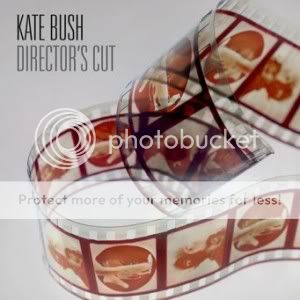
KATE BUSH – Director’s Cut

KBKate Bush is a brilliantly talented, unique individual who has provided inspiration to thousands of musicians and singer-songwriters. She’s recorded a handful of the best tracks of the 1980s, with her 1985 album ‘The Hounds of Love’ being not far short of a masterpiece. However, such talents bring with them an artistic temperament. Her first (and so far only) greatest hits package, 1986’s ‘The Whole Story’ features a re-working of her classic ‘Wuthering Heights’, since Kate was unhappy with the already brilliant original. The ’86 version, featuring a significantly lower and more limited vocal range – isn’t a patch on the original, despite what KB herself thinks. She’s also gone on record stating how much she dislikes her earlier work. Presumably, then, this is why we’ve been denied a fully comprehensive DVD of any kind, even though her promo videos and her only filmed live show from Hammersmith ’79 have been treasured by fans for years on old VHS releases. If we take into account the never-officially released stuff like the mimed performance at the Efterling theme park for Dutch TV or the 45 minute 1979 BBC Christmas special featuring Peter Gabriel – both of which have been widely circulated over the years – that’s a world of stuff which has never seen the light on day on DVD…

After the late 80s, she was rarely seen in public and appearances on television were just as scarce. We can guess that this is because she no longer looked like the 20 year old who pranced around in leotards, an argument given some weight by the ridiculously airbrushed promotional photograph accompanying this ‘Director’s Cut’ release. Has most of Kate Bush’s career hinged on how she feels she is perceived by the public? Possibly. What’s definite though, is that her striving for perfection – to obsessively airbrush the bits of the past which make her unhappy – leaps to new heights on ‘Director’s Cut’. It’s not a best of; nor is it a remix project. ‘Director’s Cut’ features a selection of songs originally released on Kate’s 1991 and 1993 albums ‘The Sensual World’ and ‘The Red Shoes’; and for better or worse, they’re re-imagined here in a way which pleases Kate – though they’re unlikely to be favoured over the original cuts by anyone else.

At first, ‘The Song of Solomon’ doesn’t appear to veer too far from the original version. The bass has a bigger role, bringing a slightly dubby quality and Kate’s vocal doesn’t appear as prominent, and then we get to the end where a previous vocal line is substantially altered. Whereby in the original version ‘Whap bam boom’ appears tagged on the end of a line, almost as an after-breath, here, Kate delivers the line at full pelt and then loops it so it becomes impossible to miss.  It’s a mistake; a very bad idea, which spoils anything which has gone before. Unless you’re Richard Penniman, there’s no excuse for ‘whap bam boom’.

‘Lily’ is a little better. Gone are the late 80s synthetic sounding drums, they’ve been sidelined for something more natural. The production sounds a little compressed, Kate’s voice is a little lower, but the performances themselves are commendable. ‘Never Be Mine’, ‘Top of The City’ and ‘And So Is Love’ each get a dusting down which doesn’t improve the original cuts in any obvious way and as before, Kate’s vocals aren’t as powerful; even so, they’re not objectionable, just a little pointless. Thankfully, Kate has opted to keep Eric Clapton’s guitar leads from the latter intact. Since those guitar lines provided one of the original version’s best features, to replace them with something different would have been madness.

‘Deeper Understanding’, meanwhile, has been completely butchered. What would improve the atmospheric, multilayered original with its fretless bass parts? Nothing. …But clearly, Kate’s opinion differed. She’s wrong. Maybe she should have had someone to tell her that once in a while. The keyboards are the same as before, but the bass is buried in the new inferior mix and what’s more, the track features a truckload of auto-tuned elements. Granted, the song is – at least in part – about computers, but that’s no reason to think your audience would want to hear it sang by an emotionless robot. ‘The Red Shoes’, meanwhile retains a fair amount of its original bounce, but not all of its original spark, due to a smoothing out of the 80s edges and Kate’s re-recorded vocal not quite hitting the marks of the ’91 model.

Alongside these tweaked cuts, ‘Director’s Cut’ features three tracks which have been totally re-recorded. The steamy ‘Sensual World’ (now re-titled ‘Flower of the Mountain’) reinstates words from James Joyce’s ‘Ulysses’ which Kate had been refused permission to use back in 1991. This isn’t necessarily a bad thing, but everything else about it really awful. The drums have been removed, the bass turned up and the production has a nasty, muddy sound. Kate’s vocal in a lower key really doesn’t match the dreamy performance on original cut of ‘The Sensual World’; in fact, it sounds like a warbling noise from an old lady. This is supposedly one of ‘Director’s Cut’s greatest achievements, but frankly, this has the sound of a middling demo take. If you hadn’t already lamented the fact that Kate’s voice isn’t a patch on its ‘Sensual World’ era equivalent you certainly will here. By the time she reaches the last verse, it feels like she’s barely trying to put in any effort at all. She’s absolutely deluded if she thinks this is an improvement.

The brilliantly played piano part of ‘Moments of Pleasure’ gets a slower arrangement here to the point where it’s almost unrecognisable. Again, this has a lot to do with the lower key. Kate’s vocal is okay but certainly not outstanding. The bouncy pop of ‘Rubberband Girl’ appears as an odd shuffling number combining a Rolling Stones inspired rhythmic twang with brushed drumming. A potentially good idea is made unlistenable by compressed production which makes everything sound underwater, while Kate’s vocal is understated and somewhat mumbly. It’s like listening with your fingers in your ears. A brief bass line which sounds like a stretching rubber band provides a great moment but it’s really fleeting.

We all change. Change is natural. We change as people – our personal views change, our tastes in music change. Slowly over time, everything about us changes. Kate Bush needs to accept that too and not indulge in exercises of warped revisionism. The overtly narcissistic ‘Director’s Cut’ only exists to massage Kate’s ego and to give her many sycophantic fans something to get excited about, since they don’t have anything wholly new. The past is the past, you can’t change it; you certainly shouldn’t attempt to rewrite it. The world doesn’t need the musical equivalent of plastic surgery, especially when such surgery brings little to no improvement.

‘Director’s Cut’ isn’t the work of the once brilliant and unique Kate Bush…it’s a totally misguided affair, presenting the ugliest face of vanity. If Kate wants to piss on her legacy that’s fine – after all, they’re her songs to mistreat as she wishes – but she shouldn’t expect everyone to still love her unconditionally afterwards.

May 2011
PETER PARCEK – Pledging My Time EP

peter parcekIn 2000, Peter Parcek released his debut album ‘Evolution’, a collection of original material which interspersed with covers of tracks penned by Mose Allison and blues legend Freddie King. The album was available only at live shows and via Parcek’s website. A decade later, his follow-up album, ‘Mathematics of Love’ enjoyed proper distribution and earned him critical acclaim, including a nomination from the Blues Foundation for “best new artist debut” at the 2011 Blues Music Awards. A nomination which was well deserved, since the album was brimming with great moments – not least of all on the Parcek written ‘New Year’s Eve’ (a remixed version of a track which made its debut on ‘Evolution’) and an absolutely storming take of the Peter Green penned ‘Showbiz Blues’ (the original of which can be heard on Fleetwood Mac’s 1969 masterpiece ‘Then Play On’).

There may have been a decade between Peter Parcek’s previous two studio works, but he was quick to follow up ‘Mathematics of Love’, and given the buzz it generated in blues circles, was certainly right to do so. His 2011 EP release ‘Pledging My Time’ sees him re-imagine a few numbers penned by the legendary Bob Dylan. The spacious, emotional approach which Parcek brings to his four chosen covers sometimes changes the mood from that of Dylan’s original vision, but each one really benefits from the passion and musical skill on show here.

Opening with the mush covered ‘She Belongs To Me’, there’s a sense of something friendly and familiar. Parcek tackles the song at the same pace as the original and treats the lyric with a great respect, the words suiting his slightly husky delivery. Musically, it has a great organic, live in the studio feel. The dobro is as clear as a bell during a great solo and provides a few great slide-driven moments elsewhere, while the electric elements add a decent amount of depth. Of particular note is Nick Giammarino’s drum work, which has a simplicity which really fits the mood. ‘Leopard Skin Pillbox Hat’ gets a straight-up blues treatment, showcasing Parcek’s electric lead work – the sound of a man who’s at one with his instrument; his playing appears effortless as he straddles a fine-line between soulful and angry leads, as he is backed by fantastic live sounding drums and a B3 organ. The vocal may not retain the slightly sneering qualities of Dylan’s ‘Blonde On Blonde’ cut, but as far as blues influenced vocals are concerned, Parcek’s delivery is fine enough. For this take of ‘Leopard Skin Pillbox Hat’, it’s definitely the music which does the talking.

The lesser-known ‘Beyond Here Lies Nothing’ (featured on Dylan’s 2009 album ‘Together Through Life’) presents a voyage deeper into the blues. Dylan’s version offered a solid blues vibe, but this reworking takes things up a notch. The root of the song is essentially the same; keeping the Peter Green inspired, ‘Black Magic Woman’ style framework. Beyond that, though, the arrangement featured here is superior, dispensing with the ugly accordion and flat brass work of Dylan’s original cut. Parcek’s guitar tone has a pleasing bite which works well against Larry Vann’s B3 organ swirls. The organ lines develop into a solo which has far more presence than the one featured on the original version. While the tight-but-loose blues vibes create a great atmosphere, it’s Parcek’s lead guitar work which steals the show.

Leaving the best for last, ‘It Takes a Lot To Laugh, It Takes a Train to Cry’ fades in with echoing guitar and a subtle drum track, giving an almost Daniel Lanois-eque spaciousness. Against a laid back drum-line, blanket of B3 and occasional reverbed guitar, Parcek’s vocal pulls the original lyric in a whole new direction; one which has a cool smoothness and an ache that’s lacking from Dylan’s straight (although still brilliant) bar-room blues approach on his original 1985 recording.

When Dylan’s songs are stripped of their unique vocal and left in the hands of lesser artists, they can sometimes feel a little ordinary, despite retaining their highly original lyrical content. Occasionally though, there are artists who’ve managed to remould Dylan’s works into something (almost) as brilliant in their own right. These versions of Dylan songs may not ever take on a life of their own in the same way as The Byrds’ ‘Mr. Tambourine Man’ or Jimi Hendrix’s earth shattering reading of ‘All Along The Watchtower’ (still the greatest Dylan cover ever); however, Parcek and his band must be applauded for twisting these four Dylan songs into brilliantly atmospheric, blues edged workouts which captivate the listener. Although a great singer and musician, it’s his gift for arrangements which really provides the true heart of this EP. For listeners with an interest in blues-based music, or anyone interested in Dylan covers – hopefully both – ‘Pledging My Time’ is an essential purchase.

April 2011