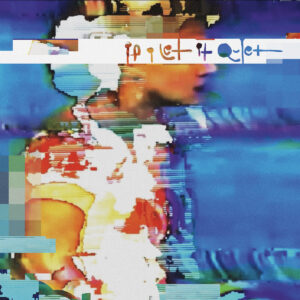
 Josaleigh Pollett’s ‘Radio Player’ is a rather special recording. Its opening sounds throw the listener into a world of dark synthwave, suggesting something rich in atmosphere. It then takes a somewhat dramatic twist when Josaleigh adds a vocal that, at first, suggests they have a love of classic dream pop, before an increase in volume allows their voice to reach for something much bigger. Hitting a couple of soaring notes, this presents a talent with a huge, natural tone, drawing the listener further into a world where Pollett’s love of almost cinematic sounds comes into its own. It’s then all change again, when a selection of programmed beats add a hard rhythm, calling back to the late 80s and a time of sharp sounding analogue synths. This contrasts brilliantly with a very human tone, but also adds a feeling of directness beneath a lyric exploring a world where the protagonist falls asleep in the glow of a TV signal, almost as if placing themselves the world of the classic ‘Poltergeist’.
Things don’t settle there: a middle eight sees the mechanical edge subside in favour of acoustic guitar lines, bringing a touch of alt-folk to an already eclectic backdrop, before returning to the electronica themes to allow a build up to a huge climax. Here, Josaleigh can be heard in full cry, making the lyrical melody act as a massive hook. Her tone may be very different, but there’s something in the way that the angst-ridden melody rises that shares a hint of Paula Cole, and specifically some of her more personal outpourings on her best-selling ‘This Fire’ album. Whether heard as a standalone track or as part of ‘If I Let It Quiet’, this is a number that presents an artist who is continually pushing forward, and the ever-shifting musical elements reward the listener with each successive spin.
By direct comparison, ‘The Witness’ – recorded with Crowd Shy – takes a safer approach. That said, it’s still a track that conveys a strong creative spark. The opening bars set a steady rhythm in place, and beneath some heavy beats, a droning sound hints at a love of old shoegaze records. Dropping into a melodic verse, the hard drum sound is offset by strummed guitar lines, but the real attraction comes via a soft vocal that makes the protagonist sound a little more vulnerable. Pollett uses a gentle delivery to allow their crying voice to glide over the sharper edged indie/electronica backdrop, and way before any of the lyrics make an impact, the contrast between the voice and music is really striking. Then, there are the lyrics themselves. Never afraid of wearing their heart on their sleeve, Josaleigh explores feelings of following gut instincts rather than “following the map” of expectation, of making new connections, and the need “to be seen, heard and understood”, with tones that implore and question, even at times when the narrative could’ve called for something more forthright. Everything combined results in a fine sounding indie rock workout that’s huge on melody, and perhaps even bigger on self-reflection. Sharing the sound of a wonderful and bold voice within the indie underground, ‘The Witness’ is certainly a number that – along with the brilliant ‘Radio Player’ – deserves to bring Josaleigh to a wider audience.
Venturing deeper into a world of folk based art pop, ‘Cherry’ kicks off with a raft of glitchy synth sounds and then transitions, somewhat unexpectedly, into an indie folk arrangement where acoustic guitar lines mesh with dream pop vocals, presenting the performer at their most reflective. The quieter elements of the track convey a huge sense of melody, but as with the record’s pre-released singles, it’s Josaleigh’s gift for mixing styles that really comes through here. The quiet, folky aspects are brilliantly offset by programmed beats and occasional metallic sounding chords, lending a flowing and almost otherworldly melody a stronger backbone. No matter what the music shares, though, it’s likely listeners will be constantly drawn to the voice, with Josaleigh offering a hushed, slightly trippy performance throughout. The folky influences come though more strongly on ‘Second Guesser’ where a vocal – shifting between an arty mumble and full on cry – meets some subtle acoustic work. In keeping with Pollett’s more typical approach, things aren’t quite so straight forward, of course. The track also makes great use of soundtrack like drones which sound like distorted electronic treatments pulled from an old Eno LP, before ‘Escape Routes’ turns everything on its head with a piece of danceable electronica; a busy track that seeks to propel the performer even further into the world of the old Drowned In Sound readership. The more intense elements of this number are offset very effectively by an a cappella interlude bringing a briefly haunting quality to the piece, and another hushed vocal which – at this point – starts to sound “recognisably Josaleigh”.
The folky influences shine once more during the first verse of ‘We All Got It Right’, a number that shares a lightly treated vocal against a sparse acoustic arrangement, taking Pollett into the realms of early 90s lo-fi, before turning everything on its head by introducing a massive alt-rock riff. The contrast couldn’t be any more extreme, but the numner eventually finds a relative comfort zone with some retro-ish indie sounds that are perfectly suited to a quiet, almost disquieting vocal. By the time the noisier riffs re-emerge, the vocal is complimented by a great sound, taking everything further into the world of shoegaze, half a world away from the quirks present on ‘Radio Player’, yet at the same time, still having the potential to thrill due to Pollett’s relative lack of musical boundaries. Then by allowing the end of this number to flow seamlessly into the ambient soundscape of ‘Yasaka, Natsu’, it creates a more epic feel, supplying another album highlight. The brilliant ‘Bed of Quiet’ expands on the more ambient elements of Pollett’s work by sharing a swooning synth and hushed vocal for an impressive intro, presenting a perfect musical marriage. Occasional beats hint at something different over the horizon, and eventually the number explodes with life, sharing a mix of 90s indie sounds and a world of 80s synth pop, creating something that feels arty, yet still accessible and almost radio friendly. As has become the relative norm, it’s impossible not to be drawn in by Josaleigh’s emotive voice: it’s always soft, yet conveys a spooky power that’s almost beguiling. For those able to find a love for any of the material here, this track is likely to become a firm favourite.
A contender for the album’s most interesting tune, ‘Repeating’ sets up a Morse-like rhythm on plucked strings, suggesting a stripped back and sparse feel, before surprising the listener with something that blends a hard, rhythmic edge with a smart indie pop melody. The way Pollett’s voice applies a light crying tone sets up another brilliant voice/music contrast, and by the time a few echoing backing vocals creep through, this becomes disarmingly beautiful. For those seeking something a little more accessible, ‘Like A River’ provides a superb showcase for a warbling vocal tone, lightly approached acoustic strums and a busy rhythm that typifies this artist’s cross-genre sound. A couple of listens in, the track’s floatier aspects will begin to make an impression, especially in the way a wordless vocal is used as a haunting hook. If you haven’t encountered the work of Josaleigh Pollett before, it’s strongly advised you check out this track first, then, if you like what you hear, make your way steadily through the rest of the album material.
Within the twelve songs that make up Josaleigh’s second full length release, it’s a pleasure to hear the singer songwriter continually jumping between the arty and accessible, the quirky and deeply personal – clearly unafraid of following their muse, or wearing their heart on their sleeve. ‘If I Let It Quiet’ isn’t necessarily the kind of album you should expect to click with immediately. Beyond the singles, its best tracks take time to weave their magic, but overall, this is the kind of long player that presents an interesting talent, and songs that have every chance of entertaining in the much longer term. It probably isn’t fair to suggest that Josaleigh Pollett has reached artistic maturity at such an early stage in their career, but this album definitely shows the singer-songwriter on the road to other great and hopefully interesting experiments. A recommended listen.
July 2026